In industrial facilities across India—from heavy mining operations in Odisha to pharmaceutical hubs in Gujarat—diesel is not just a fuel; it is a massive, recurring capital expense. When you are managing backup power generation, fleet refueling, or heavy earth-moving equipment, relying on an uncalibrated or poorly maintained fuel measurement system is a costly gamble. A mere 1% accuracy drift on a generator consuming 5,000 liters a day results in 50 liters of unaccounted fuel daily. Over a month, that is a hidden loss of nearly ₹1.35 Lakhs, eroding your operational margins.
To prevent these losses, proactive plant managers rely on robust instrumentation like the Diesel Flow Meter. However, even the most robust measurement devices require a structured preventive maintenance schedule to sustain billing-grade accuracy. Unplanned failures due to clogged strainers, worn seals, or sensor malfunctions halt production and compromise your fuel audits. This guide outlines a comprehensive, expert-level maintenance strategy tailored specifically for oscillating-piston meters operating in demanding Indian industrial environments.
Quick ROI Snapshot
- Typical Payback Period: 3 to 4 months (achieved through leak prevention, accuracy correction, and elimination of manual fuel measurement errors).
- Maintenance Cost: Less than 2% of the equipment value annually.
- Downtime Reduction: Up to 85% fewer unplanned fuel transfer stoppages when following a 30-day PM schedule.
1. Product Overview and Critical Wear Components
Before implementing a maintenance schedule, it is vital to understand the underlying technology of your measurement equipment. The Achievers Diesel Flow Meter utilizes a time-tested oscillating piston design. Because there is only a single moving component inside the measurement chamber, it delivers exceptionally reliable operation with very low mechanical wear.
Fluid enters the measurement chamber, causing the piston to oscillate in a predictable, highly repeatable circular motion. Each oscillation displaces a fixed, precise volume of liquid. A solid-state magnetic sensor detects these oscillations, translating mechanical movement into an ultra-low-powered electronic pulse.
While the system is designed for a "fit and forget" operational lifespan, the following components are subjected to constant fluid friction and pressure, making them the primary focus of your preventive maintenance program:
- Rotor/Piston (Aluminum Anodize, S.S-316, or PPS): Handles the physical displacement of the fuel. Susceptible to scoring if particulate matter bypasses the filter.
- Shaft (Hard Stainless Steel-316): The central pin around which the piston oscillates.
- O-Rings (NBR or Viton): Critical for preventing fluid bypass and external leaks. Viton is highly recommended for harsh chemical blends or biodiesel.
- Built-in Wire Mesh Strainer: The primary defense line against rust, tank scale, and suspended debris commonly found in Indian diesel supplies.
- Solid-State Magnetic Sensor: Converts mechanical motion to an NPN electrical signal (5 – 24V DC). While highly durable, its enclosure requires protection from extreme weather and moisture.
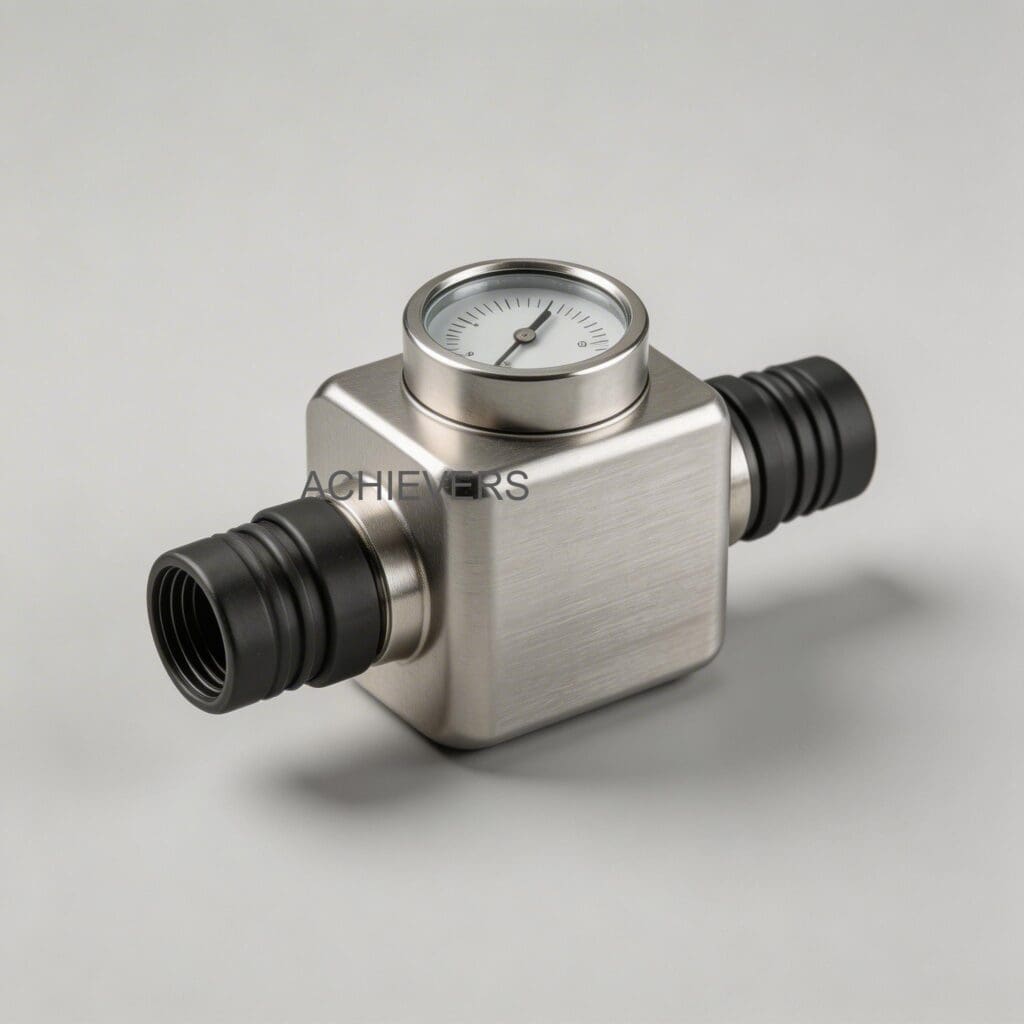
When upgrading your overall fuel management infrastructure, these meters integrate perfectly with automated Fuel Dispensers and centralized building management systems for real-time consumption tracking.
2. Preventive Maintenance Schedule
Maintaining the +/- 0.2% accuracy rating requires a disciplined approach to inspection and cleaning. The following schedule is optimized for standard Indian site conditions (35-85% RH, high dust, fluctuating ambient temperatures).
Common Mistake to Avoid
Do not wait for a noticeable drop in flow rate to clean the built-in wire mesh strainer. By the time flow is visibly restricted, the pump is already working harder, causing localized pressure drops that can lead to cavitation inside the meter chamber. This cavitation creates micro-pitting on the aluminum or PPS rotor, permanently destroying the meter's factory calibration.
| Task | Frequency | Responsible | Est. Time | Notes |
| — | — | — | — | — |
| Visual Leak Inspection | Daily | Pump Operator | 5 mins | Check flanges, threaded connections, and enclosure base for weeping fuel. |
| Electronic Display Check | Daily | Pump Operator | 2 mins | Ensure digits are clear, no flickering, and battery/power indicator is stable. |
| Strainer/Filter Blowdown | Weekly | Maintenance Tech | 15 mins | Drain moisture/sludge from the pre-filter housing. |
| Wire Mesh Filter Cleaning | Monthly | Maintenance Tech | 30 mins | Remove, inspect, and ultrasonically or solvent-clean the built-in reusable mesh. |
| Terminal & Wiring Check | Monthly | Electrical Tech | 15 mins | Inspect 5-24V DC NPN output terminals for corrosion due to monsoon humidity. |
| O-Ring Seal Inspection | Bi-Annually | Mechanical Tech | 45 mins | Inspect NBR/Viton O-rings for swelling or cracking; replace if flattened. |
| Rotor & Shaft Inspection | Bi-Annually | Mechanical Tech | 60 mins | Check for scoring or uneven wear. Clean measurement chamber with non-abrasive solvent. |
| Proving / Calibration Check | Bi-Annually | Metrology / QC | 120 mins | Dispense into a Legal Metrology certified proving measure to verify +/- 0.2% accuracy. |
| Enclosure Integrity Check | Annually | Safety Officer | 20 mins | Ensure flameproof/weatherproof seals are intact, especially before the monsoon season. |
| Complete Overhaul | Every 3-5 Years | Certified Engineer | 4 Hours | Replace all soft parts, bearings (if any), and recalibrate against a master meter. |
3. Step-by-Step Procedures for Key Tasks
Standard operating procedures (SOPs) ensure that maintenance is performed consistently, regardless of which technician is on shift.
Procedure 1: Cleaning the Built-In High-Capacity Wire Mesh Strainer
Given the high levels of suspended particulate matter sometimes found in transport tankers, keeping the strainer clean is your most critical task.
- Isolate the System: Shut down the transfer pump and close the upstream and downstream isolation valves to block flow to the meter.
- Relieve Pressure: Safely bleed off any trapped line pressure using the system's designated drain or bleed valve. Have an environmental spill kit and drip tray ready.
- Access the Strainer: Unbolt the strainer cap located on the inlet side of the meter housing. Use the correct size spanner—avoid pipe wrenches that can damage the aluminum or SS enclosure.
- Extract the Mesh: Carefully pull out the reusable wire mesh cylinder. Note its orientation for reassembly.
- Initial Flush: Rinse the mesh in a parts washer using clean diesel or a compatible non-corrosive solvent to remove heavy sludge and particulate buildup.
- Deep Cleaning: Use a soft-bristle nylon brush (never a steel wire brush) to gently scrub the mesh. If available, use compressed air (blow from the inside out) to clear stubborn particles from the mesh pores.
- Inspect for Damage: Hold the mesh up to a light source. If you see any tears, expanded holes, or crushed sections, discard and replace the strainer immediately. A compromised strainer will let welding slag or rust directly into the oscillating piston chamber.
- Clean the Housing: Wipe the inside of the strainer housing with a lint-free cloth.
- Reassemble: Lubricate the strainer cap O-ring lightly with compatible system fluid or a specified O-ring grease. Reinsert the strainer, hand-tighten the cap, and torque to the manufacturer's specification. Slowly open the upstream valve to check for leaks before resuming operations.
Procedure 2: On-Site Calibration and Accuracy Verification
The meter ensures an accuracy of +/- 0.2% of reading and a repeatability of +/- 0.1%. To verify this, perform a physical drop test using a certified proving measure (e.g., a 20-liter or 50-liter Legal Metrology stamped conical measure).
- Prime the System: Ensure the entire transfer line is completely full of fuel and totally free of air pockets. Run a few liters through the system back into the storage tank to purge air.
- Level the Proving Measure: Place your calibrated proving measure on a perfectly flat, level surface. Ensure the inside is wet with diesel and drained exactly as per the proving measure's specified drain time (usually 30 seconds after the main flow stops).
- Zero the Meter: Reset the electronic digital display of the meter to zero.
- Dispense: Open the nozzle and dispense fuel at the normal operating flow rate (e.g., 60 LPH) into the proving measure until the meter reads exactly the target volume (e.g., 20.00 Liters).
- Read the Measure: Check the meniscus on the proving measure's graduated neck. Read the exact actual volume at eye level.
- Calculate Error: Use the basic formula: Error Percentage = ((Meter Reading – Actual Volume) / Actual Volume) * 100.
- Evaluate Results: If the calculated error is within +/- 0.2%, the meter is correctly calibrated.
- Adjust if Necessary: If the error exceeds 0.2%, access the electronic sensor's calibration menu (using the manufacturer's specific sequence or magnetic key) and adjust the K-factor. Repeat steps 2-7 until the meter is within acceptable tolerance.
4. On-Site Spare Parts to Stock
Supply chain delays can turn a minor repair into a multi-day operational crisis. To prevent unexpected downtime, keep a customized "Crash Kit" of critical spares on-site.
| Part Description | Material / Specs | Recommended Qty | When to Replace |
| — | — | — | — |
| O-Ring Kit | NBR / Viton | 2 Sets | Every time the meter is opened, or if leakage occurs. |
| Wire Mesh Strainer | Stainless Steel | 2 Units | When mesh is torn, crushed, or permanently clogged. |
| Oscillating Rotor | S.S-316 or PPS | 1 Unit | If accuracy fluctuates widely due to mechanical scoring. |
| Central Shaft | Hard SS-316 | 1 Unit | If visible wear or grooving is detected during inspection. |
| Sensor Pickup | NPN Output, 5-24V DC | 1 Unit | If meter dispenses fluid but the display registers zero. |
5. Diagnosing Maintenance-Related Failures
Even with a strong preventive schedule, Indian operating conditions can throw curveballs. Use this diagnostic table to quickly isolate and rectify operational issues.
| Failure Symptom | Most Likely Cause / Missed Maintenance Task | Corrective Action |
| — | — | — |
| Gradual Loss of Flow Rate | Clogged wire mesh strainer or blocked upstream line filter. | Isolate system and clean the built-in strainer as per Procedure 1. Check tank discharge filters. |
| Meter Registers Flow, But Fluid Isn't Moving | Severe vibration in piping causing false magnetic pulses, or electrical interference. | Isolate piping with flexible connections. Ensure shielded cabling is used for the 5-24V DC signal. |
| Fluid Flows, But Display Reads Zero | Solid-state magnetic sensor has failed, or rotor is jammed while bypass valve is open. | Inspect the 5-24V DC power supply. Check sensor connection. Open chamber to ensure rotor oscillates freely. |
| Sudden Spike in Over-Registration (Meter reads higher than actual) | Air is passing through the meter. (Meters measure air volume just like liquid volume). | Inspect upstream suction lines for air leaks. Install an air eliminator upstream of the meter. |
| Inconsistent Accuracy / Poor Repeatability | Internal wear on the rotor/shaft, or debris in the measuring chamber. | Open the housing, inspect the SS-316 shaft and rotor. Clean chamber. Replace worn components. |
| External Leaks at the Meter Housing | Flattened or chemically degraded NBR/Viton O-rings. Over-pressurization (> 10MPa). | Replace O-rings. Verify system pressure does not exceed the 10MPa maximum rating. |
6. Extending Service Life in Indian Conditions
Operating industrial flow measurement equipment in India presents unique environmental and logistical challenges. Adapting your maintenance approach to these realities will double the life of your equipment.
Combatting High Ambient Temperatures
In regions like Rajasthan or central India, ambient summer temperatures routinely hit 45°C. While the meter itself can handle fluid and ambient temperatures from -40 to 80°C (and up to 150°C for special builds), prolonged direct sunlight can degrade the LCD electronic display. Install a simple sunshade over the meter enclosure to protect the ultra-low-powered electronics and extend battery life.
Managing Power Quality Issues
Industrial sites often suffer from severe voltage fluctuations and harmonic distortions, especially when heavy machinery kicks in. The meter's electronics require a clean 5 to 24V DC input. Never power the meter directly from a DG set's cranking battery, as the voltage drop during engine start can scramble the microprocessor. Always use a dedicated, stabilized SMPS (Switched-Mode Power Supply) with surge protection.
Monsoon Humidity and Enclosure Integrity
During the Indian monsoon, humidity levels consistently hover between 80-95% RH. While the meter is rated for 35-85% RH, prolonged exposure to driving rain can breach improperly sealed enclosures. If you opted for the weatherproof or flameproof aluminum anodized enclosures, ensure the cable glands are tightened perfectly. Apply a thin layer of dielectric grease to the NPN output signal terminals to prevent galvanic corrosion.
Handling Contaminated Fuel Delivery
Unfortunately, diesel delivered via road tankers often contains suspended water and fine rust particles. The built-in strainer handles particulates, but it does not stop water. Because the meter utilizes an SS-316 shaft and aluminum/PPS rotor, it is highly resistant to corrosion. However, water will reduce the lubricity of the diesel, leading to faster mechanical wear. Always draw fuel from a floating suction line in your main tank, and consider installing a water-separating coalescer filter upstream of the meter.
FAQ
Q: How often must we physically calibrate the diesel flow meter?
A: For internal accounting, a physical drop-test using a proving measure should be conducted every six months. If the meter is used for commercial custody transfer, it must be verified and stamped annually as per Indian Legal Metrology regulations.
Q: Can we use this meter for gravity-fed diesel tanks without a pump?
A: Yes. The oscillating piston design features a very low pressure drop, making it perfectly suitable for gravity head operations, provided there is enough static head pressure to overcome the minimal resistance of the internal strainer.
Q: Does the electronic sensor need frequent replacement or battery changes?
A: No. The meter uses a solid-state magnetic sensor which has no moving parts to wear out. If you are using the self-powered/battery-operated option, the ultra-low-power electronics usually provide a battery life of 3 to 5 years depending on usage frequency.
Q: What is the primary cause of a meter losing its +/- 0.2% accuracy?
A: The most common cause is abrasive particulate matter bypassing a damaged strainer and scoring the internal rotor and measurement chamber. Air entrainment in the suction line will also cause the meter to over-register.
Q: Is this flow meter safe for explosive environments like petrochemical plants?
A: Yes. The meter can be supplied with choices of weatherproof and flame-proof electronic enclosures that meet PESO and BIS safety standards for hazardous area installations.
Q: How do we handle high viscosity fuels like Heavy Fuel Oil (HFO) or LSHS?
A: While standard diesel models handle viscosities of 0.612-5.35 mm²/s, high-temperature variants of this meter are available that operate up to 150°C, specifically designed for precision measurement of hot FO, HFO, and LSHS.
Q: Why does the electronic digital display flicker or reset during DG set startup?
A: This happens due to severe voltage dips when the starter motor draws massive current from shared batteries. Ensure the meter's 5-24V DC power source is completely isolated from the engine cranking circuit.
Maintaining accurate fuel measurement isn't just an engineering task; it is a critical financial control for your business. If your facility is struggling with fuel reconciliation, unaccounted losses, or frequent equipment breakdowns, our engineering team is ready to help. Contact Achievers Pumps and Valves today with your application details, expected flow rate, and site conditions, and we will help you configure a precise, bulletproof measurement solution tailored to your exact needs.