When specifying instrumentation for viscous fluids, plant managers and industrial engineers face a critical choice: should you rely on traditional mechanical metering or upgrade to digital electronic control? Selecting the wrong measurement technology for heavy mineral oils, furnace oils, or variable-viscosity chemical derivatives does not just impact daily operational visibility—it directly affects custody transfer accuracy, regulatory compliance, and bottom-line profitability.
In fluid handling applications ranging from flight refueling vehicles to petrochemical process vessels, precision is paramount. When fluid consistency changes due to temperature fluctuations, inferior metering technologies experience high slippage and unacceptable error rates. This guide breaks down the engineering differences between mechanical and digital Oil Flow Meters, helping you match the exact volumetric technology to your specific global operating environment, pressure ratings, and accuracy requirements.
Quick ROI Snapshot
Typical payback period: 8 to 14 months.
Primary ROI drivers: Elimination of product giveaway in custody transfer, prevention of tank overflows, and reduction in maintenance downtime due to the robust oval gear design handling low-lubricity or variable-viscosity fluids without premature wear.
1. Overview of Oil Flow Meters Family
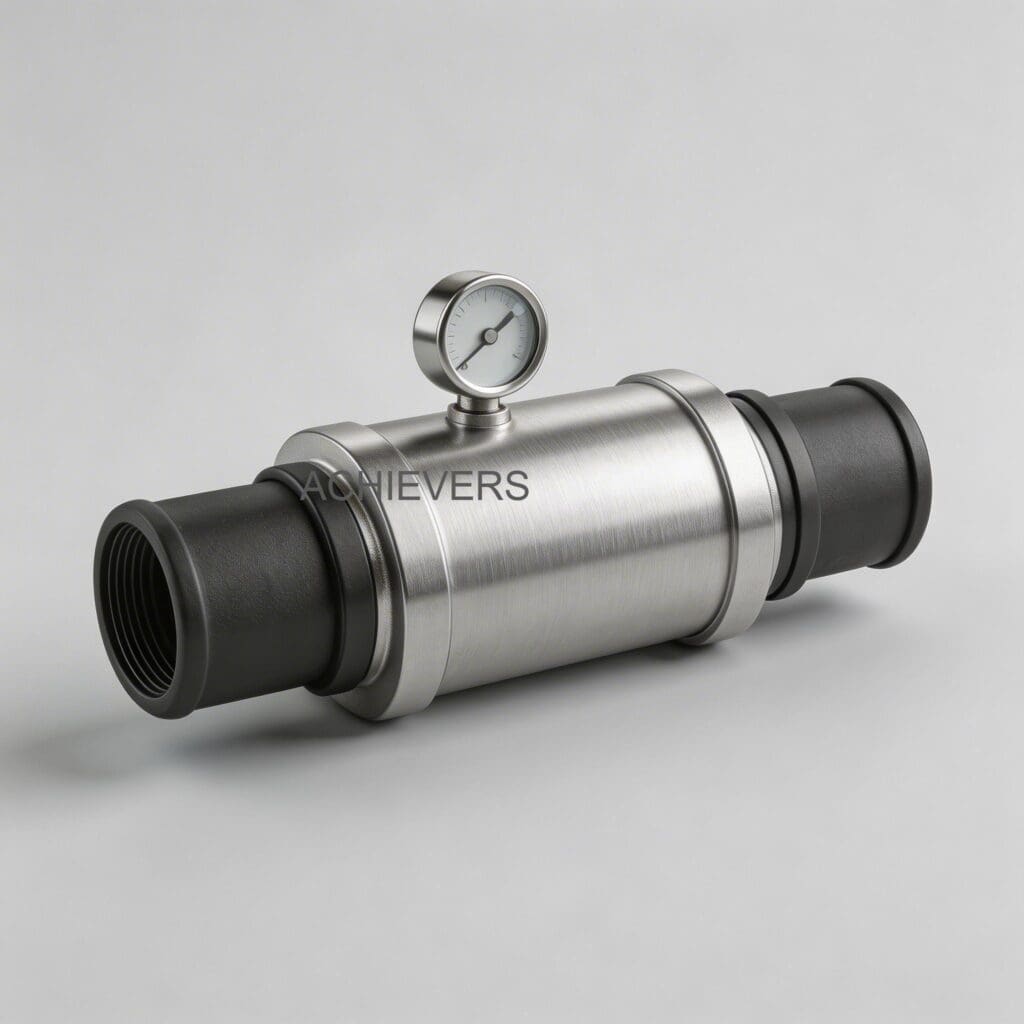
The foundation of accurate heavy fluid measurement lies in positive displacement technology. Our Oil Flow Meters utilize a precision-engineered oval gear outline. Unlike turbine meters that rely on fluid velocity—and are therefore highly sensitive to viscosity changes—oval gear meters measure intermittent flows and low flow rates by passing an exact, trapped volume of liquid with every revolution.
Because the internal moving parts are dynamically secured in tandem with the volume of fluid, these meters instantly move when there is smooth fluid motion and immediately stop when the flow ceases. This makes them exceptionally reliable for fluids of any consistency, from thin vegetable cooking oil to thick lubricating oil.
Within this product family, buyers must choose between two primary reporting mechanisms:
- Mechanical Registers: Utilizing a stepless calibration system, these meters require no external power. The physical register top can be easily removed and rotated to every 90º orientation for convenient display reading. They are the global standard for remote distribution depots and high-vibration mobile applications.
- Digital/Electronic Controllers: Utilizing the same mechanical oval gear measuring chamber, these variants feature electronic control heads. They translate gear rotation into high-resolution pulse outputs, allowing for remote monitoring, integration with a Liquid Batching System, and advanced data logging via PLC or SCADA systems in modern smart-plants.
2. Head-to-Head Specification Comparison
To make an informed engineering decision, you must understand how the core mechanical capabilities interface with either mechanical or digital readout options. Below is a strict technical breakdown based on exact Oil Flow Meters manufacturing specifications.
| Feature / Specification | Mechanical Oval Gear Meter | Digital / Electronic Oval Gear Meter |
| :— | :— | :— |
| Line Size Availability | 006mm to 150mm (1/4" to 6") | 006mm to 150mm (1/4" to 6") |
| Measuring Principle | Volumetric Oval Gear | Volumetric Oval Gear |
| Repeatability | Better than 0.02% | Better than 0.02% |
| Viscosity Handling | Any consistency (highly stable) | Any consistency (highly stable) |
| Display / Register | Mechanical counter, rotatable 90º | Digital LCD / SCADA integration |
| Calibration Framework | Stepless calibration system | Electronic multi-point calibration |
| Pressure Drop | Exceptionally low (ideal for gravity) | Exceptionally low (ideal for gravity) |
| Power Requirements | None (Process driven) | 24V DC / Battery powered |
| Strainer Integration | Provided with integrated mesh strainer | Provided with integrated mesh strainer |
| Units of Measurement | Liter, US Gal, UK Gal (factory set) | Digitally selectable/convertible |
Common Mistake to Avoid
Ignoring extreme temperature impacts on gravity-fed lines. While oval gear meters have an inherently low pressure drop that perfectly accommodates gravity and pump (in-line) applications, plant engineers often fail to account for the exponential increase in fluid viscosity during winter months or in sub-zero outdoor installations. Even with a low pressure drop meter, if the fluid becomes too thick for the pipe diameter, flow will stall. Always size the line and the meter for the highest expected viscosity state of your heavy oils.
3. Application Comparison Table
Different industries demand different compliance standards (such as ATEX, ISO, or API) and operational features. Here is how the two technologies align with real-world applications.
| Application Scenario | Recommended Option | Engineering Reason |
| :— | :— | :— |
| Unmanned Offshore Platforms | Digital Electronic | Allows for continuous remote monitoring via SCADA without requiring personnel to take manual readings in hazardous zones. |
| Flight Refueling Vehicles | Mechanical Register | High vibration tolerance, requires no localized power source, and maintains rigorous accuracy during field dispensing. |
| Petrochemical Process Control | Digital Electronic | Seamless integration into automated process loops and continuous batching systems preventing process vessel overflow. |
| Vegetable/Edible Oil Transfer | Digital Electronic | High sanitary requirements usually dictate automated CIP (Clean-In-Place) protocols where digital tracking is preferred. |
| Gravity-Fed Tank Unloading | Mechanical Register | Takes full advantage of the low pressure drop oval gear design in areas where electrical infrastructure is completely absent. |
| Automated Additive Injection | Digital Electronic | Electronic control available to precisely meter and trigger automatic additive injectors in real-time blending. |
| Lube Oil Blending Facilities | Digital Electronic | Can track and adjust for rapid batch changes, sending high-resolution pulse data to the central batch controller. |
| Remote Mining Fuel Depots | Mechanical Register | Extreme durability, rotatable display for awkward installation angles, and immune to power grid failures. |
4. Total Cost Comparison
Procurement teams must evaluate fluid handling investments over a lifecycle, rather than just upfront capital expenditure. Because pricing fluctuates globally based on tariffs, materials, and local distribution, the following comparison uses an industrial baseline scale rather than localized currency.
| Option | Initial Purchase Investment | Annual Maintenance Burden | Expected Operational Life | Best Fit For |
| :— | :— | :— | :— | :— |
| Mechanical Oval Gear | Moderate | Low (Periodic strainer cleaning) | 10–15+ Years | Harsh, remote environments requiring rugged, power-independent operation. |
| Digital/Electronic | Moderate to High | Low to Moderate (Sensor checks) | 10+ Years (Controller upgrades) | Smart-plants, automated blending, and tight-tolerance process control loops. |
| Digital with Batching | High | Moderate (System calibration) | 10+ Years | High-value custody transfer terminals and automated additive injection lines. |
| Mechanical (Large 6" Line) | High (Material cost) | Low | 15+ Years | High-volume pipeline offloading and maritime vessel refueling. |
Practical Selection Checklist
Before finalizing your procurement specifications for any heavy fluid metering system, run through this 5-point consultative checklist:
- [ ] Verify Flow Range vs. Line Size: Ensure your minimum and maximum flow rates fall within the optimal accuracy curve for the chosen pipe size (006mm to 150mm). Do not simply match pipe flanges if the flow rate is too low.
- [ ] Assess Power Reliability: If the installation site experiences frequent power outages, or is located in a highly explosive remote zone where running intrinsically safe conduit is cost-prohibitive, default to mechanical.
- [ ] Review Fluid Consistency: Confirm that the integrated mesh strainer is appropriately sized (mesh count) for your specific fluid—whether it is furnace oil, hydraulic oil, or vegetable cooking oil—to prevent gear jamming.
- ] Define Integration Needs: Do you need simple totalization, or do you need to feed data into a larger [Fuel Flow Meter network for overarching plant efficiency tracking?
- [ ] Confirm Reading Ergonomics: For mechanical units, verify the installation angle. The register top can be rotated every 90º, meaning you can install the meter vertically or horizontally without compromising readability.
5. Decision Guide: Which One for Your Plant?
Industrial engineers must bridge the gap between theoretical specifications and daily plant reality. Here are eight detailed plant scenarios and the exact engineering logic dictating the best meter choice.
- Aviation Refueling Operations
- Recommendation: Mechanical Oval Gear.
- Reasoning: Flight refueling vehicles operate on the tarmac in varying weather conditions. The mechanical meter is highly resistant to external elements caused by the installation environment. It provides a foolproof, power-independent readout for custody transfer directly at the wing.
- Petrochemical Blending Terminals
- Recommendation: Digital Electronic with Automatic Additive Injector.
- Reasoning: Chemical blending requires precise formulation. A digital unit tracks intermittent flows flawlessly and triggers additive pumps at exact volumetric intervals, ensuring product consistency and API standard compliance.
- Furnace Oil Burner Feed Lines
- Recommendation: Digital Electronic.
- Reasoning: Furnace oil feed lines often involve low flow rates to maintain continuous boiler operation. Digital meters can transmit real-time consumption data to the boiler control panel, optimizing combustion efficiency and reducing fuel waste.
- Off-Grid Mineral Oil Distribution Depots
- Recommendation: Mechanical Oval Gear.
- Reasoning: These facilities often rely on gravity feed or basic pump transfer without sophisticated PLCs. The mechanical meter offers stepless calibration, meaning operators can fine-tune accuracy on-site without software, maintaining repeatability better than 0.02%.
- Edible Oil and Food Processing Plants
- Recommendation: Digital Electronic.
- Reasoning: Vegetable cooking oil processing requires strict batch tracking for traceability and quality assurance. Digital outputs integrate easily into plant ERP systems for automated inventory management and yield calculations.
- Hydraulic Oil Testing Rigs
- Recommendation: Digital Electronic.
- Reasoning: Test rigs require high-frequency data logging to monitor hydraulic pump performance under varying loads. The digital meter’s pulse output provides the high-resolution data necessary for engineering analysis.
- Marine Engine Lubrication Systems
- Recommendation: Mechanical Oval Gear.
- Reasoning: Deep down in a ship's engine room, reliability and ease of serviceability are critical. The mechanical meter is designed for quick and easy maintenance, and its integrated mesh strainer protects the oval gears from engine wear debris.
- Hazardous Chemical Loading Racks
- Recommendation: Digital Electronic (ATEX Certified).
- Reasoning: When loading highly flammable derivatives, operators must remain behind safety barriers. Digital meters send exact volume data to the safe-zone control room, safely preventing tank vessel overflow without personnel exposure.
FAQ
Q: Do these meters lose accuracy when the fluid viscosity changes due to temperature?
A: No. Because they utilize a positive displacement oval gear outline, measuring accuracy actually stabilizes or improves with thicker fluids. They are designed to handle liquids of virtually any consistency without recalibration for viscosity swings.
Q: What is the typical maintenance requirement for these meters?
A: They are engineered for minimal maintenance and long operational life. The primary requirement is periodically cleaning the integrated mesh strainer to prevent particulate build-up from stalling the precision gears.
Q: Can these meters be used in systems without a transfer pump?
A: Yes. The oval gear design features an inherently low pressure drop, making it highly suitable for both in-line pump applications and gravity-fed distribution lines.
Q: If I install the meter in a vertical pipe, will the display be sideways?
A: No. The register top is designed for excellent serviceability and ergonomics; it can be easily removed and rotated to every 90º orientation, ensuring the display is always upright and readable.
Q: What line sizes and pipe configurations are available?
A: We manufacture these units to accommodate a wide range of industrial infrastructure, with line sizes spanning from 006mm up to 150mm (1/4" to 6"). They are available in flange type configurations.
Q: How precise is the mechanical calibration system?
A: The mechanical units feature a stepless calibration system. This allows for microscopic adjustments to the readout, ensuring accuracy remains highly predictable and repeatable (better than 0.02%) between calibration intervals.
Q: What kind of warranty and operational support is provided?
A: All units come with a standard 1-year warranty. Because we prioritize long-term plant reliability and spare parts availability, a 2-year extended warranty is also available on demand.
Selecting the right volumetric instrumentation protects your pumps, optimizes your process vessels, and stops inventory shrinkage in its tracks. If you are currently engineering a new fluid transfer line or upgrading a high-viscosity terminal, reach out to our technical team today. Provide us with your target fluid, expected viscosity range, minimum/maximum flow rates, and line size, and we will engineer a highly accurate measurement solution tailored perfectly to your global site conditions.