For industrial fleets, mining operations, and large-scale construction sites in India, diesel is rarely just a commodity—it is often the single largest variable operating expense. Yet, when Indian industrial buyers procure fuel handling equipment, the decision is frequently driven by the lowest upfront purchase price rather than the Total Cost of Ownership (TCO). This fundamental miscalculation ignores the staggering financial impact of micro-spillage, opportunistic pilferage, inaccurate metering, and equipment downtime.
When decanting thousands of liters of fuel daily into excavators, DG sets, dumpers, and transport fleets, a volumetric error of just 2% can translate to lakhs of rupees in unaccounted losses every month. This article breaks down the true TCO of industrial fuel handling, providing a rigorous financial framework to help plant managers, fleet operators, and procurement heads justify the shift from rudimentary pumps or manual drumming to engineered, legal metrology-approved dispensing solutions.
Quick ROI Snapshot
- Typical upfront investment: ₹85,000 – ₹1,50,000 (depending on flow rates and configurations)
- Average monthly fuel handled: 30,000 Liters
- Historical loss rate (manual/unmetered): 2.5% to 4%
- Value of recovered fuel: ₹67,500 to ₹1,08,000 per month
- Typical payback period: 45 to 90 days
1. Product Overview and Cost Context
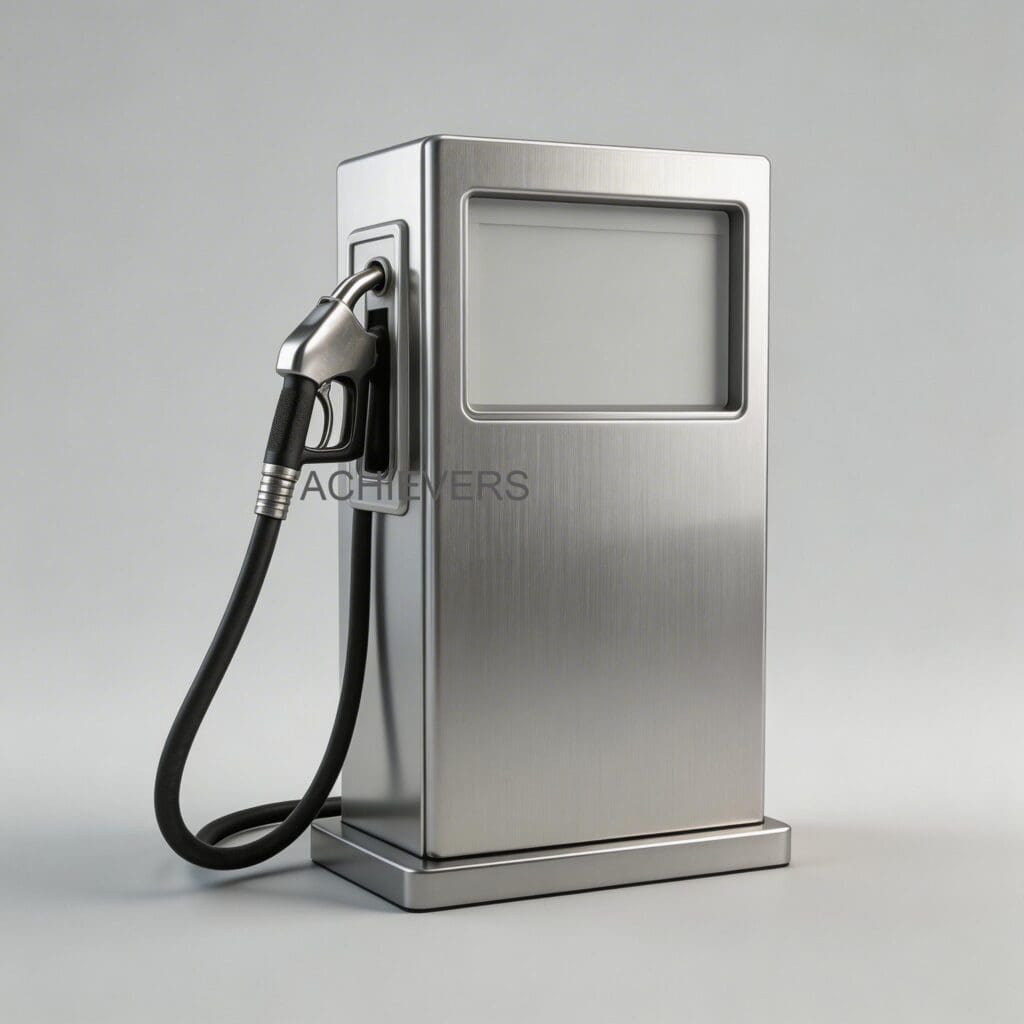
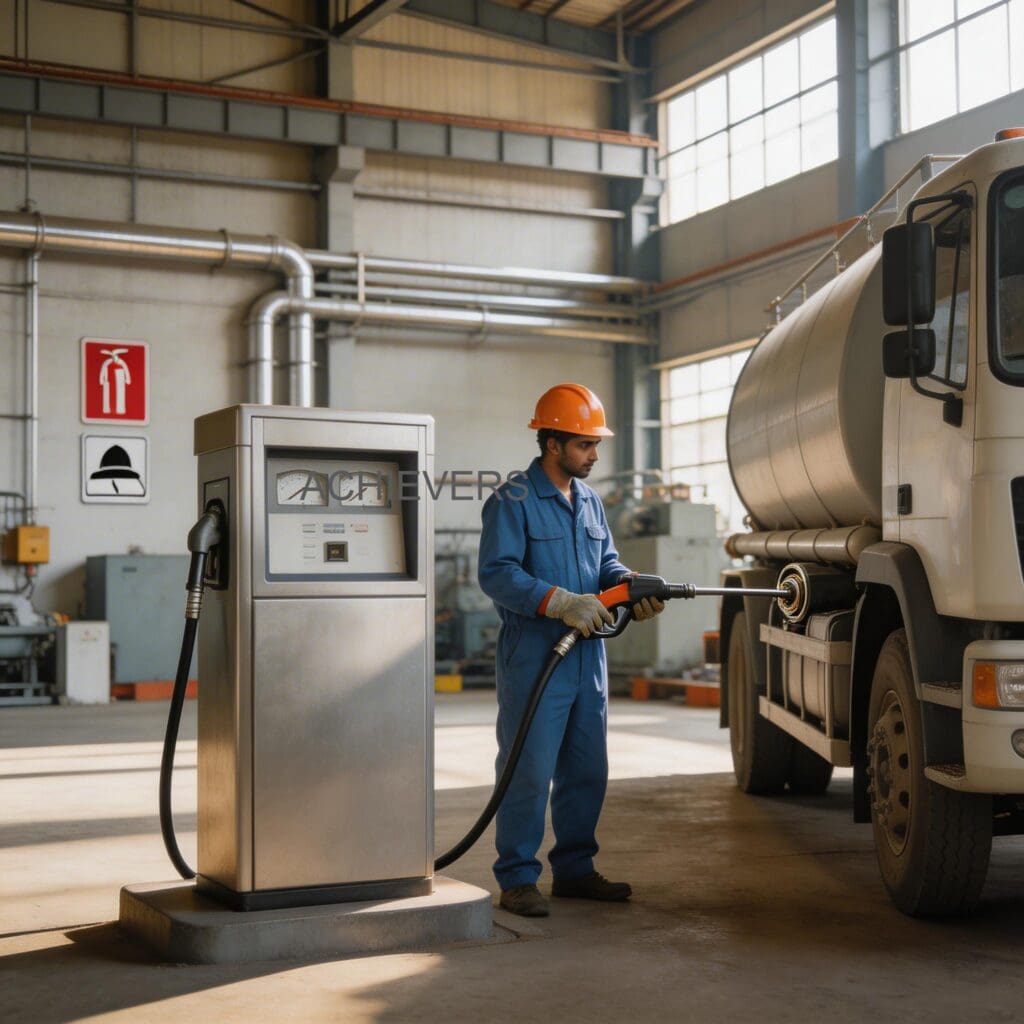
The Diesel Dispenser is an integrated, industrial-grade fuel delivery system designed to store, transport, and supply diesel in working ranges where permanent petroleum stations are unavailable. For infrastructure companies, mining enterprises, and remote rural operators, bringing the fuel directly to the heavy equipment is the only way to minimize non-productive idling time.
However, the core financial value of a high-quality dispenser lies in its measurement and control capabilities. Rudimentary transfer pumps tell you that fuel is moving; an advanced dispenser tells you exactly how much fuel moved, down to the decimal, and stops automatically when the preset volume or value is reached.
The Diesel Dispenser from Achievers incorporates high-precision batching technology and is certified by the Legal Metrology Department, Government of India. This certification is not a mere bureaucratic hurdle—it is a guaranteed safeguard against measurement drift.
To understand how product specifications directly influence financial outcomes, consider the following technical data:
| Feature / Specification | Technical Value | Financial Impact & TCO Benefit |
| — | — | — |
| Flow Rate | 20-60 L/min | Optimizes refueling time. A 300L excavator tank fills in under 6 minutes, drastically reducing machine idle time and operator waiting costs. |
| Volumetric Accuracy | ±0.5% (Legal Metrology Approved) | Ensures exact fuel accounting. Replaces theoretical fleet consumption with hard data, eliminating the 2-5% "ghost losses" common in rural Indian sites. |
| Power Source Flexibility | 12V DC, 24V DC, 220V AC | Can be powered by vehicle batteries (mobile bowsers) or grid/DG power (fixed sites). Eliminates the need to buy separate setups for mobile and static use. |
| Electronic Totalizer | Volume: 9 digits, Amount: 11 digits | Long-term tamper-proof record of fuel dispensed. Prevents operators from "resetting" meters to hide pilferage over long project lifespans. |
| Preset Functionality | Volume (0-99999.99L) & Price (0-99.99) | Allows automated batching. The operator inputs the exact quota, and the pump auto-stops, completely eliminating tank overflow and spillage waste. |
| Inlet/Outlet & Hose | 25mm port, 4-meter rubber hose | Heavy-duty 1-inch plumbing reduces pressure drops, while the 4m hose ensures reach in difficult terrains (deep pits, uneven construction roads). |
2. Total Cost of Ownership Breakdown
Evaluating a Diesel Dispenser based solely on its invoice value is a flawed procurement strategy. In the harsh operating environments of India—characterized by high ambient temperatures, heavy particulate dust, and severe voltage fluctuations—the operational costs quickly outpace the capital expenditure.
Below is a detailed Total Cost of Ownership breakdown over a standard 5-year equipment lifecycle for an industrial fueling application.
| Cost Component | Typical Range (INR) | Frequency | Notes on Indian Industrial Context |
| — | — | — | — |
| Capital Expenditure (CapEx) | ₹85,000 – ₹1,50,000 | Once | Varies based on DC vs. AC power, skid-mounting, and customized preset electronics. |
| Installation & Commissioning | ₹5,000 – ₹12,000 | Once | Includes electrical termination, structural mounting on bowsers, and initial pipeline flushing. |
| Legal Metrology Stamping | ₹2,000 – ₹5,000 | Annually | Mandatory under Indian Weights and Measures Act. Ensures the ±0.5% accuracy is maintained legally. |
| Power / Energy Costs | ₹6,000 – ₹10,000 | Annually | The electrical cost of running the 220V AC motor or charging the DC batteries for bowser setups. |
| Consumables (Filters/Hoses) | ₹8,000 – ₹15,000 | Annually | Indian diesel often contains water and particulate matter. Frequent filter changes and replacing the 4m rubber hose due to site abrasion. |
| Preventative Maintenance (AMC) | ₹10,000 – ₹18,000 | Annually | Includes electronics calibration, motor servicing, and clearing blockages in the flow meter chamber. |
| Unplanned Downtime Cost | ₹5,000 – ₹50,000+ | Per Event | If the dispenser fails, excavators sit idle. The TCO impact of non-dispensing is massive in mining and construction. |
| Spillage & Pilferage Cost | Nominal (Near Zero) | Ongoing | With ±0.5% accuracy and preset auto-shutoff, the cost of wasted diesel is virtually eliminated. |
Common Mistake to Avoid
Many procurement teams authorize the purchase of cheap, imported transfer pumps that feature uncalibrated mechanical meters. These meters are not Legal Metrology approved and typically drift to a ±3% to ±5% error margin within months of exposure to Indian summer heat and site vibrations. A 5% drift on 50,000 liters of diesel a month equals 2,500 liters of "invisible" loss. Always insist on Legal Metrology Government of India approved units.
3. ROI Calculation: Real-World Indian Example
To move beyond theory, let us conduct a rigorous, step-by-step ROI calculation based on a mid-sized civil construction contractor operating highway projects in Maharashtra.
The Scenario:
The contractor operates 8 excavators, 4 loaders, and several large DG sets. They consume approximately 40,000 Liters of diesel per month. Currently, fuel is brought to the site in barrels and manually decanted using basic hand pumps or gravity hoses. There is no automated metering.
The 8-Step Payback Calculation:
- Establish Baseline Monthly Fuel Volume: 40,000 Liters.
- Determine Current Fuel Cost: Assuming a standard industrial diesel rate of ₹90 per Liter. Total monthly fuel spend = ₹36,00,000.
- Calculate Historical Loss Rate: Based on industry averages for manual drumming in India, spillage (overflowing tanks, leaking hoses) and opportunistic pilferage account for a conservative 3% loss.
- Quantify Financial Losses: 3% of 40,000 Liters = 1,200 Liters lost per month. 1,200 Liters x ₹90 = ₹1,08,000 in monthly financial leakage.
- Calculate Investment Cost: The contractor procures a Legal Metrology approved Achievers Dispenser equipped with preset batching and a 24V DC motor (for mobile bowser mounting). Estimated landed cost = ₹1,20,000.
- Calculate Post-Installation Savings: The Achievers unit boasts an accuracy of ±0.5% and preset auto-shutoff, reducing spillage to absolute zero and restricting measurement variance to just 0.5% (200 Liters). Net volume saved = 1,000 Liters per month.
- Calculate Monthly Financial Gain: 1,000 Liters x ₹90 = ₹90,000 saved per month.
- Determine Simple Payback Period: Total Investment (₹1,20,000) / Monthly Savings (₹90,000) = 1.33 Months (approx. 40 days).
By the second month of operation, the dispensing unit has completely paid for itself. For the remainder of its multi-year operational life, it is adding ₹90,000 directly to the contractor's bottom line every single month.
4. Cost Comparison: Available Approaches
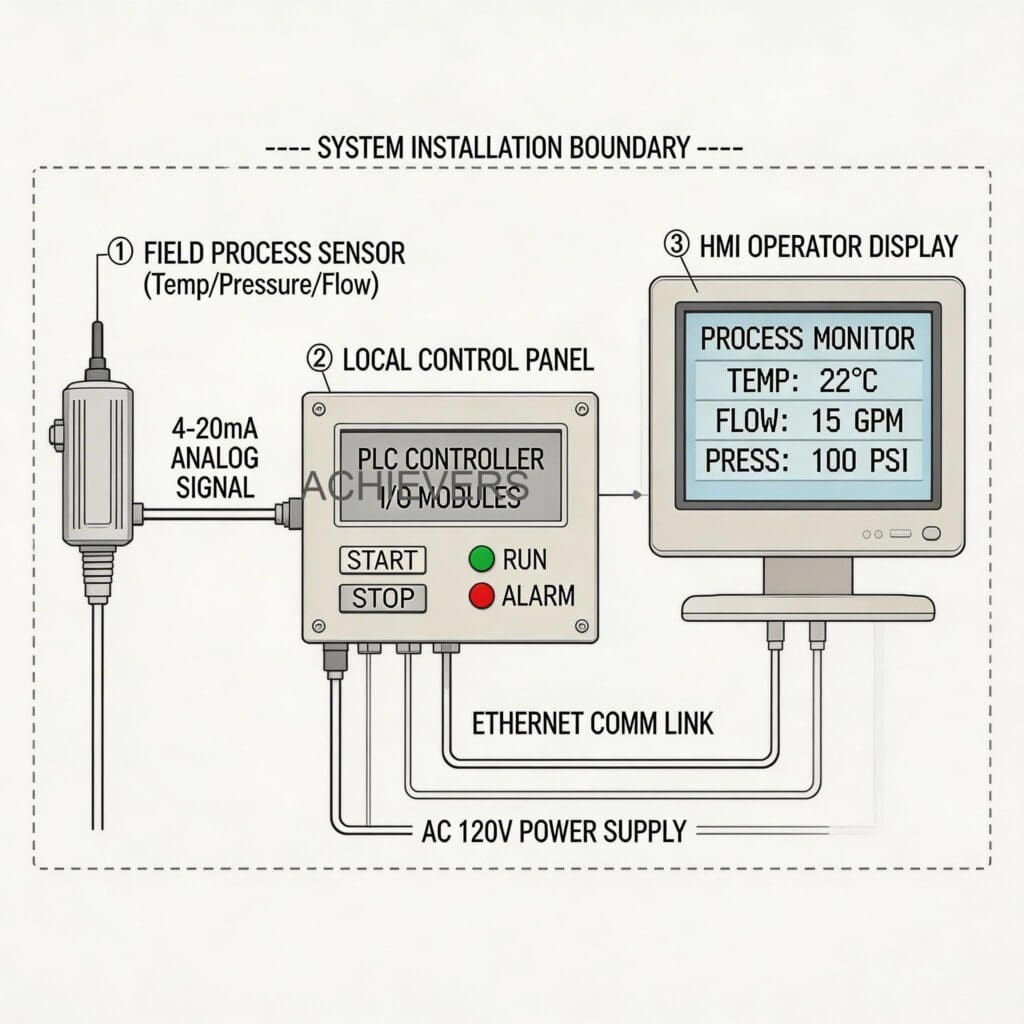
When building a fluid handling architecture, decision-makers generally have four paths. Here is how they compare on Total Cost of Ownership and operational reliability over a 3-year horizon.
| Dispensing Approach | Upfront Capital Cost | Annual Maintenance & Spares | Metering Accuracy | Risk of Pilferage / Spillage | Best Suited For |
| — | — | — | — | — | — |
| Manual Drumming / Hand Pumps | Very Low (₹2,000 – ₹5,000) | Low | None | Extremely High (3-5% loss) | Small farms, infrequent emergency backup. |
| Basic Electric Transfer Pump (No Meter) | Low (₹15,000 – ₹25,000) | Medium | None | High (Overflow spills are common) | Transferring bulk fuel between storage tanks where measurement happens elsewhere. |
| Standard Pump with Unapproved Mechanical Meter | Medium (₹30,000 – ₹50,000) | High (Frequent replacements) | Poor (±2% to ±5%, drifts heavily) | Medium (Meter tampering is easy) | Non-critical applications where approximate volume is acceptable. |
| Achievers Legal Metrology Approved Dispenser | Premium (₹85,000+) | Low (Highly durable components) | Excellent (±0.5% guaranteed) | Near Zero (Preset stops, tamper-proof totalizers) | Fleet refueling, mining, civil construction, factory DG sets. |
For businesses requiring localized measurement but perhaps not full dispensing automation, integrating a high-quality Fuel Flow Meter into existing pump setups is an alternative stepping stone toward better loss control.
5. Hidden Costs to Budget For
When planning the TCO for industrial fueling systems in India, buyers frequently overlook site-specific hidden costs. Budgeting for these in advance prevents project overruns and ensures smooth deployment.
- Power Conditioning Equipment: Rural Indian project sites are notorious for poor power quality. If you are opting for the AC 220V dispenser model, running it directly off erratic grid power or unsynchronized DG sets can fry the preset electronics. Budgeting for a dedicated voltage stabilizer (approx. ₹5,000 – ₹8,000) is critical to protect the control board. For sites with no reliable power, mounting a 12V/24V unit on a Mobile Fuel Dispenser setup is more cost-effective.
- Advanced Fuel Filtration: Indian diesel often suffers from contamination during transit—specifically water ingress during monsoons and silica dust in mining zones. Pumping contaminated diesel at 60L/min directly into your expensive earthmovers will destroy their common-rail injectors. You must budget for heavy-duty water separators and particulate filters upstream of the dispenser.
- Routine Legal Metrology Calibration: To maintain the ±0.5% accuracy, the flow meter must be tested and stamped by government officials periodically. Factor in the nominal government fees, but more importantly, the logistical cost of bringing the inspector to remote sites or taking the meter to the lab.
- Hose and Nozzle Wear and Tear: The 4-meter rubber hose will be dragged across sharp rocks, hot tarmac, and mud. While the dispenser itself will last for years, the hose and the auto-shutoff nozzle are wear items. Budget for a replacement set every 12 to 18 months to prevent high-pressure leaks.
- Civil and Structural Mounting: A dispenser cannot be placed on loose soil. If it is a static installation, you must construct a concrete plinth. If it is mobile, it requires custom steel fabrication to mount securely onto the diesel bowser to withstand off-road vibrations.
- Operator Training: The equipment features a highly accurate 9-digit volume and 11-digit amount preset interface. If operators are not trained to utilize the preset batching features, they will bypass the automation and continue manual filling, negating the spillage protection. Factor in one day of localized training.
6. How to Justify the Purchase to Management
Engineers and plant managers often understand the technical necessity of superior fuel handling, but they struggle to get CAPEX approval from finance teams. The key is to frame the purchase not as an "equipment upgrade," but as a "revenue recovery mechanism." Finance teams respond to reduced risk and rapid payback periods.
Follow this systematic procedure to build an irrefutable business case for procurement:
- Conduct a Baseline Audit: Collect fuel purchase invoices for the last 90 days. Compare the total volume purchased against the theoretical consumption of your fleet based on engine hours. The gap between these two numbers is your "unaccounted fuel."
- Quantify the Financial Leakage: Multiply the unaccounted fuel volume by the current local diesel price. Present this as a monthly recurring cash loss.
- Highlight Safety and PESO Compliance Risks: Point out the liabilities of manual diesel handling. Spilled diesel is a severe fire hazard and a violation of environmental and Petroleum and Explosives Safety Organization (PESO) guidelines. Mention that messy barrel operations increase insurance premiums and safety audit failures.
- Propose the Achievers Solution: Introduce the legal metrology-approved dispenser. Emphasize the ±0.5% accuracy and the tamper-proof 11-digit totalizer. Explain that preset batching removes human error from the equation entirely.
- Present the TCO and ROI Calculation: Use the exact methodology outlined in Section 3 of this article. Show that the equipment pays for itself from the recovered losses, typically within the same financial quarter.
- Highlight Equipment Uptime Gains: Detail how the 60L/min flow rate reduces the time each machine spends waiting for fuel. If an excavator costs ₹3,000 per hour to rent, saving 20 minutes a day on refueling adds up to immense project savings over a year.
The Management Decision Checklist
Use this checklist during your internal meetings to confirm you have evaluated all parameters before raising the Purchase Order:
- [ ] Have we quantified our current monthly fuel spillage/theft percentage?
- [ ] Is the proposed dispensing unit Legal Metrology approved by the Govt. of India?
- [ ] Does the unit feature preset capabilities for both Volume and Amount?
- [ ] Have we chosen the correct voltage (12V/24V for mobile bowsers, 220V for static tanks)?
- [ ] Is the 20-60 L/min flow rate adequate for our largest vehicle tanks?
- [ ] Have we factored in upstream fuel filtration to protect the meter?
FAQ
Q: Why is Legal Metrology approval so critical for internal fleet refueling?
A: Even if you are not selling fuel commercially, Legal Metrology approval guarantees the internal flow meter has been independently tested to strict ±0.5% tolerances. Unapproved meters degrade rapidly, leading to inaccurate fleet efficiency data and masking ongoing pilferage.
Q: Can the Achievers dispenser handle the voltage fluctuations common at rural Indian construction sites?
A: The DC models (12V/24V) run off vehicle batteries, rendering them immune to grid fluctuations. For the AC 220V models, while the motors are robust, we strongly advise installing a dedicated voltage stabilizer to protect the sensitive preset electronic boards from sudden DG set spikes.
Q: What happens if the internal electronic totalizer is tampered with by the operator?
A: The preset totalizer is designed with tamper-evident features and high-digit capacities (9 digits for volume, 11 for amount). Once calibrated and sealed, it cannot be manually reset or bypassed without breaking the physical metrology seals, making theft immediately obvious to management.
Q: How frequently does the dispenser require maintenance?
A: For typical Indian conditions, we recommend a basic preventative maintenance check every 6 months. This includes cleaning the internal strainers, checking the rubber hose for abrasions, and verifying electrical connections. Recalibration should be done annually as per government norms.
Q: Can this dispenser handle biodiesel blends or contaminated diesel?
A: The unit is designed for standard high-speed diesel. While it can handle minor impurities, pumping heavily contaminated fuel or water-logged diesel will damage the meter's internal components. Always install high-capacity water separators and micron filters before the dispenser inlet.
Q: Is the 4-meter rubber hose sufficient for heavy machinery?
A: A 4-meter hose is the optimal balance between reach and pressure drop. It allows operators to comfortably reach the fuel tanks of large excavators and dumpers without having to maneuver the bowser dangerously close to the equipment.
Q: What is the warranty period on these units?
A: Achievers provides a standard 1-year warranty on the dispensing units, which covers manufacturing defects. Recognizing the harsh conditions of industrial use, a 2-year extended warranty is also available on demand for added peace of mind.
Stop letting unaccounted fuel drain your project's profitability. If your operation decants thousands of liters of diesel monthly, exact measurement isn't a luxury—it is a financial necessity. Contact the technical team at Achievers Pumps and Valves today with your required flow capacity, power source, and site conditions, and let us design a custom dispensing solution that pays for itself in months.