An unplanned failure of dispensing equipment brings site operations to a grinding halt. Whether you are fuelling excavators at a remote mining site, managing a fleet of heavy commercial vehicles, or running generator sets at a manufacturing plant, equipment downtime costs money. More insidiously, accuracy degradation costs even more. If a meter loses its ±0.5% accuracy and over-dispenses by just 1% on a daily volume of 10,000 litres, you are losing ₹9,000 every single day (assuming diesel at ₹90/litre). That translates to an invisible loss of ₹2,70,000 per month.
A robust preventive maintenance strategy shifts your operational focus from reactive firefighting to predictive reliability. By implementing a systematic Fuel Dispensers maintenance guide, plant managers and procurement heads can protect their capital investment—which can range from ₹44,000 for standard units to over ₹2,00,000 for high-volume flameproof models—ensure Legal Metrology compliance, and eliminate expensive fuel shrinkage.
Quick ROI Snapshot
- Typical payback period on PM program: Immediate (the moment you avert your first inaccurate batch)
- Annual savings on fuel shrinkage: ₹1,00,000 to ₹5,00,000+ depending on daily dispensing volume
- Equipment lifespan extension: 3 to 5 additional years of highly accurate service
1. Product Overview and Critical Wear Components
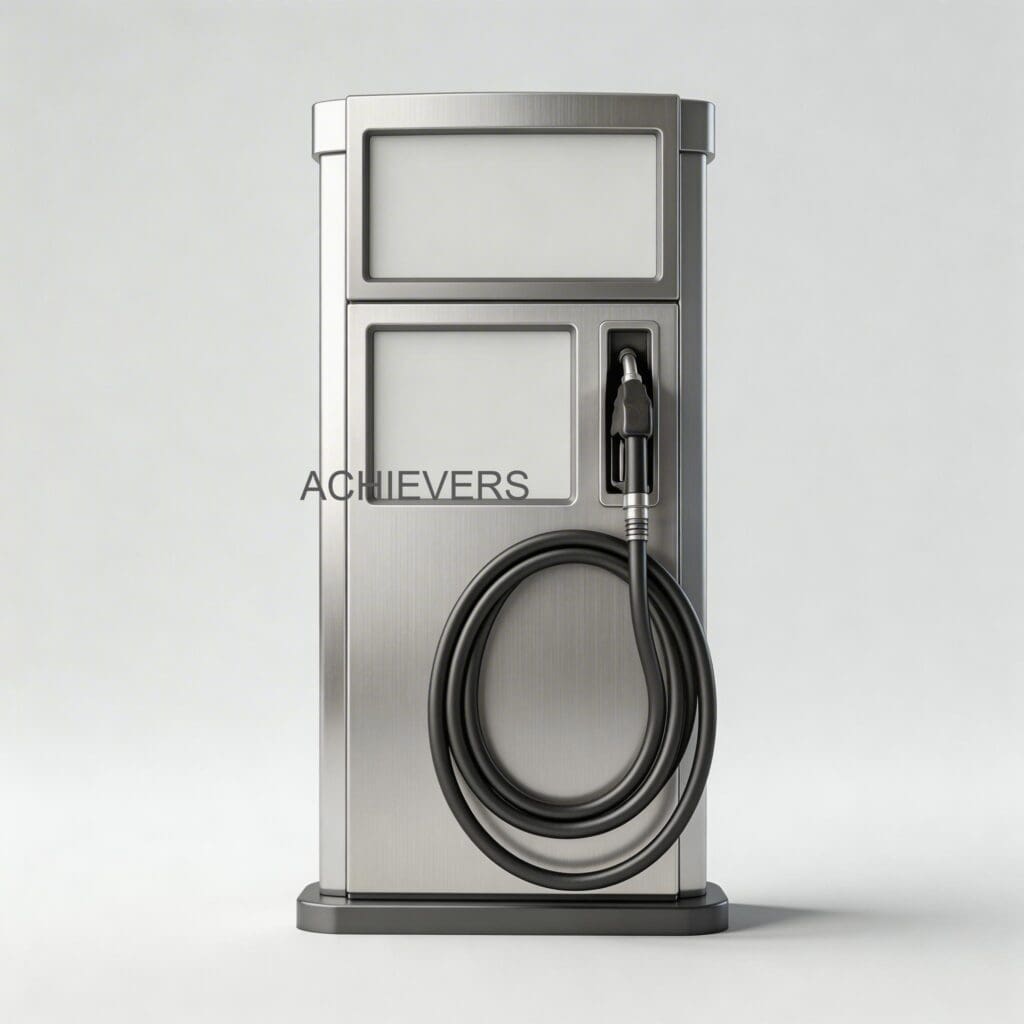
Achievers Pumps (a brand of Chintan Engineers) manufactures heavy-duty Fuel Dispensers specifically engineered for harsh industrial environments. Every unit, from the standard CE-117 model to the heavy-duty CE-202 series, integrates a self-priming vane or gear transfer pump, a high-precision piston or oval-gear flow meter, an inline filter, and a digital batch/cumulative totalizer.
While the rugged powder-coated steel enclosures protect internal mechanics, the internal wetted parts and external delivery components inevitably experience wear. Understanding how to maintain a diesel fuel dispenser for accuracy starts with identifying these high-stress zones.
The 4-meter rubber delivery hose and auto shut-off nozzle face constant physical manipulation, bending, and abrasive dragging across concrete yards. Internally, the inline filter works continuously to capture rust, silica dust, and adulterants common in Indian bulk fuel supplies. The flow meter’s internal mechanisms—which deliver the critical ±0.1% repeatability—rely on clean fluid to prevent scoring and loss of volumetric precision.
Common Mistake to Avoid
Bypassing a clogged inline filter. Site operators often remove the filter element when dispensing flow rates drop in order to speed up vehicle filling. This allows abrasive silica and rust particles directly into the precision flow meter and pump chamber. This causes catastrophic scoring, immediate loss of metering accuracy, and premature pump failure. Always clean or replace the filter; never bypass it.
2. Preventive Maintenance Schedule
To guarantee peak performance, sites must adopt a strict preventive maintenance checklist for industrial fuel dispensers. This schedule distributes tasks across daily operators and specialized maintenance personnel.
| Task | Frequency | Responsible | Est. Time | Notes |
| — | — | — | — | — |
| Visual Leak Inspection | Daily | Operator | 5 mins | Check beneath the unit, at hose connections, and the nozzle swivel for damp spots. |
| Display & Totalizer Verification | Daily | Operator | 2 mins | Ensure the backlit display is fully legible and the batch totalizer resets to zero properly. |
| Nozzle Spout & Auto Shut-off Check | Weekly | Maintenance | 10 mins | Inspect spout for physical deformation. Ensure the auto-shutoff mechanism triggers when fuel reaches the tip. |
| Delivery Hose Physical Inspection | Weekly | Maintenance | 10 mins | Look for bulging, deep abrasions exposing wire braid, or cracking near the crimped brass fittings. |
| Inline Filter Element Cleaning | Monthly | Maintenance | 20 mins | Open filter housing, remove the mesh/element, wash in clean solvent, and blow out with compressed air. |
| Pump Belt & Coupling Check | Monthly | Maintenance | 15 mins | For belt-driven or coupled models, check for proper tension, alignment, and absence of fraying. |
| Electrical Terminal & Grounding Check | Quarterly | Electrician | 20 mins | Tighten 220V/440V terminals. Verify earth grounding resistance is under 1 ohm to prevent static hazards. |
| Flow Meter Accuracy Verification | Quarterly | Calibration Tech | 45 mins | Dispense fuel into a certified 20L or 50L proving measure to verify ±0.5% accuracy. |
| Tank Bottom Moisture Drain | Quarterly | Maintenance | 30 mins | Drain water and sludge from the main storage tank sump to prevent moisture from entering the dispenser. |
| Legal Metrology Re-Stamping | Annually | Govt. Inspector | 2 Hours | Mandatory compliance check by the Legal Metrology Department to renew commercial dispensing certification. |
3. Step-by-Step Procedures for Key Tasks
Establishing standard operating procedures (SOPs) ensures that your maintenance team executes tasks safely and consistently. Below are two critical procedures.
Procedure 1: Fuel Dispenser Filter Replacement Schedule and Cleaning
Maintaining a strict fuel dispenser filter replacement schedule is your primary defense against flow meter damage.
- Isolate Power: Turn off the main electrical isolator switch providing 220V/440V AC to the dispenser. Apply a Lockout/Tagout (LOTO) padlock.
- Close Supply Valves: Shut the isolation ball valve on the suction line coming from the bulk storage tank to prevent gravity feeding.
- Relieve Pressure: Squeeze the dispensing nozzle trigger into a safe container to relieve any residual line pressure.
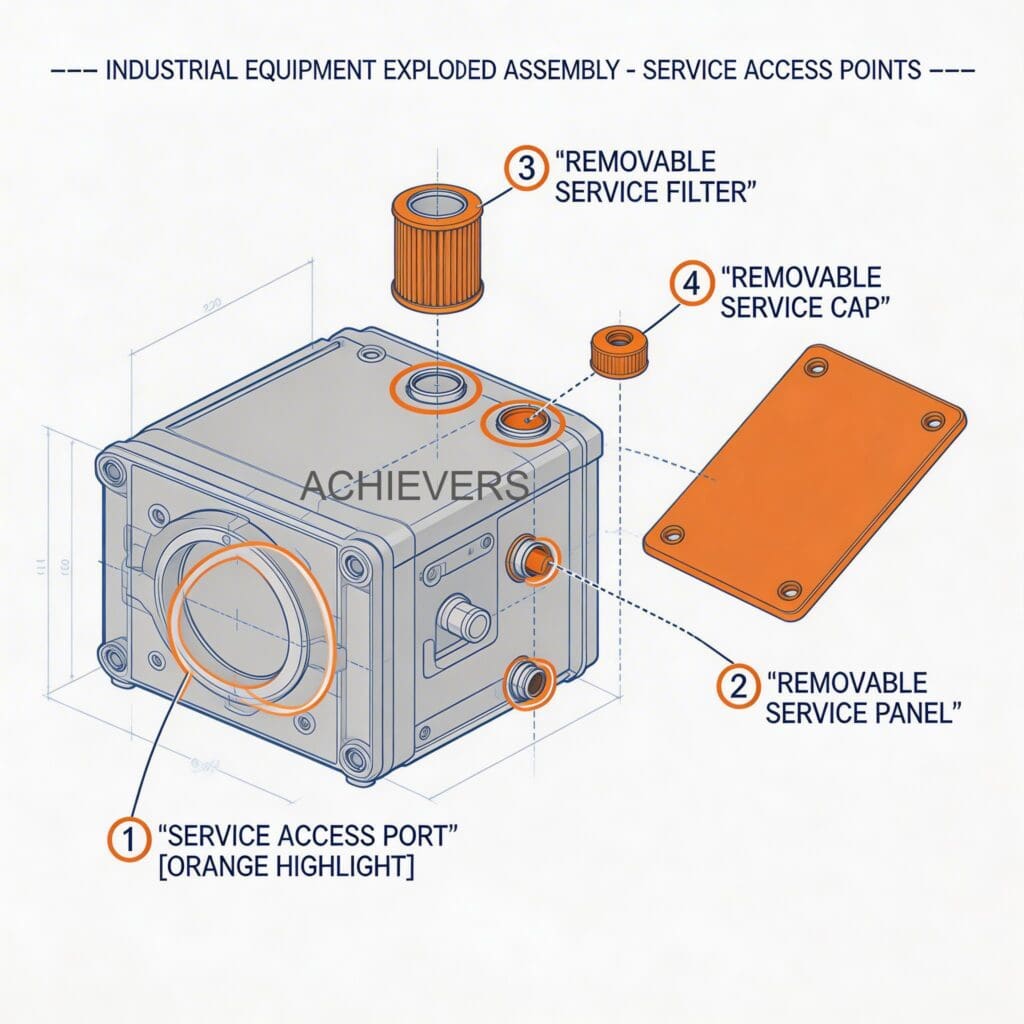
- Access the Filter Housing: Using the appropriate spanner, carefully loosen the bolts securing the inline filter cap. Keep an oil drip tray beneath the housing to catch minor spills.
- Extract the Element: Remove the filter cap and pull out the cylindrical mesh strainer or paper filter element. Inspect the housing interior for heavy sludge or metallic flakes.
- Clean or Replace: If using a cleanable stainless-steel mesh, wash it gently in a clean solvent (like fresh diesel or kerosene) and use low-pressure compressed air from the inside out to dislodge trapped debris. If using a disposable element, discard and replace it.
- Inspect and Lubricate Seals: Check the filter cap O-ring for flattening, cuts, or swelling. Apply a light coat of fuel-compatible grease before re-seating it.
- Reassemble and Prime: Insert the filter, bolt down the cap evenly in a star pattern. Open the supply valve, turn on the power, and run the pump briefly while squeezing the nozzle into a bucket to purge air from the system and check for leaks.
Procedure 2: Fuel Dispenser Hose and Nozzle Inspection Checklist
Hoses and nozzles are the most frequently replaced consumables. Implementing a strict fuel dispenser hose and nozzle inspection checklist prevents environmental spills and operator hazards.
- De-energize Equipment: Turn off the pump motor to ensure no accidental fuel discharge occurs during the inspection.
- Inspect the Hose Outer Cover: Run a gloved hand along the entire 4-meter rubber hose. Feel for soft spots, blisters, or kinks that indicate internal structural failure.
- Check the Crimped Fittings: Examine the brass or stainless steel swaged ends where the hose connects to the dispenser body and the nozzle. Look for weeping fuel or loose crimps.
- Examine the Swivel Joint: Rotate the nozzle swivel (if fitted). It should move freely without binding. Binding indicates dried O-rings or debris, which can lead to hose twisting.
- Inspect the Nozzle Spout: Check the metal dispensing tube. If it is bent, flattened, or scored from being dropped, it must be replaced as this can alter fluid dynamics and cause splashing.
- Verify the Sensing Port: Look at the small vacuum sensing hole near the tip of the nozzle spout. Use a pin to clear out any dried dirt or mud. If this hole is blocked, the automatic shut-off will fail.
- Test Trigger and Latch: Actuate the trigger and the hold-open latch. The mechanism should be smooth, and the latch should disengage instantly when the trigger is pulled or the unit shuts off.
- Live Functional Test: Turn the pump on and dispense fuel into a test bucket. Ensure the auto-shutoff actuates reliably when the tip is submerged in the rising fuel level.
4. On-Site Spare Parts to Stock
Relying entirely on a fuel dispensers service and spares supplier for emergency breakdowns guarantees unacceptable downtime, especially for remote Indian mining and construction sites. Stocking strategic consumables onsite ensures you can restore operation in hours, not days.
| Part Description | Type | Recommended Qty | When to Replace |
| — | — | — | — |
| Inline Filter Elements / Mesh | Consumable | 3 per dispenser | Every 3-6 months, or if flow rate drops by 20% |
| Auto Shut-off Fuel Nozzles | High-Wear | 1 per site | Spout damage, continuous leaking, or failed shut-off |
| 4-Meter Rubber Delivery Hose | High-Wear | 1 per site | Deep abrasions, bulging, or weeping at crimped fittings |
| Pump Vanes / Gears set | Internal Wear | 1 set per 5 units | Every 2-3 years, or if pump loses self-priming capability |
| O-Ring & Seal Kit | Consumable | 2 sets per site | During any internal maintenance or if leaks develop at joints |
| Digital Display Board | Electronic | 1 per site | If display digits fail, flicker, or succumb to moisture damage |
5. Diagnosing Maintenance-Related Failures
When issues arise, quick diagnosis prevents minor faults from escalating into major component replacements.
| Failure Symptom | Missed Maintenance Task | Corrective Action |
| — | — | — |
| Flow rate drops significantly (e.g., from 60 LPM to 30 LPM) | Routine filter cleaning / Tank bottom draining | Isolate power, open filter housing, and clean/replace the clogged inline filter. |
| Meter dispenses less fuel than the display indicates | Flow meter calibration / Fluid cleanliness | Perform volumetric calibration check. Inspect internal meter chamber for scored components. |
| Pump motor hums but fails to rotate or dispense | Electrical terminal checks / Voltage verification | Check for single-phasing on 440V models or low voltage. Check for jammed pump rotor due to debris. |
| Fuel leaks continuously from the nozzle tip after shut-off | Nozzle inspection and cleaning | Replace the main poppet valve inside the nozzle or replace the entire nozzle assembly. |
| Pump makes excessive grinding or cavitation noise | Suction line inspection / Strainer cleaning | Clear suction line blockages. Ensure bulk tank has adequate fuel level to prevent air ingress. |
| Digital display flickers, resets randomly, or goes blank | Enclosure sealing / Electrical grounding | Check for moisture ingress in the panel. Secure all loose wire connections and verify stable power supply. |

6. Extending Service Life in Indian Conditions
Indian industrial sites present a unique combination of environmental and operational challenges. Applying these specific Fuel Dispensers maintenance in India strategies will drastically improve equipment longevity.
Managing Heat and Dust:
In construction and mining environments, fine silica dust coats everything. If this dust enters the electrical enclosure, it can cause thermal retention and premature failure of the digital totalizer. Keep the powder-coated enclosure doors firmly locked. Ensure all external cable glands are tightly secured to maintain the panel's protective IP rating.
Combating Power Fluctuations:
Voltage dips and power surges are common across industrial grids and generator sets. For standard 220V AC and heavy-duty 440V AC dispensers, running the equipment on severe under-voltage will cause the motor to overheat and trip. Install dedicated voltage stabilizers or industrial surge protectors at the power source, especially if your dispenser features a receipt printer or sensitive batching electronics.
Handling Contaminated Fuel:
The reality of fuel transport often involves adulteration or high particulate contamination. Never rely solely on the dispenser’s internal filter. Install heavy-duty water-separator filters directly on the bulk storage tank's outlet. Furthermore, implement a strict schedule to drain water condensation and sludge from the bottom of your bulk tanks, particularly right after the monsoon season.
Monsoon and Humidity Protection:
Heavy rains and high humidity accelerate rust and threaten electronics. Inspect the powder-coated steel enclosure regularly; touch up any deep scratches with anti-rust paint. Apply dielectric grease to internal electrical terminals to prevent corrosion, and ensure the backlit display cover remains crack-free to prevent water ingress.
FAQ
Q: How often must we verify the calibration of our dispensing equipment?
A: Internally, you should perform an accuracy check using a certified 20L proving measure every month. Officially, Legal Metrology requires re-stamping and certification annually for commercial transactions.
Q: The dispensing flow rate has slowed down dramatically. Is the pump failing?
A: Rarely. In 90% of cases, a sudden drop in flow rate indicates a clogged inline filter or a blocked suction strainer in your bulk tank. Clean or replace the filters before investigating the pump.
Q: Can we use our diesel dispenser for other liquids like water or chemicals?
A: Absolutely not. The internal cast iron pump components, vanes, and meter seals are specifically designed for the lubricating properties of diesel and kerosene. Pumping water will cause immediate rusting and catastrophic failure.
Q: Our auto shut-off nozzle keeps clicking off before the vehicle tank is full. Why?
A: This usually happens if the small vacuum sensing port at the tip of the nozzle is partially blocked by mud or diesel sludge, or if fuel is splashing back rapidly in a narrow vehicle fill-pipe. Clean the nozzle tip carefully with a pin.
Q: What is the expected service life of the flow meter?
A: With clean fuel and strict adherence to filter replacement schedules, a high-quality piston or oval-gear flow meter can easily last 5 to 7 years before requiring an internal seal rebuild or recalibration.
Q: Are standard dispensers safe to use in environments with flammable gases?
A: No. If you are operating in hazardous zones (like petrochemical plants or underground mines), you must specify a custom CE-201/215 series dispenser built with flameproof (FLP) motors and PESO-approved enclosures.
Q: The digital totalizer is blank but the pump still runs. What should I check?
A: Check the internal DC power supply to the display board, verify the ribbon cable connections are secure, and inspect the panel for signs of moisture ingress. Ensure your site's earthing is properly connected.
Routine maintenance is the most cost-effective way to secure your fluid handling investments and guarantee absolute accountability of your diesel stocks. If your existing dispensing systems are suffering from recurring breakdowns, inaccurate metering, or you require heavy-duty equipment tailored for specialized flow rates and power setups, we are here to assist. Contact Achievers Pumps and Valves today with your required flow capacity, application details, and site conditions, and our engineering team will help you configure the ideal dispensing solution.