When plant managers and industrial procurement heads evaluate fluid handling investments, the conversation often begins and ends with the upfront capital expenditure (CAPEX). However, in the high-stakes environment of petrochemical refining, aviation refueling, and continuous process manufacturing, the initial purchase price of an instrument represents only a fraction of its true financial footprint.
If you are looking to buy oil flow meters for industrial metering, evaluating the Total Cost of Ownership (TCO) is not just a best practice—it is a critical financial safeguard. A meter that drifts out of calibration by even a fraction of a percent can silently leak tens of thousands of dollars in unbilled product or ruined batches over a single financial quarter.
This comprehensive guide is designed for engineering and operations leaders across global markets. We will break down the real cost drivers of Oil Flow Meters, quantify the often-ignored financial impact of accuracy loss, and provide a clear, actionable payback model. By transitioning from a CAPEX-centric view to a lifecycle-focused TCO approach, you can defend your procurement decisions, optimize your process control, and maximize the return on your fluid handling infrastructure.
1. Product Overview and Cost Context
Before we can calculate the TCO of any measurement device, we must understand the mechanical realities of the instrument itself. Industrial flow measurement requires robust precision. Fluids such as mineral oil, vegetable cooking oil, furnace oil, and hydraulic oil have varying viscosities that fluctuate wildly with temperature changes.
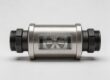
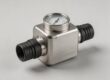
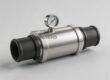
The Oil Flow Meters manufactured by Achievers utilize a highly engineered oval gear design. As volumetric flow estimation instruments, they measure flow by passing an exact, discrete volume of liquid with every revolution. The internal moving parts are dynamically secured in tandem with the volume of fluid traveling through the meter. This positive displacement method ensures that the meter can accurately measure irregular flows, extremely low flow rates, and fluids of virtually any consistency. When smooth fluid movement occurs, the internal gears move instantly; when the fluid stops, the movement stops immediately, preventing overrun and measurement bloat.
To understand why this specific technology provides financial value, we must look at its technical specifications. Below is the specification table outlining the baseline capabilities that drive the operational reliability of these meters.
| Specification Parameter | Technical Detail | Operational Benefit |
| — | — | — |
| Line Size Range | 006mm to 150mm (1/4 inch to 6 inch) | Scalable from small lubrication lines to large fuel terminal transfer pipes. |
| Measurement Principle | Volumetric Oval Gear Design | Unaffected by flow profile; eliminates the need for straight pipe runs before/after the meter. |
| Repeatability | Superior to 0.02% | Ensures consistent batching and dispensing, drastically reducing product giveaway. |
| Calibration Method | Stepless Calibration System | Allows for micro-adjustments without interrupting the process, maintaining accuracy between calibration levels. |
| Pressure Drop | Exceptionally Low | Suitable for both gravity-fed dispensing and in-line pump applications, saving energy. |
| Display & Registration | Register top rotatable every 90 degrees | Easy integration into existing tight piping layouts without compromising readability. |
| Standard Features | Integrated mesh strainer, electronic control options | Protects internals from debris and allows for seamless SCADA/PLC integration. |
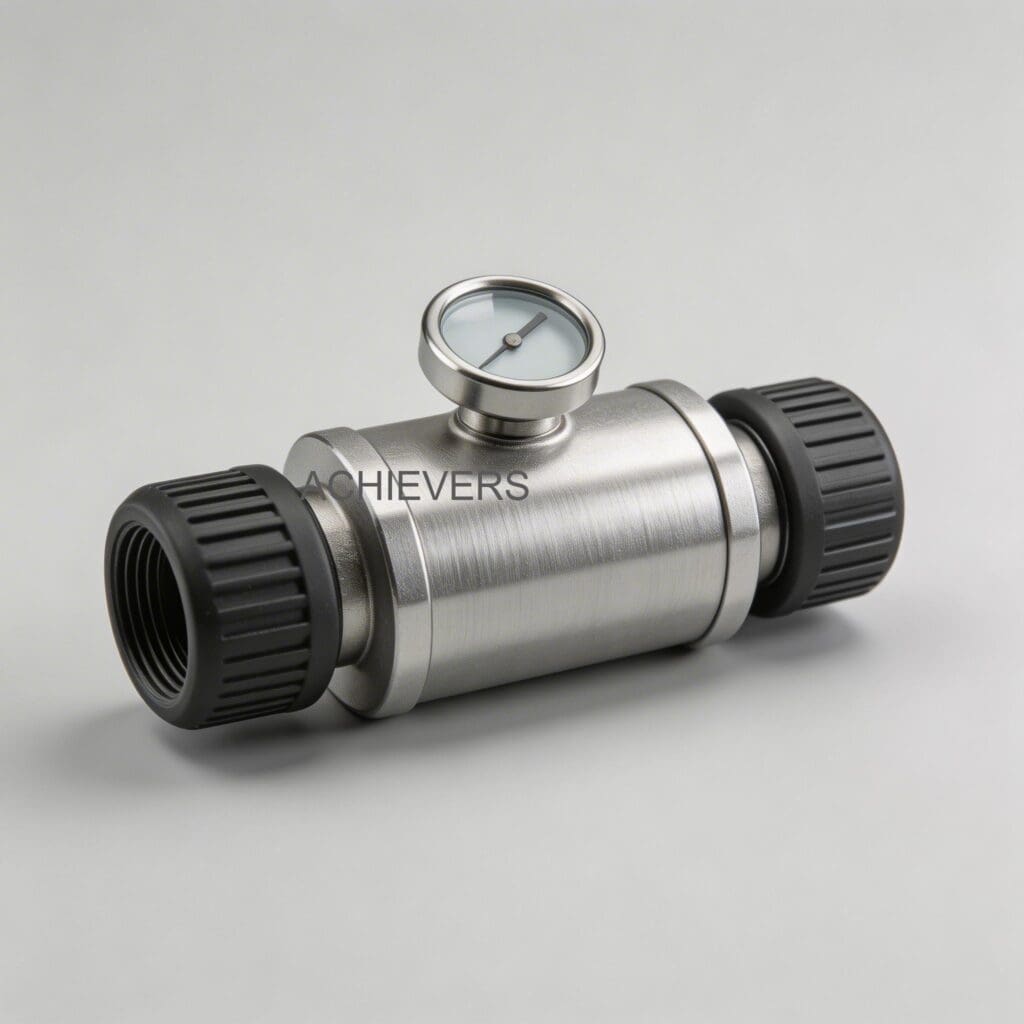
Whether you are deploying these units in flight refueling vehicles or hazardous ATEX-rated chemical plants, the simplicity of the design coupled with maintained accuracy leads to widespread utilization. But how do these technical features translate into financial metrics?
2. Total Cost of Ownership Breakdown
Total Cost of Ownership is the comprehensive calculation of all expenses associated with purchasing, deploying, using, and retiring a piece of equipment. When assessing Oil Flow Meters, buyers often focus entirely on the initial vendor invoice. However, over a typical 10-to-15-year lifecycle, operating expenses (OPEX), maintenance, and hidden process losses dwarf the upfront cost.
To build an accurate oil flow meter total cost of ownership ROI calculator model, you must account for the following eight cost categories.
| Cost Component | Typical Lifecycle Share (%) | Frequency | Financial Notes and Impact |
| — | — | — | — |
| Upfront Purchase Price | 10% – 15% | Once (at procurement) | Includes the base meter, integrated mesh strainer, and electronic register. Varies by line size (e.g., 6mm vs. 150mm) and material compatibility. |
| Installation & Integration | 5% – 8% | Once (at installation) | Flange bolting, piping modifications, and wiring for electronic control. Oval gear meters require no straight pipe runs, keeping this cost relatively low. |
| Commissioning & Initial Calibration | 2% – 4% | Once | Verification of the stepless calibration system in Liter, US Gal, or UK Gal. Ensures the meter hits the specified 0.02% repeatability baseline. |
| Energy Costs (Pressure Drop) | 10% – 20% | Continuous | Highly viscous fluids require pumping power. Low pressure drop oval gear meters reduce electrical load on transfer pumps over millions of gallons. |
| Preventive Maintenance & Consumables | 15% – 25% | Annually | Cleaning the integrated mesh strainer, checking oval gear tolerances, and replacing minor seals. Designed for quick and easy maintenance. |
| Periodic Recalibration | 10% – 15% | Annually / Bi-annually | Hiring certified technicians to verify accuracy. Mandatory for custody transfer at oil terminals to comply with international metrology standards. |
| Unplanned Downtime | 5% – 30% | Variable (Risk-based) | The cost of halted production if a meter fails. Robust construction minimizes this, but severe fluid contamination can cause unexpected lock-ups. |
| Product Giveaway (Accuracy Drift) | 10% – 50%+ | Continuous (if neglected) | The most significant hidden cost. If a meter under-registers by 0.5%, you are giving away free product with every batch. |
By mapping out these categories, it becomes obvious that an artificially cheap meter with poor repeatability or high pressure drops will end up costing an organization exponentially more through energy waste and product giveaway.
3. ROI Calculation: Real-World Industrial Example
To truly justify a capital upgrade, engineers need to translate technical specifications into hard currency. Let's look at how to build an ROI model around the oil flow meter accuracy loss cost per year.
Imagine a mid-sized global fuel terminal loading refined diesel into transport trucks. They load an average of 200,000 liters per day. Their existing, aging turbine meter has mechanically worn down and is currently suffering an accuracy drift, under-registering by just 0.4%. Diesel is valued at approximately $1.00 USD per liter.
Here is the exact step-by-step procedure to calculate the ROI for upgrading to a precision oval gear meter with better than 0.02% repeatability:
- Establish the Baseline Flow Volume: Determine your total daily, monthly, or annual throughput.
- Daily Volume = 200,000 liters
- Annual Working Days = 300 days
- Total Annual Volume = 60,000,000 liters
- Determine the Value of the Transferred Fluid: Find the standard market or internal transfer cost per volumetric unit.
- Fluid Value = $1.00 per liter
- Quantify the Current Accuracy Error (The Leak): Identify how far out of calibration the existing system is.
- Existing Error Rate = 0.4% under-registration
- Calculate the Daily Product Giveaway: Multiply daily volume by the error rate.
- 200,000 liters * 0.004 = 800 liters of unbilled/lost product per day.
- Calculate the Annual Financial Loss: Multiply daily giveaway by fluid value and operational days.
- 800 liters * $1.00 * 300 days = $240,000 lost per year.
- Factor in the New Meter's Accuracy: The new precision meter offers repeatability superior to 0.02%. Even conservatively estimating maximum system error at 0.05%, the improvement is massive.
- New Error Rate = 0.05%
- New Daily Giveaway = 100 liters
- New Annual Financial Loss = $30,000
- Determine Annual Savings (Loss Prevention): Subtract the new loss from the old loss.
- $240,000 (Old Loss) – $30,000 (New Loss) = $210,000 in saved product per year.
- Calculate the Payback Period (ROI): Divide the total cost of the new meter installation by the annual savings.
- Let's assume the new meter, electronic register, accessories, and installation cost $15,000 total.
- $15,000 / $210,000 = 0.071 years (roughly 26 days).
Quick ROI Snapshot
- Application: High-volume fuel terminal transfer
- Capital Investment: ~$15,000 (Meter + Installation)
- Annual Savings via Accuracy: ~$210,000
- Typical Payback Period: Less than 1 month (under 30 days)
While a 30-day payback is common in high-volume custody transfer, even lower-volume applications like furnace oil injection for internal boilers usually see payback periods of 12 to 18 months just in reduced fuel consumption variability.
4. Cost Comparison: Available Approaches
When procurement teams seek an industrial oil flow meters for fuel terminals and process plants, they are usually deciding between four main approaches: Manual Tank Gauging, Turbine Meters, Coriolis Mass Meters, and Positive Displacement (Oval Gear) Meters.
Use this decision table to compare the TCO implications of each technology across key industrial criteria.
| Metering Approach | Upfront Capital Cost | Annual OPEX & Maintenance Cost | Accuracy & Repeatability | Fluid Viscosity Tolerance | Best Application Fit |
| — | — | — | — | — | — |
| Manual Tank Gauging (Dip tapes) | Very Low | Extremely High (Labor intensive, high error rate) | Poor (Subject to human error, temperature variables) | High | Basic inventory checks; not suitable for continuous process or dispensing. |
| Turbine Flow Meters | Medium | Medium (Bearings wear out, requiring frequent recalibration) | Good (on thin fluids), Poor (on thick fluids) | Low (Struggles with heavy oils, highly sensitive to viscosity changes) | Water, light chemicals, very light refined fuels at constant temperatures. |
| Coriolis Mass Flow Meters | Very High | Low (No moving parts, but high calibration costs) | Excellent (Measures mass directly) | High (Handles almost anything) | Complex multi-phase chemical batching where mass measurement is strictly required. |
| Positive Displacement (Oval Gear) | Medium | Low (Simple maintenance, standard spare parts) | Excellent (Superior to 0.02% repeatability) | Very High (Actually improves sealing at higher viscosities) | Lubricants, hydraulic oils, fuel terminals, aviation refueling, general oil metering. |
As the table shows, Oval Gear meters strike the ultimate balance. They provide the precision of Coriolis meters for viscous fluids without the prohibitive upfront price tag. Unlike turbine meters, oval gears are not affected by outside components caused by the establishment (like turbulent flow from a nearby valve), meaning they don't require expensive piping overhauls to install long, straight calming sections.
5. Hidden Costs to Budget For
A comprehensive TCO analysis must expose the hidden lifecycle costs that typically blindside operations managers during years two and three of deployment. When dealing with an oil flow meters supplier for manufacturers, ensure you are budgeting for the following six indirect expenses:
- Filtration and Strainer Maintenance: Oval gear meters have tight internal tolerances to maintain their high accuracy. While they are provided with an integrated mesh strainer, this strainer must be cleaned. Heavy particulate matter in dirty furnace oil can clog the strainer, causing pressure spikes. Budgeting for periodic strainer blowdowns is essential.
- Viscosity-Driven Pressure Drops: While these meters feature a low pressure drop design, pushing highly viscous mineral oil through any device requires pump energy. Ensure your transfer pumps are sized correctly so you don't burn out pump stators trying to overcome line resistance during cold weather operations.
- Global Certification and Calibration Infrastructure: In global operations, meters used for custody transfer (buying/selling fluid) must be periodically calibrated by certified metrology labs (ISO, API standards). Factor in the cost of removing the meter, sending it to a lab, and reinstalling it, or paying a technician to bring a master meter to your site.
- Automatic Additive Injector Integration: In aviation and fuel terminal applications, specialized additives must be mixed into the fuel based on exact volume. These meters offer an automatic additive injector available as an add-on. Failing to budget for the PLC integration and wiring of these injectors can delay commissioning.
- Spares and Import Logistics: While spare parts accessibility is a key feature of Achievers meters, international buyers should account for local customs duties, taxes, and shipping times when ordering spare oval gears or seals. Keeping a dedicated operational spares kit on site prevents expensive downtime.
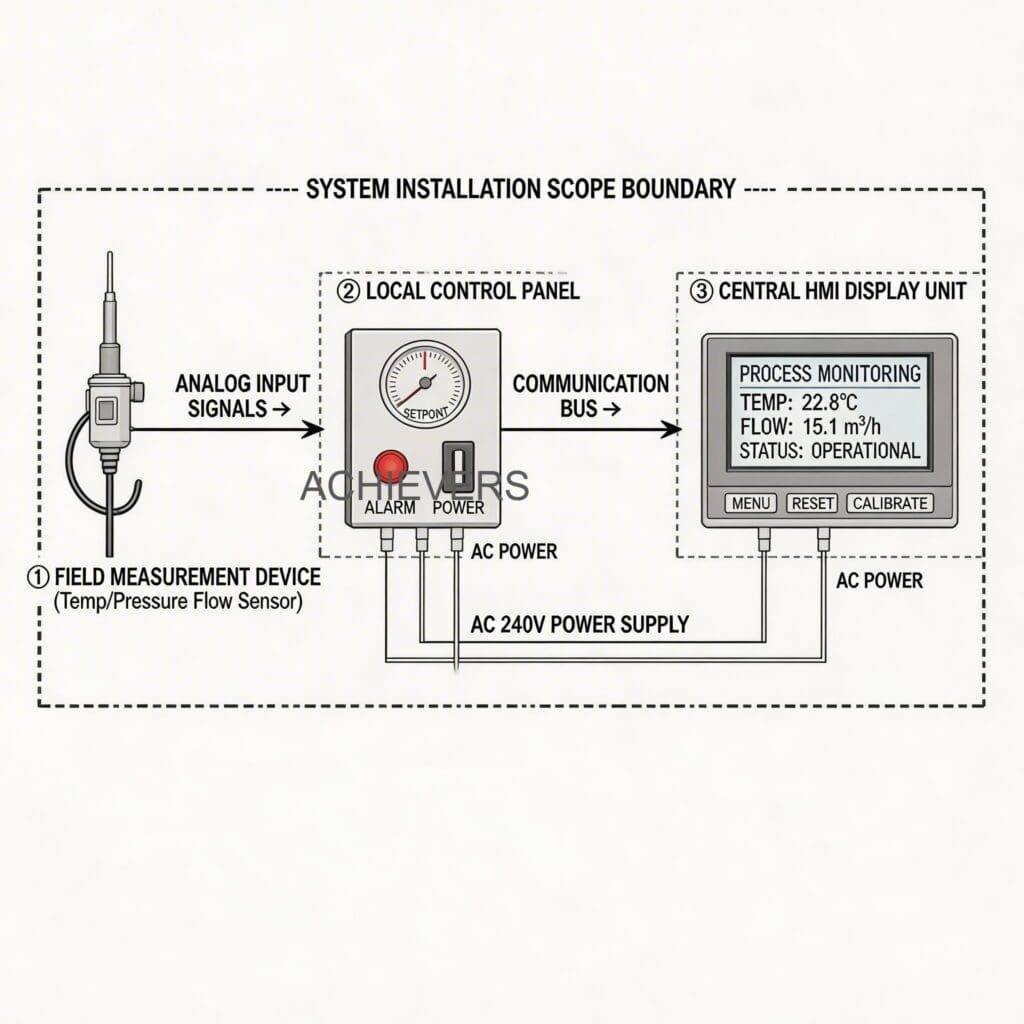
- System Synergy and Automation: An accurate meter is only as good as the system controlling it. If you are integrating the meter into a larger Liquid Batching System, budget for the engineering hours required to connect the electronic control registers to your plant's SCADA or distributed control system (DCS).
6. How to Justify the Purchase to Management
Armed with TCO calculations and an understanding of lifecycle OPEX, the final hurdle is getting CAPEX approval from upper management or the board. Financial controllers often resist replacing equipment that "technically still works."
Here is a proven, six-step procedure to build an irrefutable business case for upgrading to high-accuracy positive displacement meters.
- Audit the Current State: Document the exact make, model, age, and maintenance history of the existing measurement system. Highlight recurring failures, bearing replacements, or labor hours spent on manual workarounds.
- Establish the Financial Bleed: Use the ROI calculation from Section 3. Do not just say "we need a more accurate meter." Say, "Our current meter drift is costing us $80,000 annually in unbilled hydraulic oil."
- Present the Technical Solution: Introduce the proposed oval gear meter. Emphasize that the simple design and low pressure drop takes into account gravity and pump applications, minimizing the need for wider infrastructure changes. Highlight the stepless calibration system as a tool for long-term accuracy stability.
- Address the Integration Risk: Management fears downtime. Explain that the register top can be easily removed and rotated to each 90º orientation for display reading, meaning it drops seamlessly into existing pipework without extensive hot-work or re-piping.
- Present the TCO and ROI Snapshot: Show the 10-year total cost, not just the purchase price. Compare the 10-year cost of doing nothing (Status Quo) versus the 10-year cost of upgrading.
- Leverage Warranties and Support: Mitigate perceived financial risk by highlighting the manufacturer's backing. Emphasize the standard 1-year warranty and the availability of a 2-year extended warranty on demand, guaranteeing performance.
Common Mistake to Avoid
Do not size a flow meter based solely on the diameter of your existing pipe. Flow meters must be sized based on the actual flow rate (minimum, normal, and maximum) and the viscosity profile of the fluid. Installing a 4-inch meter simply because you have a 4-inch pipe can lead to the meter operating at the very bottom of its flow range, significantly degrading accuracy. Always consult with the manufacturer to match the meter's sweet spot to your process conditions.
If your facility struggles with wider energy efficiency audits, you might also tie this procurement request into a broader tracking initiative, utilizing tools like a Fuel Consumption Meter on your plant's boilers or backup generators to create a holistic fluid management upgrade package.
FAQ
Q: Can oval gear meters handle high temperatures found in furnace oil applications?
A: Yes. Oval gear meters can be manufactured with specialized internal clearances and high-temperature seals (such as Viton or PTFE) to accommodate elevated temperatures without the gears expanding and seizing inside the measuring chamber.
Q: How does fluid viscosity affect the accuracy of the meter?
A: Unlike turbine meters, which lose accuracy as fluid gets thicker, positive displacement meters actually perform better with higher viscosity fluids. Thicker oils act as a liquid seal between the oval gears and the chamber wall, reducing "slip" (internal leakage) and improving measurement precision at lower flow rates.
Q: Is it difficult to change the reading orientation once installed?
A: Not at all. The register top is designed to be easily removed and rotated in 90-degree increments. This allows operators to achieve a clear line of sight for display reading regardless of whether the pipe is running vertically, horizontally, or close to a wall.
Q: What maintenance is required to keep the meter at its 0.02% repeatability?
A: The most critical maintenance task is keeping the fluid clean. The meter is provided with an integrated mesh strainer that must be blown down or cleaned periodically. Beyond that, inspecting the gear tolerances and verifying calibration annually via the stepless calibration system ensures long-term fidelity.
Q: Are these meters suitable for use in hazardous, explosive environments?
A: Yes. When equipped with the appropriate electronic controls and mechanical registers, these meters can be safely deployed in ATEX-rated distribution depots, flight refueling vehicles, and petrochemical environments where intrinsic safety is mandated.
Q: What happens if the flow stops suddenly? Does the meter over-register?
A: No. Because the internal moving parts are dynamically secured in tandem with the volume of fluid, the gears instantly stop moving the moment the fluid movement stops. This eliminates the "spin-down" over-registration errors common in turbine meters.
Q: What line sizes and measurement units are available?
A: The meters support a broad line size range from 006mm to 150mm (1/4 inch to 6 inch). Depending on your global region and operational standards, the calibration and mechanical registers are readily available in Liters, US Gallons, and UK Gallons.
Ready to stop giving away expensive product and gain total control over your fluid transfer processes? Contact the engineering team at Achievers today to discuss your specific flow application. Please be prepared to share your target fluid, expected flow rate, maximum operating temperature, and line size so our specialists can configure the perfect metering solution with a guaranteed fast ROI.