When industrial buyers evaluate fluid handling investments, they often focus entirely on the initial capital expenditure. Plant managers and procurement teams look at the purchase price of a fueling unit, compare it against their quarterly budget, and make a decision. However, in heavy-duty applications like construction, mining, and large-scale fleet operations, the upfront cost of dispensing equipment represents only a fraction of its financial footprint. Relying on outdated, inaccurate, or poorly maintained fueling equipment introduces hidden costs that quietly drain your operational budget month after month.
Understanding the Total Cost of Ownership (TCO) changes how you evaluate your equipment. By analyzing metric accuracy, spillage reduction, maintenance frequency, and equipment lifespan, you can transition your procurement process from a basic cost-center purchase to a strategic, ROI-driven investment. This analysis breaks down the actual cost drivers of industrial fueling systems, providing you with a clear roadmap to justify your CAPEX and significantly reduce your long-term operating costs.
Quick ROI Snapshot
- Typical upfront investment: Low to Moderate
- Primary cost-saving drivers: Eliminating 1-3% fuel shrinkage, preventing spillage, and reducing fleet downtime.
- Typical payback period: 6 to 12 months (depending on daily throughput and prior loss rates).
1. Product Overview and Cost Context
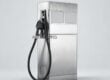
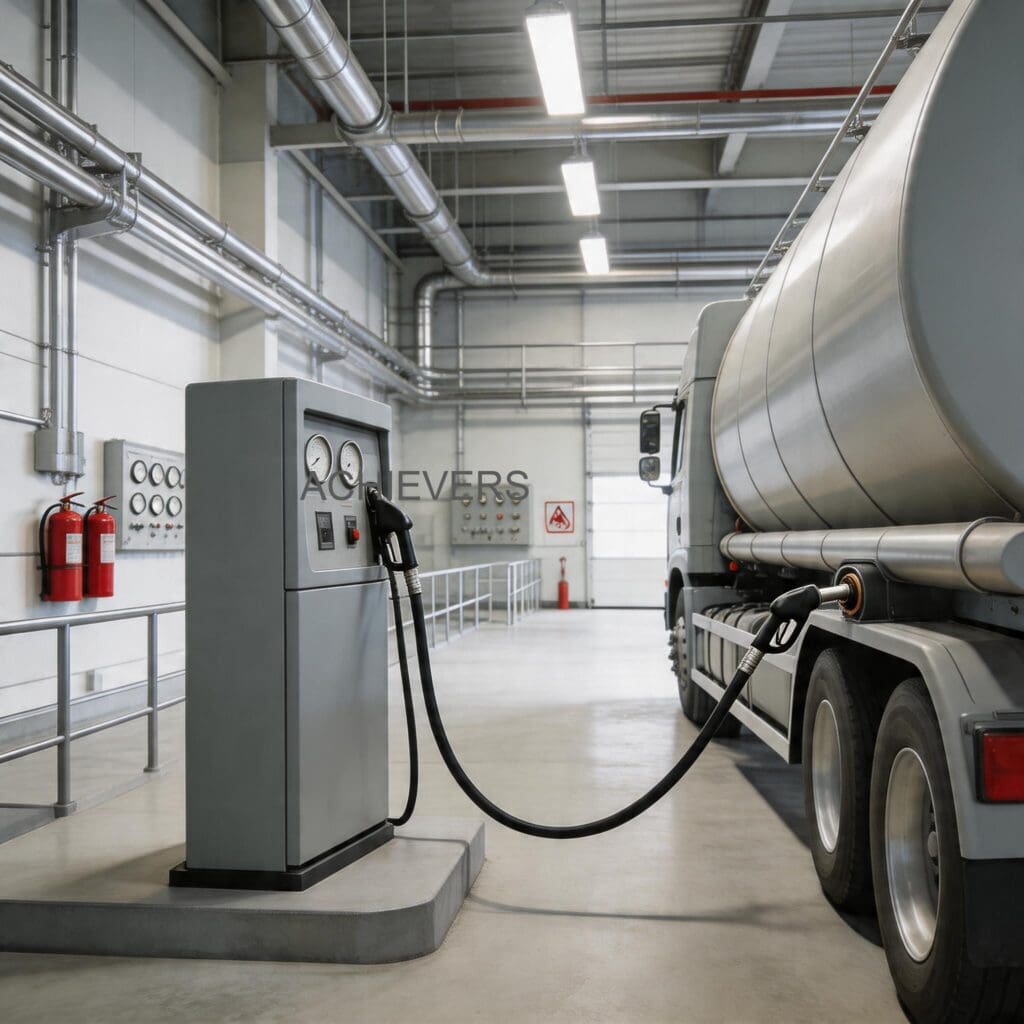
A high-quality Diesel Dispenser is engineered to store, transport, and supply fuel to working ranges where traditional fueling stations are unavailable. Whether you are running earthmoving equipment on rugged off-road terrain or managing logistics fleets at a distribution hub, having a dedicated, highly accurate dispensing system is critical.
At Achievers Pumps and Valves, our units are designed for steady performance, minimum maintenance, and flawless finish. More importantly, they provide market-leading accuracy. When you are dispensing thousands of liters of fuel weekly, an accuracy deviation of even 1% equates to massive financial losses over a year. By moving away from hazardous, messy barrel-filling operations and utilizing preset control mechanisms, you protect your inventory against theft, pilferage, and accidental waste.
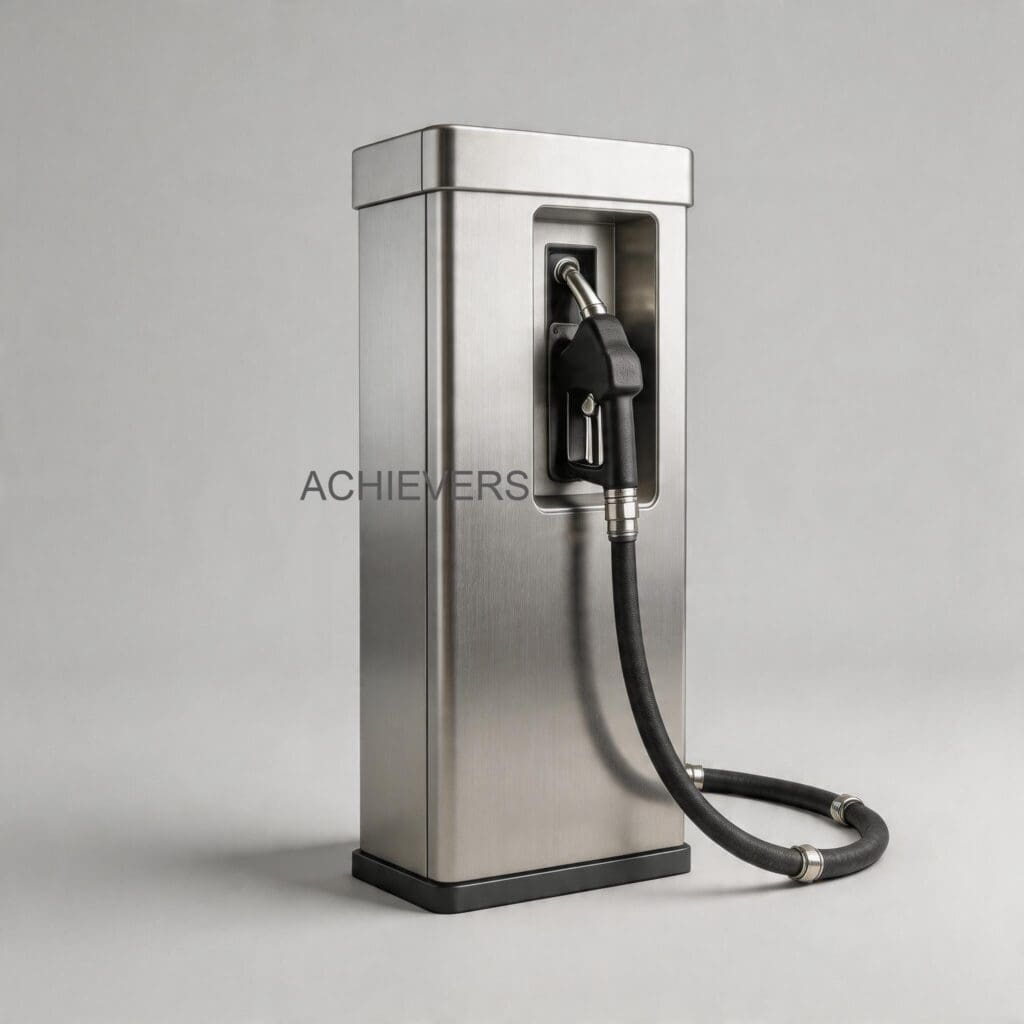
Below are the core technical specifications that directly influence the performance and operational cost of the unit:
| Specification Parameter | Technical Details | Operational Benefit |
| — | — | — |
| Flow Rate | 20-60 Liters/min | Reduces waiting time for heavy machinery, lowering fleet downtime. |
| Volumetric Accuracy | ±0.5% | Ensures precise fluid accounting, virtually eliminating unrecorded fuel shrinkage. |
| Power Source Options | DC 12V, DC 24V, AC 220V | Highly versatile; can be wired into site mains or run directly from mobile vehicle batteries. |
| Totalizer Capacity | Volume: 9 digits, Amount: 11 digits | Provides long-term, tamper-proof tracking for massive fuel throughput over the equipment's lifespan. |
| Connection Sizes | Inlet / Outlet: 25mm | Standardized sizing allows for easy integration into existing piping and tank infrastructure. |
| Dispensing Hose | 4 meters (Rubber) | Provides ample reach for fueling large excavators and commercial trucks without repositioning. |
2. Total Cost of Ownership Breakdown
To build a realistic TCO model, you must map out every expense associated with the unit over its expected lifecycle. The table below outlines a standard cost framework for a heavy-duty Diesel Dispenser deployed in a demanding industrial environment.
| Cost Component | Typical Range (USD) | Frequency | Notes |
| — | — | — | — |
| Upfront Equipment (CapEx) | $800 – $2,500 | Once | Varies based on power configurations (AC vs. DC) and integrated accessories. |
| Installation & Commissioning | $300 – $800 | Once | Includes piping integration, electrical setup, and initial safety checks. |
| Annual Calibration | $150 – $350 | Annually | Essential for maintaining the ±0.5% accuracy and complying with local weights and measures regulations. |
| Consumables (Hoses/Filters) | $100 – $250 | Bi-annually | High-usage sites may require more frequent replacement of the 4m rubber hose or inline filtration. |
| Preventative Maintenance | $200 – $500 | Annually | Labor and parts to ensure sturdy construction and flawless operation over time. |
| Power Consumption | $50 – $150 | Annually | Highly efficient; varies based on 12V/24V or AC 220V usage and daily run hours. |
| Spillage & Shrinkage Costs | $0 (After install) | Ongoing | Older, manual systems can cost thousands annually in lost product; modern preset systems mitigate this entirely. |
| Downtime/Repair Costs | $200 – $1,500 | Per Event | Reliable units minimize these events. A cheap pump failing stops fleet operations, multiplying financial losses. |
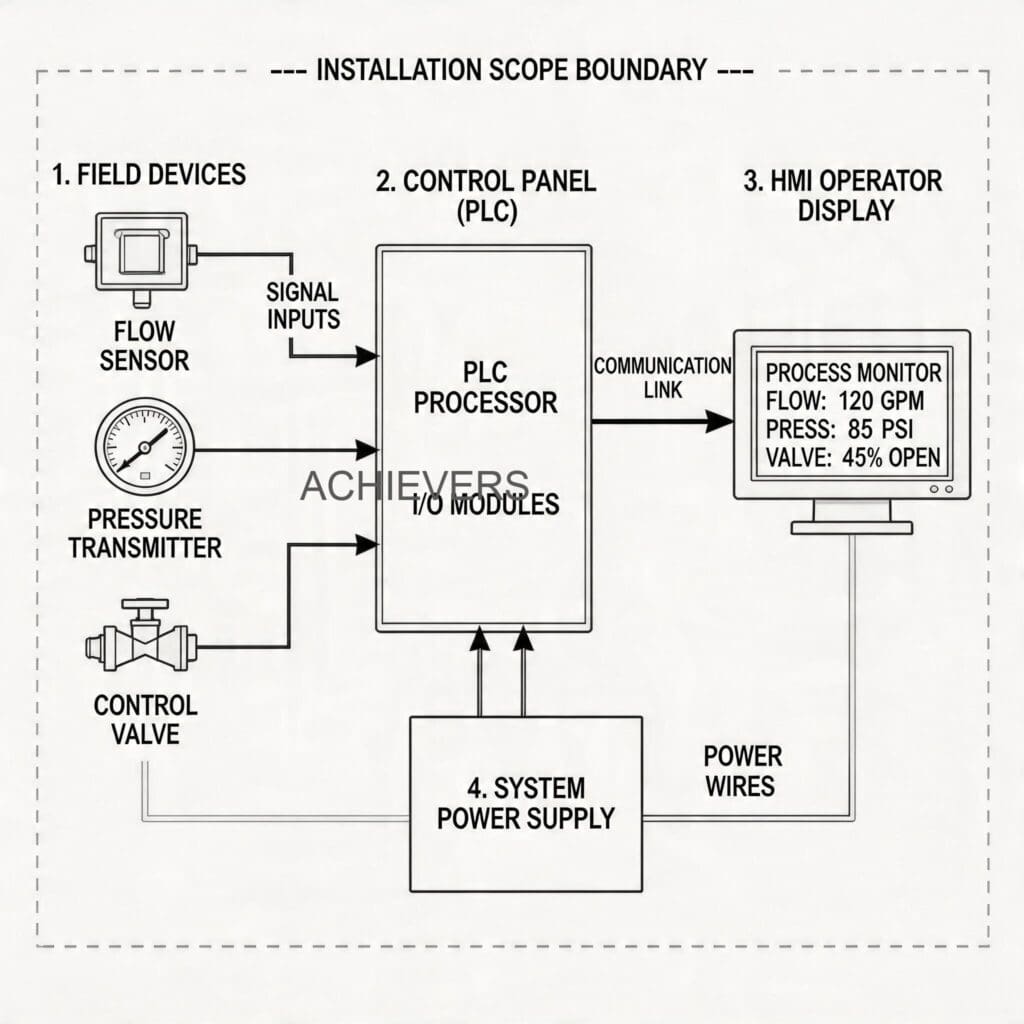
3. ROI Calculation: Real-World Global Example
To truly understand the value of this equipment, let us run a straightforward ROI calculation for a mid-sized construction or mining operator. Assume the site consumes 10,000 liters of diesel per week to power excavators, cranes, and generator sets. They currently use basic transfer pumps and manual barrel filling, experiencing an estimated 2% loss through spillage, overfilling, and undocumented dispensing.
Step-by-Step ROI Calculation:
- Establish Baseline Consumption: Calculate total annual usage. 10,000 liters per week multiplied by 52 weeks equals 520,000 liters annually.
- Quantify Existing Loss: Identify the volume of fuel lost to inefficiency. 2 percent of 520,000 liters equals 10,400 liters lost per year.
- Determine Financial Value of Loss: Multiply the lost volume by the local cost of fuel. Assuming a diesel price of $1.20 per liter, the annual financial loss is $12,480.
- Calculate Total CapEx: Combine the purchase price of the new dispenser, delivery, and necessary accessories. For this example, assume a total CapEx of $2,000.
- Add Installation and Setup: Include labor, piping (25mm inlet/outlet matching), and electrical configuration. Assume $500.
- Include First-Year Maintenance: Factor in routine checks and calibration to maintain the ±0.5% accuracy rating. Assume $300.
- Calculate Total First-Year Investment: Add CapEx, Installation, and Maintenance. Total investment equals $2,800.
- Determine Simple Payback Period: Divide the Total Investment ($2,800) by the Annual Savings ($12,480) and multiply by 12 months. The system pays for itself in just under 3 months. Every month thereafter generates pure operational savings.
4. Cost Comparison: Available Approaches
When upgrading your fluid handling infrastructure, you have several technological paths to choose from. Selecting the wrong method for your throughput can either result in massive labor inefficiencies or unnecessary capital expenditure.
Decision Table: Dispensing Solutions Compared
| Approach | Upfront Cost | Annual Operating Cost | Dispensing Accuracy | System Reliability | Best For |
| — | — | — | — | — | — |
| Manual Barrel / Gravity Fed | Very Low | Very High (Labor & Loss) | Extremely Poor | Low | Emergency backup only. |
| Basic Electric Transfer Pump | Low | High (Spillage prone) | Poor (No preset/meter) | Moderate | Small farms with low volume. |
| Standard [Diesel Dispenser] | Moderate | Low | High (±0.5%) | High | General fleet fueling, manufacturing plants, and heavy machinery. |
| Integrated Mobile Diesel Dispenser | High | Low | High (±0.5%) | Excellent | Remote rugged terrain, deep pits, and dynamic construction zones. |
5. Hidden Costs to Budget For
Even with a detailed TCO model, procurement teams can sometimes overlook peripheral costs required to keep the system running optimally in harsh industrial environments. Being aware of these elements ensures your budget is comprehensive and protects you from mid-year surprises.
- Power Supply Conditioning: In many remote areas, AC 220V power grids can be highly unstable. Voltage spikes can damage internal electronics. Budgeting for surge protection or utilizing the DC 12V/24V configurations on mobile bows can prevent expensive circuit board failures.
- Specialized Filtration: If your primary bulk tank suffers from condensation, rust, or sediment, pushing that contamination through the dispenser's precise flow meter can degrade its ±0.5% accuracy. High-quality inline particulate and water-absorbing filters are a necessary ongoing expense.
- Calibration Verification: To remain compliant with Legal Metrology and internal ISO audit standards, you must schedule third-party calibration checks. This requires budgeting for a certified technician to verify the 9-digit volume and 11-digit amount totalizers annually.
- Harsh Environment Protections: For operations in extreme climates—whether extreme Middle Eastern heat or freezing North American winters—protective enclosures, thermal wraps, or UV-resistant hosing may be required to reach the equipment's maximum operational life.
- Hose and Nozzle Wear: The 4-meter rubber hose and the dispensing nozzle are the most frequently handled components. Operator abuse, driving over hoses, or dropping nozzles on concrete will require premature replacement outside of standard warranty coverage.
- Operator Training: A preset system allows operators to set the exact volume or amount required, freeing them to perform visual inspections on the vehicle while it fuels. However, operators must be trained on how to properly input data, handle the automatic shut-off nozzle, and safely rewind the hose to prevent workplace accidents.
Common Mistake to Avoid
Skipping routine inline filter replacements. Procurement managers often view replacement filters as an easy place to cut costs. However, running unfiltered, contaminated fuel through a high-precision dispenser accelerates wear on internal moving parts. This not only causes calibration drift—leading to inaccurate totalizer readings and "invisible" fuel loss—but can ultimately seize the mechanism, resulting in thousands of dollars in downtime and emergency repair costs. Always follow the manufacturer's recommended filter change intervals.
6. How to Justify the Purchase to Management
Engineers and operations managers know that upgrading fluid handling equipment makes sense, but convincing the finance department requires a structured business case. To secure budget approval, you must translate technical features into financial benefits.
- Audit the Baseline State: Do not guess your losses. Implement a strict one-week manual audit. Compare the bulk tank dip readings against the claimed fuel usage of the fleet. Document the discrepancy.
- Highlight the Security Risk: Frame the purchase as an asset protection strategy. Emphasize that current, uncontrolled barrel filling operations leave the company highly vulnerable to the theft and pilferage of diesel.
- Map Out the TCO and ROI: Use the calculations from Section 3. Show finance that the unit is not just an expense, but a cost-recovery tool that will yield a positive cash flow within the same fiscal year.
- Emphasize Equipment Versatility: Highlight that the system offers multiple power source options (12V, 24V, 220V) and a flow rate of up to 60L/min, meaning it can scale alongside the fleet without needing immediate replacement.
- Quantify Downtime Reduction: Calculate the hourly cost of an excavator sitting idle waiting for slow, manual fueling. Show how increasing the flow rate directly translates to more productive operational hours.
- Highlight Compliance and Safety: Mention that modern preset systems vastly reduce the risk of environmental spillage, mitigating the threat of costly environmental fines and improving the overall safety of operators.
FAQ
Q: What is the typical maintenance interval for this dispensing unit?
A: Basic visual inspections should be performed daily. Filter changes and hose inspections should occur every 3 to 6 months depending on throughput. A formal calibration verification is recommended annually to maintain the ±0.5% accuracy standard.
Q: Can this system run effectively on a mobile fuel bowser?
A: Yes. The unit is designed with DC 12V and DC 24V power options specifically for mobile applications. This makes it ideal for refueling heavy machinery like cranes and loaders directly in off-road terrains or deep pits.
Q: How does the ±0.5% accuracy actually impact my bottom line?
A: At high volumes, a small percentage of error equates to massive fuel volume. If a meter is under-reading by just 2%, you are giving away thousands of liters of fuel over a year for free. Tight accuracy ensures every drop is accounted for.
Q: Are these units compliant with weights and measures authorities?
A: Yes, our units are rigorously checked against quality assurance parameters and are approved by Legal Metrology authorities, ensuring they are certified for accurate volumetric accounting and fault-free operation.
Q: Can I set a specific fuel volume limit for different vehicles?
A: Yes. The preset functionality allows operators to input a specific volume or monetary amount. Once that target is reached, the flow stops automatically, completely preventing overfilling and messy spills.
Q: Does the system retain dispensing data if there is a power failure?
A: Yes. The system features a robust 9-digit volume and 11-digit amount totalizer that acts as a secure, long-term mechanical or non-volatile memory record, preventing data loss during unexpected power grid fluctuations.
Q: What happens if the standard 4-meter hose is too short for our specific heavy equipment?
A: While 4 meters is standard and covers the vast majority of fleet applications, the 25mm inlet/outlet design allows for easy adaptation. You can request customized configurations or longer hoses during the purchasing process to meet specific site requirements.
If you are ready to eliminate fuel shrinkage, upgrade your fluid tracking, and secure a fast return on your equipment investment, we are here to help. Contact the team at Achievers Pumps and Valves to discuss your specific operational needs. Please provide us with your target flow rate, power availability, and site conditions, and our engineers will configure the ideal Diesel Dispenser to maximize your operational efficiency.