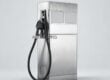
Managing a high-volume fleet refueling depot presents a unique set of fluid handling challenges. Every drop of fuel transferred from storage to vehicle represents operational capital. When you multiply the daily refueling volume across hundreds of logistical assets, the efficiency, safety, and accuracy of your dispensing equipment dictate your bottom line. Relying on generic, poorly specified dispensing hardware leads to chronic spillage, inaccurate fuel accounting, and costly environmental hazards. For operations managers and industrial engineers, optimizing the final point of transfer—the nozzle—is a critical step in total loss control.
In high-throughput environments across global logistics hubs, the physical demands placed on dispensing equipment are extreme. Constant shock loading, pressure surges, and rough handling by operators quickly degrade substandard equipment. This degradation manifests as slow leaks, failed automatic shut-offs, and "hammering" in the lines. To maintain rigorous issuing discipline and prevent mis-fueling, fleet depots require robust, precision-engineered Fuel Nozzles designed explicitly for continuous, high-cycle commercial use.
Quick ROI Snapshot
Typical payback period: 4 to 6 months
Primary cost drivers reduced: Fuel shrinkage (theft/spills), environmental remediation fines, and vehicle downtime during fueling.
Operational gain: 1 million+ cycle reliability reduces nozzle replacement frequency by up to 300% compared to standard aluminum variants.
1. Industry Overview: The Fluid Challenge
Fluid transfer in commercial transport hubs—whether in mining yards, agricultural co-ops, or global logistics centers—requires a delicate balance between flow velocity and control. Diesel and ethanol blends present specific fluid dynamics challenges. Diesel, for instance, has a tendency to foam under high-velocity turbulent flow. If a nozzle cannot properly regulate this flow, the foam triggers the automatic shut-off prematurely, causing the operator to repeatedly "click" the lever. This extends queue times and increases the risk of splash-back.
Furthermore, fuel shrinkage is a massive vulnerability in unmanned or card-lock fleet depots. A card-lock system relies on automated authorization. If a driver leaves a standard nozzle in the "open" position after fueling, the next driver who activates the pump will immediately trigger a high-pressure spill.
To mitigate these risks, modern facilities integrate advanced Fuel Nozzles featuring "no pressure, no flow" interlocks and precise flow control mechanisms. Compliance with global environmental and safety directives (such as ATEX for explosive atmospheres and ISO metrology standards) mandates that every component in the dispensing chain must prevent unauthorized discharge and fugitive emissions.
2. Product Capabilities Matched to Industry Needs
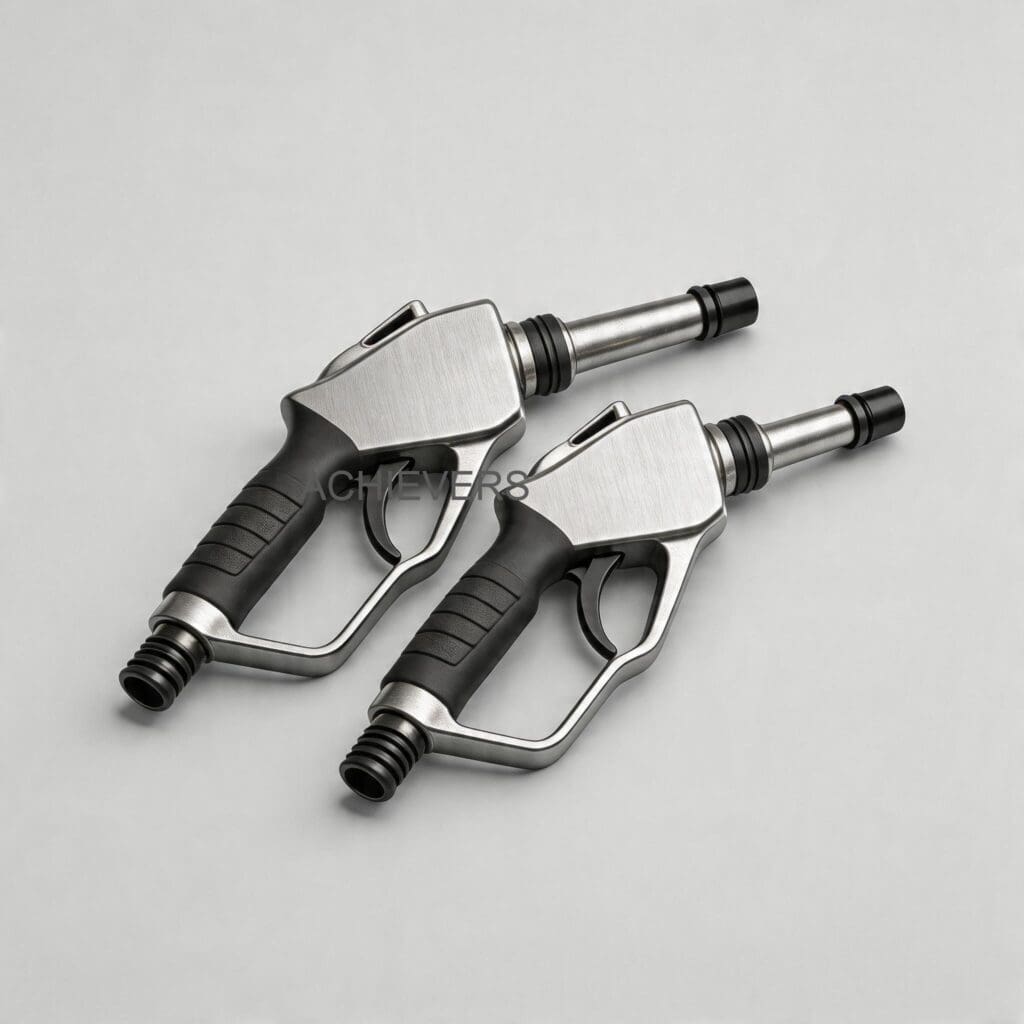
Selecting the right Fuel Nozzles requires aligning technical specifications with the operational realities of your depot. The OPW 11b arrangement provided by Achievers offers a highly specific set of features engineered for commercial fleet management.
| Industry Requirement | Specific Nozzle Feature | How It Addresses the Operational Need |
| :— | :— | :— |
| High-Volume Continuous Duty | Cycle verified for 1 million+ cycles | Delivers an operational life significantly longer than industry averages, directly reducing maintenance downtime and replacement procurement costs. |
| Spill Prevention in Card-Lock Systems | No-pressure, no-flow device | The nozzle cannot be opened until the pumping system is fully pressurized. It closes automatically when pressure is removed, preventing accidental discharge. |
| Environmental Protection | Vacant position blocker on lever guard | Physically prevents consumers or drivers from jamming the nozzle in an open position with foreign objects, a common cause of massive forecourt spills. |
| Wear and Cavitation Resistance | Stainless steel spout tip | Resists the abrasive wear of repeated insertion and the corrosive effects of fuel. Lasts four times longer than standard cast aluminum spouts. |
| Operator Ergonomics and Vehicle Safety | Duratuff lever guard and 2-piece hand protector | Prevents scratching of fleet vehicles during maneuvering while providing a comfortable grip, reducing operator fatigue during high-volume shifts. |
| Precise Volume Dispensing | Accu-stop to-the-penny flow control | Enables highly accurate topping-off without splash-back. Essential when integrating with a precision Fuel Flow Meter for exact batching. |
| Standard Fleet Compatibility | 0-60 L/min flow rate with 13/16" Spout | Delivers optimal flow for light to medium-duty commercial tanks without causing diesel foaming or triggering false shut-offs. |
| System Integration | BSP 3/4" Inlet Thread at 0.18 MPa | Ensures seamless, leak-free integration with global standard hoses and standard dispenser pumping pressures (approx. 1.8 bar). |
Common Mistake to Avoid
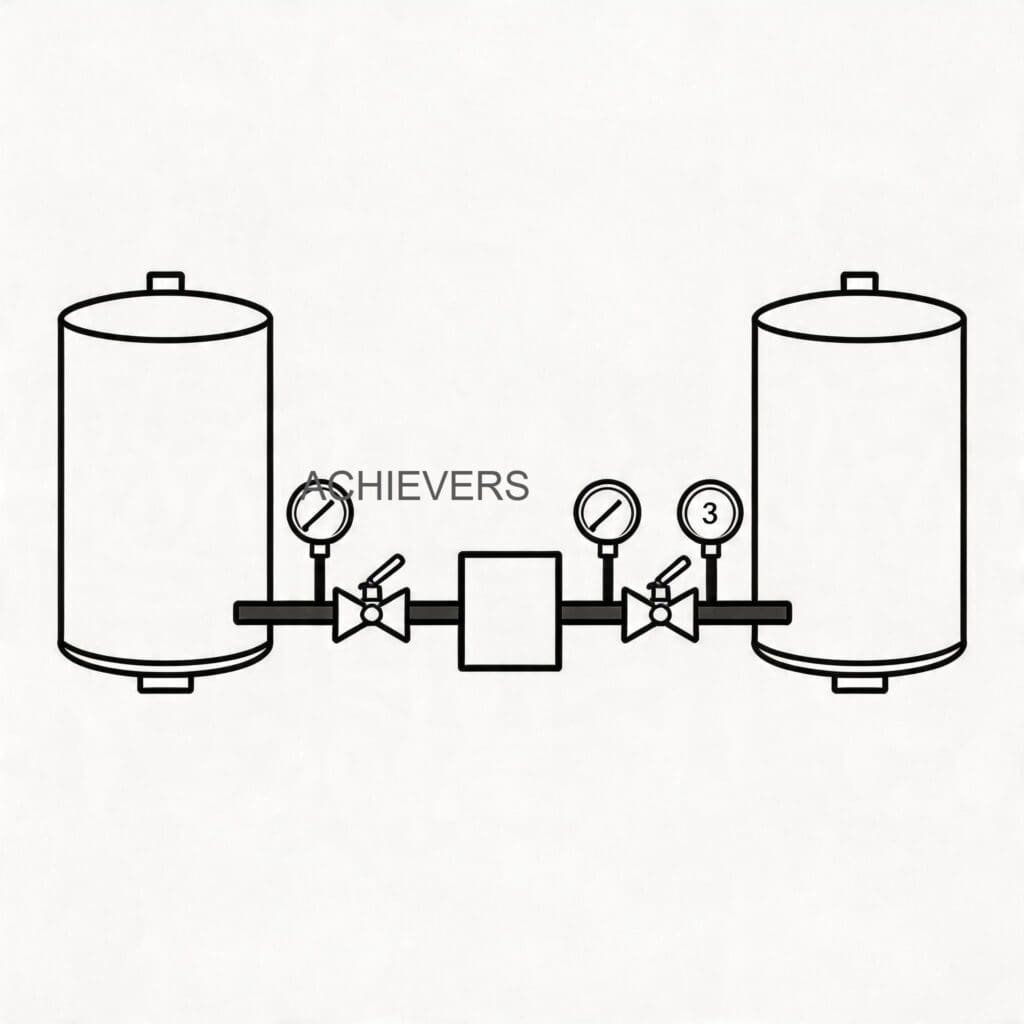
Mismatched Dispenser and Nozzle Flow Rates: A frequent engineering error is pairing a 60 L/min nozzle with a high-capacity dispenser pushing 120+ L/min. This creates a severe bottleneck, leading to immediate back-pressure, extreme diesel foaming, pump cavitation, and continuous false shut-offs. Always verify that the rated nozzle flow capacity aligns exactly with your pump's output and the vehicle's fill neck capacity.
3. Typical Installation Scenarios in This Industry
The versatility of the OPW 11b arrangement allows it to be deployed across a variety of industrial scenarios. Below are three common configurations:
Unmanned Commercial Card-Lock Depots
In an unmanned card-lock facility, drivers authorize fueling via RFID or magstripe. Security and spill prevention are paramount because there is no forecourt attendant. Here, the nozzles are integrated with a central fleet management system. The vital feature in this scenario is the no-pressure, no-flow device. If a careless driver finishes fueling, forces the hold-open clip, and returns the nozzle to the cradle, the system depressurizes and the internal check valve closes. When the next driver swipes their card and activates the pump, fuel will not instantly blast from the nozzle. The driver must physically squeeze the lever to break the interlock.
Mobile Fueling Bowsers in Mining and Construction
For heavy civil construction or mining, fuel must be brought directly to the equipment via a mobile diesel bowser or Mobile Fuel Dispenser. These environments are characterized by heavy dust, vibration, and operator haste. The stainless steel spout tip is critical here. Standard aluminum tips easily deform when repeatedly banged against heavy machinery fill ports. Once the tip deforms, the small vacuum hole required for the automatic shut-off mechanism becomes blocked or misaligned, rendering the automatic shut-off useless. The stainless steel construction ensures the geometry of the venturi port remains intact under extreme physical abuse.
Standard Fleet Logistics Terminals
For standard delivery fleets (e.g., courier vans, medium-duty box trucks), fast turnaround times are essential. Operators utilize the Accu-stop flow control and the hold-open clip spring. With a flow rate of 60 L/min (0.18 MPa pressure), a standard 120-liter tank fills in approximately two minutes. The operator locks the clip, steps back, and the nozzle automatically shuts off the exact millisecond the fuel level covers the venturi hole, preventing costly splash-back onto the depot floor.
4. Compliance, Accuracy, and Certification Requirements
Operating a fluid transfer facility requires strict adherence to international regulatory frameworks. Using non-compliant hardware exposes businesses to severe liability.
Legal Metrology and Custody Transfer
When fuel is transferred and accounted for financially, accuracy is strictly governed by legal metrology standards (such as OIML or localized weights and measures directives). While the nozzle itself does not measure the fuel—that is the job of the Diesel Dispenser and flow meter—the nozzle must facilitate exact stopping. The Accu-stop technology ensures that when the operator releases the lever or the automatic shut-off triggers, the flow stops instantaneously. Any lag in valve closure results in "post-flow," which causes the meter reading to disagree with the actual dispensed volume.
Hazardous Area Safety (ATEX/UL)
Fuel depots are classified as hazardous zones due to the presence of explosive vapors. Nozzles must be constructed from non-sparking materials and designed to prevent static electricity build-up. The integration of high-grade insulators (indicated by the red insulator color) and proper hose grounding ensures that static electricity generated by the turbulent flow of diesel is safely dissipated, mitigating ignition risks.
Media Compatibility
Modern fleets frequently utilize alternative fuels. These nozzles are recorded for use not only with standard diesel but also with up to 10% ethanol blends. Ethanol is highly corrosive to certain elastomers and seals. The internal O-rings and packing in Achievers nozzles are specifically formulated to resist ethanol degradation, preventing the slow, weeping leaks common in cheaper models.
5. ROI and Operational Benefits
Investing in industrial-grade dispensing hardware yields immediate, measurable returns. By engineering out the common failure points of fleet refueling, depots can drastically reduce their total cost of ownership.
| Benefit Area | Typical Improvement | Global Industry Context |
| :— | :— | :— |
| Shrinkage Reduction | Eliminates 95% of minor splash-back and over-fill events. | At a depot dispensing 50,000 liters daily, a 0.5% loss reduction saves thousands of liters annually, directly recovering lost capital. |
| Maintenance Labor | Extended 1 million cycle life reduces replacement frequency by 4x. | Maintenance teams spend less time locking out pumps to swap faulty nozzles, ensuring maximum pump availability during peak hours. |
| Environmental Compliance | Prevents major accidental discharges in card-lock scenarios. | Eliminates the costly requirement for hazmat remediation teams and protects the company from severe regulatory fines. |
| Queue Optimization | Consistent 60 L/min flow without false shut-offs. | Trucks return to the road faster. Saving just 2 minutes per truck across a 300-truck fleet recovers 10 hours of active driving time daily. |
6. Implementation Procedure: 6-Step Nozzle Integration
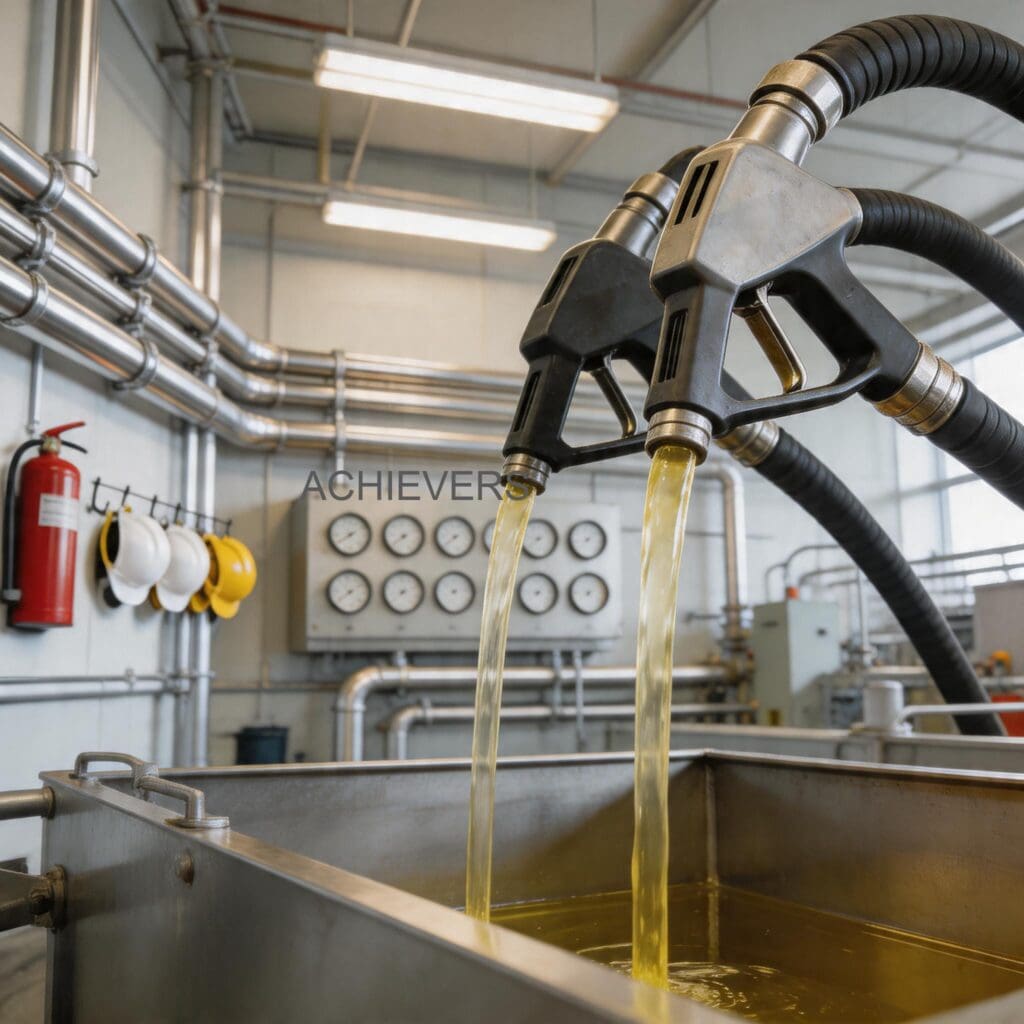
Proper installation is just as critical as the hardware itself. To ensure maximum lifespan, prevent leaks, and validate the automatic shut-off functions, engineering teams should follow this rigorous integration procedure when replacing or installing new dispensing nozzles.
- System Depressurization and Lockout: Isolate the dispenser from the main submersible turbine pump or suction line. Safely bleed all residual line pressure into an approved containment vessel. Never attempt to unthread a nozzle on a pressurized hose.
- Hose and Swivel Inspection: Inspect the hose end and the swivel joint (if applicable) for worn threads, damaged O-rings, or degraded gaskets. A new nozzle attached to a compromised swivel will still leak.
- Thread Preparation: Clean the BSP 3/4" male threads on the hose or swivel. Apply an industry-approved, fuel-resistant, non-hardening thread sealant paste. Do not use standard plumbing Teflon tape, as fragments can shear off, enter the fuel stream, and permanently jam the nozzle's internal check valves.
- Torque Application: Thread the new nozzle onto the hose by hand to prevent cross-threading. Use a properly sized open-ended wrench on the nozzle's designated hex flats to tighten. Do not over-torque, as this can stress the aluminum body casting.
- Pressurization and Leak Testing: Restore power to the pump and authorize a transaction to pressurize the line. Do not squeeze the lever yet. Inspect the BSP 3/4" inlet joint for any signs of weeping. The nozzle's "no-pressure, no-flow" valve should hold the fluid back completely.
- Venturi and Auto-Shutoff Validation: Dispense fuel into an approved, grounded testing container. While dispensing, carefully submerge the tip of the stainless steel spout into the fluid. The nozzle must automatically click and shut off flow within a fraction of a second. This validates that the vacuum port is clear and the shut-off diaphragm is functioning perfectly.
7. Selection Checklist for Global Fleet Depots
Before finalizing procurement for your depot upgrade or new build, cross-reference your site requirements with this comprehensive technical checklist.
- Inlet Thread Specification: Verify your existing hoses or breakaways utilize a BSP 3/4" connection to avoid the need for structural adapters.
- Spout Diameter Compatibility: Confirm that the 13/16" (approx. 20.6mm) spout is compatible with your fleet's standard vehicle fill necks.
- Flow Rate Matching: Ensure your dispenser pumps operate within the 0 to 60 L/min capability of the nozzle to prevent severe back-pressure and foaming.
- Operating Pressure Validation: Check that your system's dynamic operating pressure does not exceed the rated 0.18 MPa (1.8 bar) limits of the nozzle internals.
- Fluid Chemical Compatibility: Verify that the media being transferred is standard diesel, petrol, or an ethanol blend up to 10% (E10). For higher ethanol concentrations or biodiesel (B20/B100), verify specific elastomer compatibility.
- Automation System Interlocks: If utilizing an unmanned card-bolt system, ensure the "no-pressure, no-flow" security feature is specified to prevent forecourt dumping.
- Expected Cycle Life: Standard consumer nozzles fail around 250,000 cycles. Confirm the procurement of the 1-million-cycle verified spring design for commercial fleet applications.
- Ergonomic Protection: Specify the Duratuff lever guard and insulator colors (e.g., Red) to match your depot's visual identification protocols, preventing mis-fueling through visual cues.
FAQ
Q: Why does the nozzle frequently shut off before the vehicle tank is full?
A: Premature shut-off is usually caused by excessive diesel foaming, a blocked venturi vacuum hole at the tip of the spout, or a mismatch between the pump's flow rate and the nozzle's capacity. Ensure you are not pushing more than 60 L/min through the unit.
Q: Can we use these nozzles in a gravity-fed dispensing system?
A: No. These automatic nozzles feature a "no-pressure, no-flow" interlock designed for pressurized pumping systems. A gravity-fed tank typically cannot generate the requisite 0.18 MPa to open the internal check valve.
Q: What makes the stainless steel spout superior to aluminum?
A: Aluminum spouts degrade rapidly due to physical impacts and fluid cavitation, which distorts the geometry of the automatic shut-off vacuum port. Stainless steel lasts up to four times longer, maintaining exact dimensional tolerances for reliable shut-offs.
Q: How does the vacant position blocker improve safety?
A: In an attempt to avoid holding the lever, operators sometimes wedge fuel caps or foreign objects into the handle guard. The vacant position blocker is a physical design element that prevents these objects from lodging, eliminating the risk of unattended overflows.
Q: Are these compatible with standard card-lock authorization systems?
A: Yes. The OPW 11b arrangement is specifically designed for retail, business, and prepaid/card-bolt frameworks. The pressure interlocks ensure fuel is only dispensed during an active, pressurized, and authorized transaction.
Q: What maintenance is required to reach the 1 million cycle lifespan?
A: Routine inspection of the spout tip to ensure the vacuum hole is free of debris, periodic checking of the inlet threads for weeping, and ensuring the depot's primary fuel filters are changed regularly to prevent particulate scoring on the nozzle's internal O-rings.
Q: Can this nozzle handle heavy-duty mining equipment refueling?
A: While the durable construction is excellent for harsh environments, the 0-60 L/min flow rate is geared toward standard commercial transport, vans, and light/medium duty equipment. Refueling a 1,000-liter excavator tank at 60 L/min will take considerable time; larger high-flow variants are generally recommended for extreme bulk transfer.
To optimize your fleet depot's fluid transfer efficiency and eliminate costly spills, expert specification is essential. Contact our technical engineering team today with your required flow rates, specific vehicle applications, and site operating conditions so we can configure the exact Fuel Nozzles and dispensing systems to protect your bottom line.