For industrial operations managing off-grid sites—whether telecom towers, remote mining camps, offshore platforms, or large-scale construction projects—diesel generators are the lifeblood of productivity. Without them, operations halt. However, relying entirely on remote diesel power introduces a massive operational expense and a significant logistical blind spot: fuel management. Diesel is often the single largest variable operating cost at these sites, yet it remains one of the most poorly tracked assets. Generic fuel management solutions, such as simple tank level sensors or manual dipstick readings, consistently underperform. They are highly susceptible to thermal expansion errors, tank geometry inaccuracies, and, crucially, manual manipulation.
When you are burning thousands of liters of diesel per week, a measurement error of just 3% to 5% translates to massive financial leaks. More concerning is the vulnerability to fuel pilferage during transit, unloading, or directly from the day tank. To transition from reactive fuel purchasing to proactive fuel accounting, operations managers require high-precision, tamper-proof volumetric tracking. This is where a dedicated Fuel Flow Meter becomes an indispensable asset. By installing precision measurement instruments at critical transfer points, you can reconcile every drop of fuel delivered against every drop consumed by the engine, eliminating "phantom losses" and drastically improving your runtime forecasting.
Quick ROI Snapshot
- Typical Payback Period: 4 to 8 months.
- Key Drivers: 5–8% reduction in unaccounted fuel loss, elimination of manual dipstick errors, prevention of short-deliveries from vendors.
- Operational Gain: Precise calculation of Specific Fuel Consumption (SFC) to schedule predictive maintenance before engine failures occur.
1. Industry Overview: The Remote Power Fuel Challenge
The logistics of supplying fuel to remote sites are inherently complex. Diesel is loaded at a bulk terminal, transported over rugged terrain, unloaded into main storage tanks, transferred to day tanks, and finally consumed by the generator engine. At every node in this supply chain, operators face risks of contamination, spillage, and theft.
Furthermore, industrial diesel generator engines are rarely steady-state consumers. They experience rapid load fluctuations based on site power demand. Measuring actual engine consumption is further complicated by the fact that modern diesel engines use fuel not just for combustion, but also to cool and lubricate the fuel injectors. An engine will draw a high volume of fuel from the day tank, consume a fraction of it, and return the hot, unburnt fuel back to the tank. Standard tank level sensors cannot accurately separate actual consumption from fuel expansion caused by returning hot diesel.
To achieve legal-metrology-grade accounting and accurate generator efficiency metrics, operations require positive displacement measurement. Positive displacement technology physically traps a precise volume of fluid in a measuring chamber, ensuring that accuracy remains stable regardless of changes in fuel viscosity or ambient temperature extremes.
2. Product Capabilities Matched to Remote DG Needs
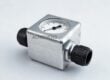
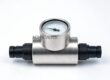
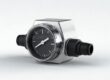
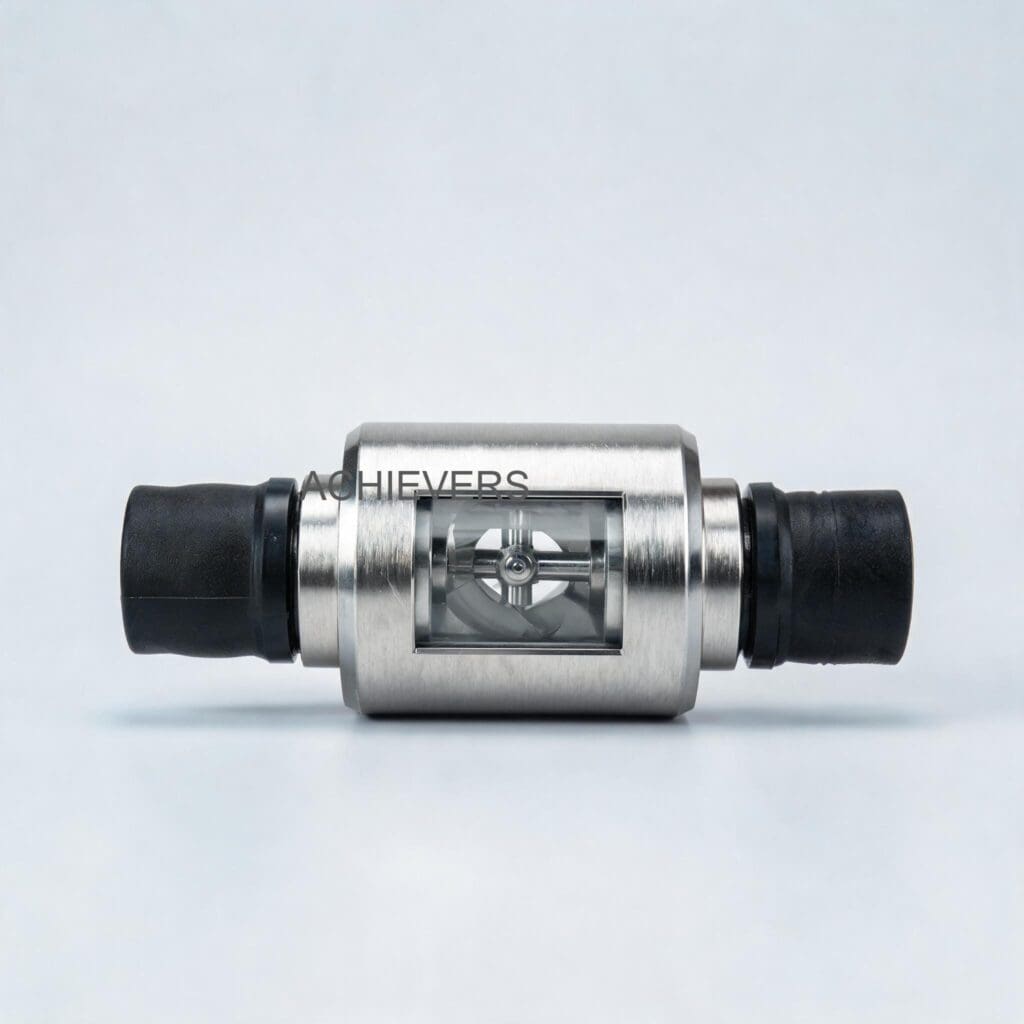
When specifying instrumentation for off-grid power stations, ruggedness and sustained accuracy are paramount. The Fuel Flow Meter (Model CE-104) is engineered specifically for these harsh conditions, utilizing two precision-machined oval gears. As fluid pressure pushes against the gears, they rotate, trapping and measuring exact volumetric pockets of fluid.
Here is how the technical specifications align directly with remote power generation requirements:
| Remote Site Requirement | Fuel Flow Meter Feature | How It Addresses the Need |
| :— | :— | :— |
| High Accuracy for Reconciliation | +/- 1% Metric Accuracy | Ensures precise tracking of fuel drops and consumption, minimizing discrepancies between invoiced and actual fuel. |
| Variable Engine Load Tracking | 0-120 L/Min Flowrate Range | Highly sensitive to low flow rates during generator idling, while capable of handling peak load demands. |
| Tamper & Theft Prevention | Protection Against Exaggeration | Features secure totalizers and licensing protocols to prevent unauthorized resetting or manipulation of flow data. |
| Harsh Environment Durability | Leak-proof and Dry Totaliser | The counting mechanism is isolated from the fluid, preventing dial fogging and ensuring readability in extreme weather. |
| Maintenance-Free Operation | Self-lubricating Oval Gears | The diesel itself lubricates the measuring gears, providing a long operational life without scheduled internal lubrication. |
| Compatibility with Gravity Systems | Low Head Loss Design | Can be installed on gravity-fed day tanks without restricting fuel flow to the engine injection pump. |
| Standardized Installation | BSPT/NPT 1” Inlet Size | Allows for immediate, leak-free integration into standard industrial diesel piping without complex adapters. |
| Long-Term Data Tracking | 8-Digit Accumulative Totalizer | Capable of tracking up to 99,999,999 liters, ensuring continuous lifetime data logging for large continuous-run sites. |
3. Typical Installation Scenarios for Remote Sites
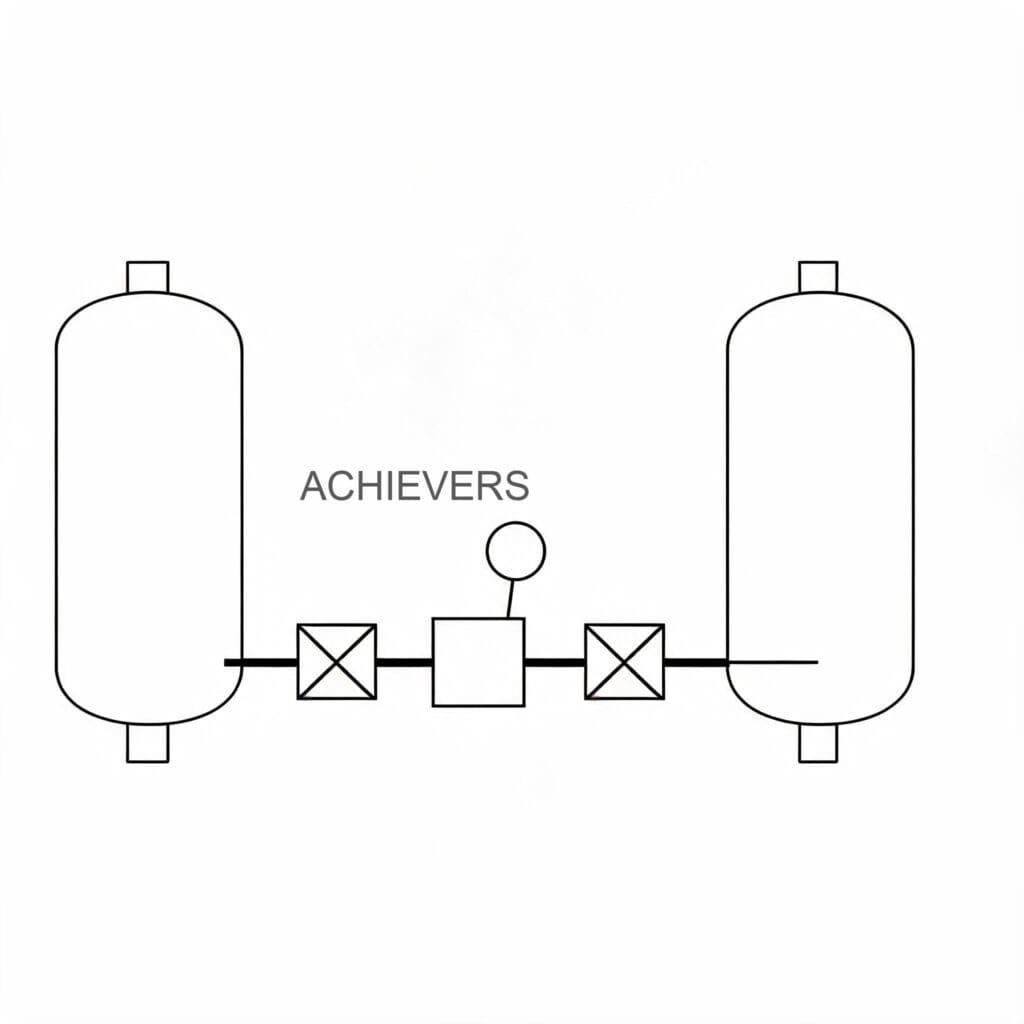
Deploying a Fuel Flow Meter effectively requires strategic placement across your fuel infrastructure. Here are the three most critical deployment scenarios for industrial operations:
Scenario 1: Bulk Storage Receipt and Vendor Auditing
When fuel delivery trucks arrive at a remote site, the standard practice is to rely on the truck's meter or a manual tank dip. Both are highly susceptible to error or deliberate short-delivery. By installing a meter at the main storage tank receiving line, operations managers capture the exact volume transferred into their custody. The digital or mechanical totalizer provides an indisputable, tamper-proof record that procurement teams can use to audit vendor invoices.
Scenario 2: Main Tank to Day Tank Transfer
Large off-grid sites typically pump fuel from a massive bulk storage tank to smaller day tanks located directly next to the generator sets. Installing a meter on this transfer line allows site managers to track exactly how much fuel is being allocated to specific power generation units per shift. This helps identify if a specific day tank is losing fuel to external pilferage when the generator is offline. For multi-tank configurations, pairing this with a Liquid Batching System can automate the precise filling of day tanks, preventing hazardous overfills.
Scenario 3: Engine Differential Measurement (Feed and Return)
To determine the true efficiency of a diesel engine (liters per kilowatt-hour), you must measure actual consumption. Because engines return unburnt fuel, a single meter on the feed line will over-report consumption. The solution is a differential setup: one meter on the engine feed line and a second meter on the return line. True consumption is calculated as (Feed Volume – Return Volume). For heavy industrial engines, utilizing a dedicated Diesel Flow Meter on both lines provides the exact data needed to trigger predictive maintenance if the engine starts burning more fuel than its baseline.
4. Compliance, Accuracy, and Certification Requirements
Operating industrial sites across global jurisdictions requires adherence to strict engineering and safety standards. Fuel handling systems must often comply with ISO 9001 quality management standards, API (American Petroleum Institute) guidelines for fluid measurement, and local metrology laws to ensure accurate financial accounting.
Furthermore, if the site stores other volatile fluids alongside diesel (such as gasoline or aviation fuel), instrumentation may require ATEX certification for explosive atmospheres, or CE and UL marks for electrical safety. The Model CE-104 is vacuum sealed and manufactured under stringent industry norms to ensure it meets the rigorous demands of global facility managers.
Common Mistake to Avoid
Do not install a positive displacement flow meter without proper pre-filtration. Remote sites often receive "dirty diesel" contaminated with rust, silica, or water. Because oval gear meters have incredibly tight internal tolerances to ensure high accuracy (+/- 1%), solid particulates can jam the gears. Always install a Y-strainer (typically 60 to 100 mesh) directly upstream of the meter to protect your investment and ensure a long, maintenance-free life.
5. ROI and Operational Benefits
Investing in precision flow measurement shifts a facility from reactive guessing to proactive operational control. The return on investment is realized not just in preventing theft, but in optimizing generator efficiency and streamlining procurement.
| Operational Benefit | Typical Improvement | Global Industry Context |
| :— | :— | :— |
| Pilferage Detection | Eliminates 95%+ of unaccounted losses | Thieves often skim small amounts daily that dipsticks miss. An 8-digit totalizer provides an unalterable audit trail. |
| Vendor Reconciliation | 2-4% reduction in fuel spend | Pay only for the exact volume of fuel delivered, catching short-deliveries caused by air entrainment or fraud. |
| Runtime Forecasting | +/- 1% accuracy in specific fuel consumption | Accurately calculate exactly how many hours of power remain in the tank, preventing catastrophic off-grid blackouts. |
| Predictive Maintenance | Early detection of engine wear | A sudden spike in specific fuel consumption (L/kWh) alerts engineers to injector failures or filter clogs before engine failure. |
6. Selection Checklist for Remote DG Sites
Specifying the correct flow meter requires a systematic approach to ensure compatibility with your specific site conditions. Follow this 8-step engineering procedure before procuring your instrumentation:
- Determine Your Required Flow Rate Range: Verify the maximum and minimum flow rates of your pump or gravity system. The meter must cover your normal operating range (e.g., 6 to 100 L/Min). Undersizing will restrict flow; oversizing will reduce accuracy at low flows.
- Identify Connection Sizes and Standards: Standardize your piping. Verify if your system requires 1” BSPT or NPT threaded connections to avoid the need for multiple pressure-dropping adapters.
- Confirm the Fluid Medium: Ensure the meter's internal materials are compatible. While excellent for diesel, kerosene, and gasoline, these meters are forbidden for measuring corrosive chemicals or acids.
- Evaluate Pressure Drop Limits: For gravity-fed day tanks, available head pressure is extremely low. Verify that the meter's low head loss characteristics will not starve the engine's injection pump.
- Specify Filtration Requirements: Mandate the installation of an upstream micron strainer. Check your site's fuel quality history to determine the appropriate mesh size.
- Plan for Air Elimination: If measuring fuel received from delivery trucks, include an air eliminator upstream of the meter. Positive displacement meters will measure air bubbles as fluid, artificially inflating the reading.
- Decide on Differential vs. Direct Measurement: Determine if you are measuring total bulk transfer (single meter) or actual engine consumption (requires two meters for feed and return).
- Verify Totalizer Requirements: Ensure the required accumulative counting capacity. For remote sites with high continuous consumption, an 8-digit totalizer is mandatory to prevent frequent roll-overs and confused accounting.
FAQ
Q: What is the typical maintenance interval for the internal gears?
A: Because the oval gears are self-lubricating via the diesel fuel passing through them, they offer a long, maintenance-free working life. Routine maintenance is generally limited to cleaning the upstream strainer to prevent pressure drops and ensuring no solid debris enters the measuring chamber.
Q: Can this meter effectively detect slow, steady fuel theft?
A: Yes. Because it features an accumulative 8-digit dry totalizer with protection against reading manipulation, managers can compare the exact meter total against engine run-hours. Any discrepancy instantly highlights unaccounted fuel removal.
Q: Will installing this meter on my engine feed line restrict fuel flow?
A: No, provided it is sized correctly. The meter is designed for low head loss, meaning it creates minimal resistance in the line. However, always verify that your engine's maximum fuel draw (including return volume) falls within the 0-120 L/Min specification.
Q: What happens if there is air in the fuel lines?
A: Like all positive displacement meters, this instrument measures total volume passing through it, including trapped air. For applications where air introduction is common (like unloading empty delivery trucks), an air eliminator must be installed upstream to maintain the +/- 1% metric accuracy.
Q: Is the meter affected by engine vibration if installed near the generator skid?
A: The robust, compact construction is designed for mobile and settled installations with diesel motors. However, to maximize longevity, it is best engineering practice to mount the meter using vibration-damping supports or flexible hose connections if installed directly on a high-vibration generator skid.
Q: How does changes in ambient temperature affect the accuracy?
A: Positive displacement meters are virtually unaffected by changes in liquid viscosity caused by temperature fluctuations. While the physical volume of diesel expands or contracts with temperature, the meter will accurately report the exact volumetric space the fluid occupied as it passed through the gears.
Q: Can it be used for fluids other than diesel?
A: Yes, it is suitable for petroleum-kind fluids including kerosene and gasoline. However, it is strictly forbidden to use this meter for corrosive liquids, acids, or high-viscosity heavy fuel oils (HFO) outside of its design parameters.
To lock down your fuel accounting and protect your off-grid operations from costly pilferage and measurement errors, reach out to our engineering team today. Provide us with your site's peak flow rates, generator engine specifications, and whether you require bulk transfer monitoring or differential engine consumption tracking. We will help you specify the exact Fuel Flow Meter configuration to ensure seamless integration and rapid ROI for your global facilities.