For industrial operations relying heavily on diesel power, fuel is often the single largest variable operating expense. Yet, surprisingly few facilities measure exactly how much fuel their engines are actually burning. Instead, they rely on bulk tank level drops or generic fuel calculations, leaving a massive blind spot in their operational expenditure. This lack of visibility masks inefficient engine loads, mechanical degradation, and the ever-present risk of fuel pilferage.
To gain true control over your diesel asset OPEX, you need highly accurate, engine-specific data. This is where a Fuel Consumption Meter changes the game. By moving measurement away from the bulk storage tank and placing it directly at the engine's supply and return lines, operations managers can capture the exact net fuel consumed. This enables real-time load optimization, predictive maintenance based on burn-rate anomalies, and absolute accountability for every drop of diesel purchased.
1. Industry Overview: The Fluid Challenge
Modern heavy-duty diesel engines and generator (DG) sets operate using a continuous circulation of fuel. The fuel pump draws significantly more diesel from the tank than the engine actually requires for combustion. This excess fuel acts as a coolant and lubricant for the fuel injectors before being routed back to the fuel tank via a return line.
Because of this circulation loop, simply measuring the fuel going into the engine provides a grossly inaccurate picture of actual consumption. Furthermore, the diesel returning from the engine is hot, less dense, and heavily aerated (full of micro-bubbles caused by the pressure drop and heat of the injectors).
Standard flow meters fail in this environment. If you do not account for the aerated, thermally expanded return flow, your net consumption calculations will be entirely wrong. Facilities running continuous prime power or heavy-duty construction equipment need a Fuel Consumption Meter specifically designed to measure the differential between the inlet and return lines while physically deaerating the return flow before measurement. Whether you are installing a fuel consumption meter for DG set in India, an offshore drilling rig in the North Sea, or a remote mining camp in Western Australia, the physics of diesel return lines dictate the need for specialized differential measurement.
2. Product Capabilities Matched to Industry Needs
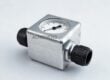
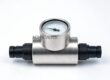
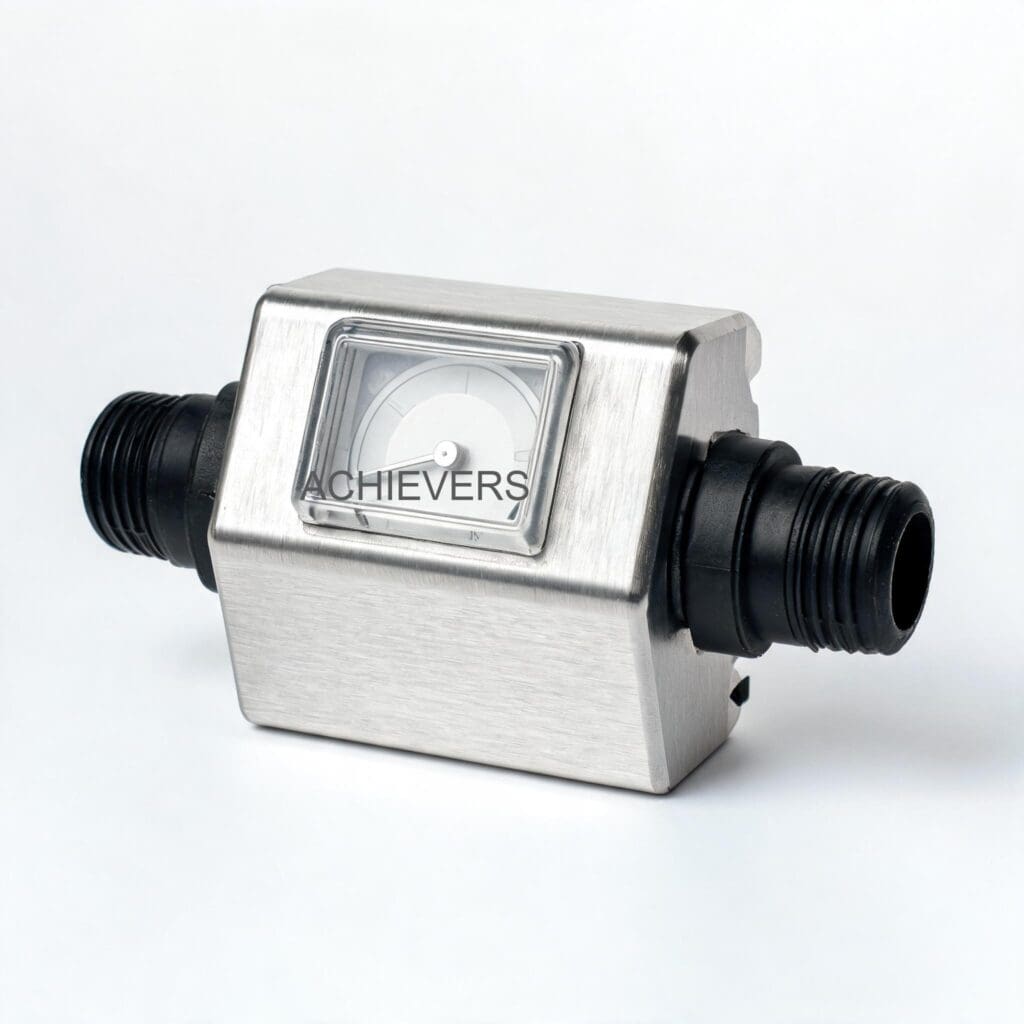
To overcome the specific physics of diesel engine fuel loops, an industrial-grade Fuel Consumption Meter utilizes dual positive displacement sensors and a sophisticated calculating unit.
Here is how the specific features of our systems translate to operational reliability for fleet and plant managers:
| Industry Requirement | Fuel Consumption Meter Feature | How It Addresses the Need |
| :— | :— | :— |
| High Accuracy Differential Measurement | Dual Aluminum Anodized Oval Gear Sensors | Measures inlet (A) and return (B) simultaneously. Calculates exact consumption (C = A – B) with a system accuracy of 0.5% of genuine consumption. |
| Aeration in Return Fuel | Integrated Deaeration Design | The return flow of fuel is deaerated before passing through the return flow sensor, preventing vapor lock and false volumetric readings. |
| Engine Vibration and Heat | Remote Micro-controller Display | The fuel calculator and LCD display can be mounted away from the immediate heat and vibration of the engine block, ensuring longevity. |
| Variable Engine Sizes | Scalable Sensor Options (CE-006 to CE-025) | Easily matched to engine sizes ranging from small 200 HP utility generators up to massive 2500 HP prime power units. |
| Integration with Telematics | RS-485 / RS-232 / Digital Pulse Output | Allows seamless data transmission to SCADA, BMS, or mobile GPS/GPRS modems for remote, real-time tracking. |
| Dirty Fuel / Contamination | Y-Type Fuel Strainer included | Captures particulate matter before it enters the precision oval gear chambers, preventing sensor jamming and mechanical wear. |
| Wide Voltage Environments | 5 Vdc to 24 Vdc (up to 29 Vdc peak) Power | Operates directly off the engine's onboard battery system without requiring external power converters. |
| Tamper Prevention | Closed-Loop Digital Calculation | Because it provides precise net consumption data, it acts as a reliable diesel generator fuel theft monitoring meter by revealing discrepancies between tank drops and engine burns. |
3. Typical Installation Scenarios in This Industry
Deploying a differential measurement system requires matching the right sensor capacity to your engine's internal fuel pump flow rate—not just the combustion rate.
Scenario 1: Prime Power Generation (Mining & Remote Sites)
In off-grid mining camps, large megawatt-class generators run 24/7. These engines feature massive internal fuel circulation rates.
- Configuration: The FCM:020 system is ideal here, utilizing two CE-020 fuel sensors capable of handling the flow rates of 1000 HP to 1500 HP engines.
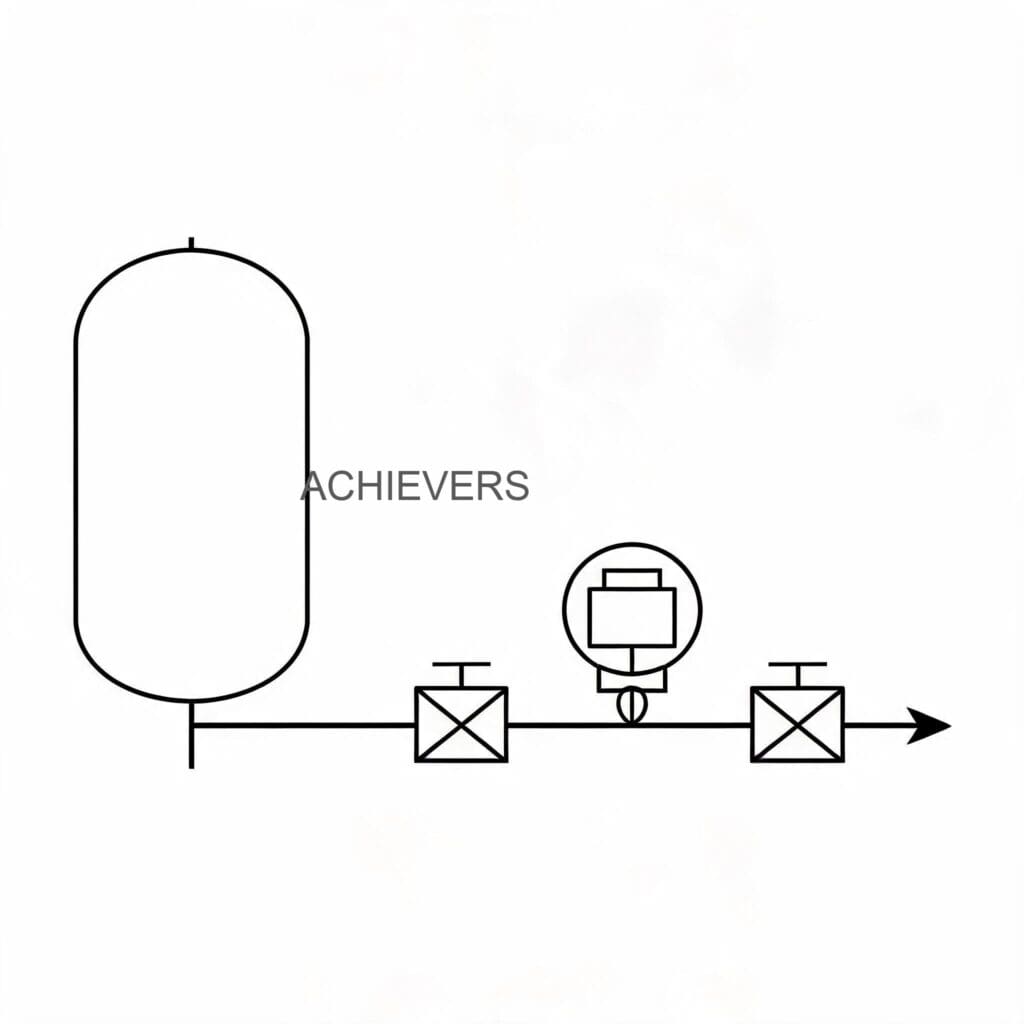
- Setup: The inlet sensor is installed after the primary water separator, while the return sensor is installed after the engine's fuel cooler (if equipped) but before the main day tank.
- Key Settings: Integrated with the camp's SCADA via RS-485 to monitor grams-per-kilowatt-hour (g/kWh) efficiency in real time.
Scenario 2: Data Center Backup Power
Data centers rely on fleets of standby generators. While they don't run constantly, when they do run, fuel burn efficiency is critical to extending runtime during grid failures.
- Configuration: The FCM:012 system (for 400 HP to 1000 HP engines).
- Setup: Installed in the drop-down lines from the overhead day tanks. Because these environments are highly automated, the digital output is wired directly to the Building Management System (BMS).
- Key Settings: Pulse outputs are configured to trigger automated fuel polishing and refilling sequences based on exact engine burn data rather than rough tank estimates.
Scenario 3: Heavy Mobile Fleet Management (Marine & Earthmoving)
Fuel consumption in haul trucks, inland riverboats, and heavy agricultural equipment fluctuates wildly based on operator behavior and load.
- Configuration: The FCM:006 or FCM:008 systems (up to 400 HP).
- Setup: Powered directly by the vehicle's 12V/24V battery system. The robust aluminum anodized sensors easily handle mobile vibration.
- Key Settings: Connected to an onboard GPS/GPRS modem. Fleet managers use this setup as a strict control measure; comparing the onboard meter's net burn to bulk dispenser logs highlights exact instances of fuel pilferage.
Common Mistake to Avoid
Sizing the meter based on fuel consumption rather than fuel pump flow. A 500 HP engine might only burn 100 liters per hour, but its internal fuel pump might circulate 400 liters per hour (300 L/hr returning to the tank). If you size the oval gear sensors for 100 L/hr, you will cause severe flow restriction, fuel starvation, and engine failure. Always size the sensors based on the engine's maximum internal pump flow rate.
4. Compliance, Accuracy, and Certification Requirements
Industrial operators must adhere to strict internal auditing and international standards for fuel storage and usage.
Accuracy Standards:
The core of our differential system relies on precision positive displacement. The oval gear detecting components deliver an individual sensor accuracy of 0.1% Full Scale Deflection (FSD). When calculating the differential (inlet minus return), the total system accuracy is guaranteed at 0.5% of genuine consumption. This high degree of accuracy satisfies strict corporate auditing requirements for OPEX tracking and carbon emissions reporting.
International Compatibility:
For global industries operating under CE machinery directives or local equivalent safety standards, the aluminum anodized construction provides necessary durability. Furthermore, the low-voltage DC electronics (5–24 Vdc) comply with standard automotive and marine electrical safety guidelines, ensuring safe integration into existing engine wiring harnesses without risking intrinsic safety breaches.
When procurement heads look to buy fuel consumption meter with RS485 output, they require absolute assurance that the digital handshake will conform to standard Modbus RTU protocols used globally, ensuring seamless integration regardless of the PLC brand utilized on site.
5. ROI and Operational Benefits
Implementing an accurate fuel consumption meter for diesel generator return line measurement transforms a major variable expense into a tightly controlled metric.
Quick ROI Snapshot
- Typical Capital Cost: Low to medium depending on engine size (CE-006 vs CE-025).
- Fuel Savings: 3% to 8% reduction in "lost" or pilfered fuel; 2% to 4% savings via load optimization.
- Typical Payback Period: 4 to 8 months for continuous prime power applications; 12 to 18 months for standby applications.
| Benefit | Typical Improvement | Global Industry Context |
| :— | :— | :— |
| Fuel Theft Prevention | Eliminates up to 99% of undocumented fuel loss. | In remote global infrastructure sites, skimming fuel from return lines or day tanks is common. Matching engine burn to tank levels stops pilferage instantly. |
| Load Optimization | Reduces fuel burn by running engines at optimal efficiency bands. | Operators can view real-time consumption and shut down unnecessary parallel generators if the load can be handled more efficiently by fewer engines. |
| Predictive Maintenance | Identifies injector wear 3–5 weeks before failure. | A sudden, unexplained increase in fuel consumption for the same kW output is a primary indicator of injector fouling, clogged air filters, or loss of compression. |
| Emissions Reporting | Highly accurate data for ESG and carbon tax reporting. | Provides precise liter/gallon usage data required by international environmental agencies, removing the need for estimates. |
6. Selection Checklist for This Industry
Choosing the right industrial fuel consumption meter supplier and specifying the correct configuration requires gathering specific technical data from your fleet. Use this 8-step checklist before placing an order:
- Determine Engine Horsepower (HP) or Kilowatt (kW) Rating: This is the primary metric for selecting your meter range (e.g., FCM:006 for <200 HP vs FCM:020 for 1000-1500 HP).
- Verify Max Fuel Pump Flow Rate: Check the engine manufacturer's datasheet for the maximum flow rate of the internal fuel transfer pump, not just the burn rate.
- Confirm the Number of Lines: Ensure your engine utilizes a standard supply and return loop (some modern common-rail systems have unique bypass routings that require careful sensor placement).
- Identify Power Supply Availability: Confirm that stable 12V or 24V DC power is available from the engine battery or control panel to power the 5–24 Vdc meter.
- Select Required Units of Measure: Determine if your facility standardizes on Liters, Gallons, or Cubic Meters (m3) for the micro-controller display.
- Choose Data Output Requirements: If integrating with telemetry, specify if you require an RS-485 serial yield, RS-232, or a digital pulse output to connect with your GPRS/GPS modem.
- Check Operating Environment: Assess if standard aluminum anodized construction is sufficient, or if environmental covers are required for extreme weather.
- Evaluate Strainer Needs: Ensure there is physical space in the piping layout to install the mandatory Y-type fuel strainer upstream of the inlet oval gear sensor.
(Note: For operations utilizing broader bulk transfer setups, you may also want to evaluate a standard Diesel Flow Meter for your main storage tanks to complement engine-level monitoring).
FAQ
Q: Can this meter handle the high temperatures of return-line diesel?
A: Yes. The aluminum anodized oval gear sensors are designed to withstand the elevated temperatures of diesel returning from the engine block and injectors without warping or losing their 0.1% FSD accuracy.
Q: How does the system handle air bubbles in the return line?
A: Aeration is a critical challenge in return line measurement. Our system deaerates the return flow of fuel prior to measurement, ensuring that the oval gears only measure liquid volume, not expanded air or vapor, guaranteeing accurate net differential calculations.
Q: Do I need a separate power source for the flow sensors and the display?
A: No. The entire system is designed for onboard industrial use. It operates safely on 5 Vdc to 24 Vdc (capable of handling up to 29 Vdc peaks), meaning you can wire it directly to the existing diesel engine starting batteries.
Q: Will the sensors restrict fuel flow and stall the engine?
A: Not if sized correctly. This is why we offer different models (CE-006 through CE-025). As long as you select a model rated for your engine's horsepower and pump flow rate, the positive displacement oval gears will rotate freely with minimal pressure drop.
Q: How does this system stop fuel theft?
A: While tank level sensors can be fooled by physically tilting the tank or bypassing the cap, a consumption meter tracks what the engine actually consumes. If your bulk delivery receipts say you dispensed 1,000 liters, but the consumption meter shows the engine only burned 800 liters, you immediately know you have 200 liters of undocumented loss.
Q: What maintenance is required for the oval gear sensors?
A: The system requires minimal maintenance, provided the Y-type fuel strainers are kept clean. We recommend inspecting and cleaning the strainer basket during every standard engine oil change interval to prevent particulate buildup from entering the flow chamber.
Q: Can this system withstand harsh, dusty, or high-ambient-temperature environments?
A: Absolutely. The robust aluminum construction and solid-state micro-controller are built specifically to endure heavy vibrations, high ambient temperatures, dusty environments, and variable fuel quality typical of demanding global and Indian site conditions.
If you are ready to eliminate fuel blind spots and take absolute control of your diesel generation OPEX, our engineering team is here to help you configure the perfect setup. Contact Achievers Pumps and Valves today with your engine horsepower, estimated maximum flow rates, and preferred data integration method, and we will tailor a Fuel Consumption Meter solution guaranteed to deliver immediate ROI.