Selecting the right fluid dispensing equipment is rarely just about matching pipe threads and flow rates. For operations managers and procurement heads overseeing high-volume vehicle fleets, mining operations, or remote power generation sites, dispensing hardware directly impacts environmental compliance, operator safety, and fluid loss. When evaluating Fuel Nozzles, the choice between automatic and manual configurations dictates your operation's spill risk, shut-off reliability, and long-term total cost of ownership.
This automatic vs manual fuel nozzles comparison for industrial fueling is designed to help engineering and procurement teams move beyond basic specifications. We will analyze how specialized features—such as no-pressure/no-flow mechanisms, cycle-verified lifespans, and ergonomic integration—affect daily operations. Whether your fleet operates in heavily regulated ATEX zones in Europe or you are evaluating a fuel nozzles supplier in India for fleet refueling, applying global engineering standards to your dispensing hardware ensures maximum return on your fluid handling investments.
Quick ROI Snapshot
- Typical payback period: 12 to 18 months for automatic models.
- Primary savings driver: Elimination of overfill events (saving 1-3 liters per accidental overfill) and reduced environmental cleanup costs.
- Secondary savings: Cycle-verified longevity (over 1 million cycles) drastically reduces replacement frequency compared to standard commercial hardware.
Common Mistake to Avoid
Installing manual nozzles in prepay, card-lock, or self-service automated fueling systems. Without a pressurized automatic shut-off mechanism, an operator can accidentally leave the nozzle in an open position. When the system activates, this guarantees an immediate, high-volume spill, violating ISO 14001 environmental standards and risking severe facility fires.
1. Overview of Fuel Nozzles Family
At a fundamental fluid dynamics level, all Fuel Nozzles serve as the terminal control valve in a pressurized dispensing system. However, the internal architecture governing how that valve stays open, and more importantly, how it closes, separates basic manual units from advanced automatic models.
Automatic Dispensing Technology
Premium automatic variants, such as the OPW 11b arrangement, are engineered for commercial and retail filling applications, including prepaid, full-service, and card-lock systems. These units feature integrated Venturi tubes and pressure-sensing diaphragms. When fluid covers the sensor port at the end of the spout, the vacuum changes, tripping the mechanical release and slamming the main valve shut in milliseconds. Advanced models also feature a unique "no pressure – no flow" safety device. The nozzle cannot be opened until the central pumping system is pressurized, and it closes automatically the moment system pressure is removed.
Manual Dispensing Technology
Manual variants lack the internal pressure-sensing diaphragm and automatic mechanical trip. The operator maintains physical control over the flow rate by holding the lever. While simple in construction and immune to false-tripping from fuel foaming, they rely entirely on human intervention to prevent tank overfills.
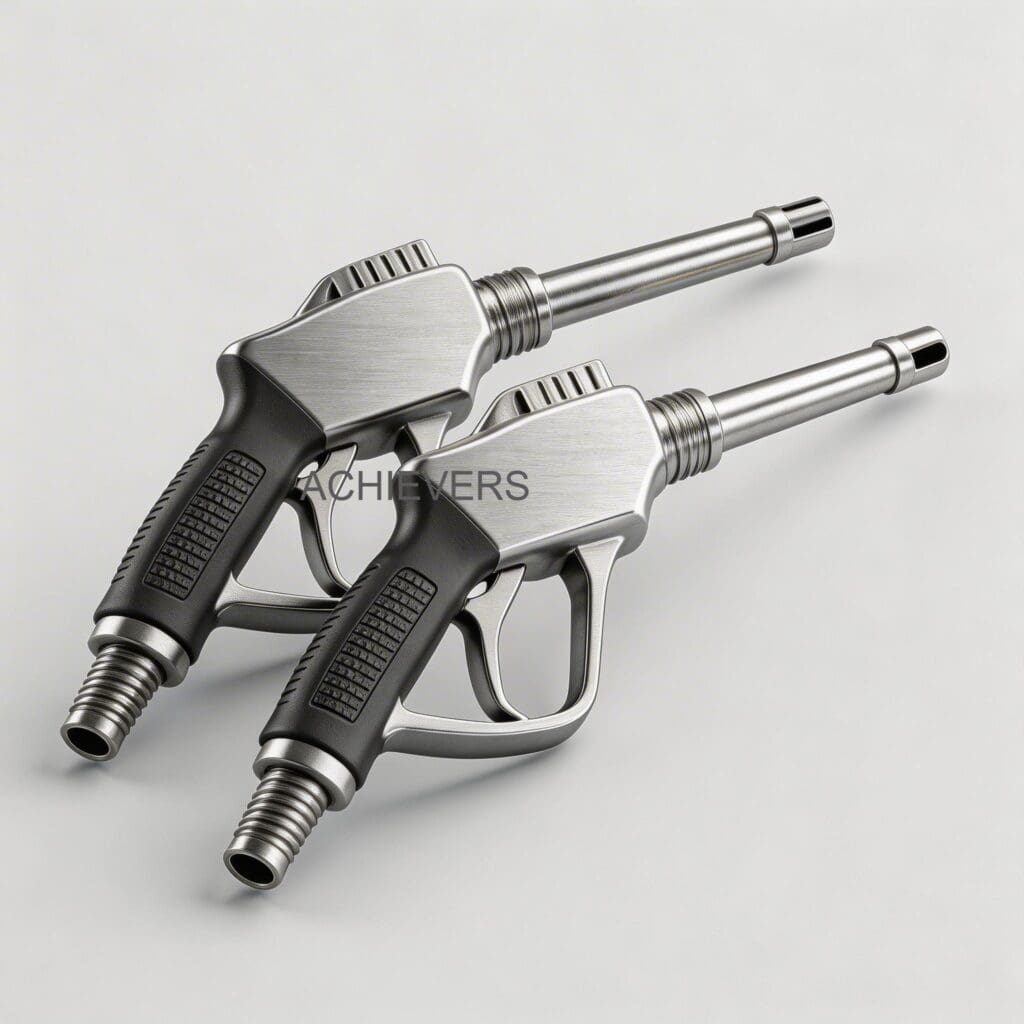
2. Head-to-Head Specification Comparison
To make an informed engineering decision, you must evaluate the internal materials, pressure ratings, and safety interlocks. Below is a technical comparison based on the high-performance Fuel Nozzles available for industrial deployment.
| Feature / Specification | Premium Automatic Nozzles (OPW 11b Series) | Standard Manual Nozzles |
| :— | :— | :— |
| Primary Shut-Off Mechanism | Venturi vacuum-trip automatic shut-off | Manual operator release |
| Spill Prevention Technology | No pressure – no flow device; closes upon pressure drop | None; flows if mechanically held open |
| Flow Rate Capacity | Accu-stop to-the-penny control, 0-60 L/min | Varies, typically unregulated 0-80+ L/min |
| Maximum Working Pressure | 0.18 MPa (1.8 Bar) | Varies by valve spring rating |
| Spout Construction | Stainless steel (lasts 4x longer than standard aluminum) | Usually standard extruded aluminum |
| Cycle Life Verification | Tested to > 1 million operational cycles | Typically untested or < 100,000 cycles |
| Inlet Connection | BSP 3/4" standard industrial thread | Varies (BSP/NPT) |
| Spout Diameter | 13/16" (optimized for standard diesel/gasoline tanks) | Varies based on high-flow requirements |
| Ergonomics & Protection | Duratuff lever guard with empty position blocker | Bare metal or basic rubber sleeve |
| Fluid Compatibility | Diesel, petrol, up to 10% ethanol blends | Fluid dependent (often broad compatibility) |
| Net Weight | 1.14 kgs per piece | Usually lighter (0.8 – 1.0 kgs) |
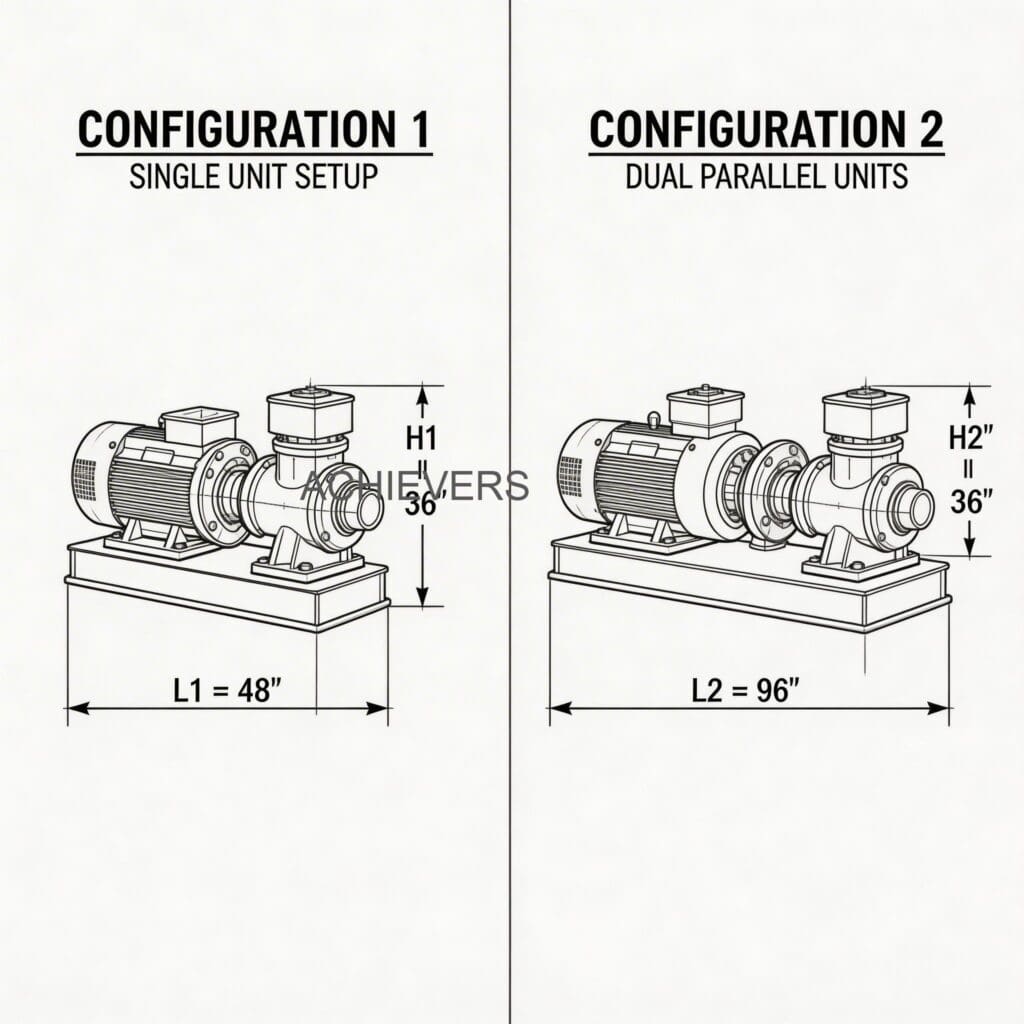
3. Application Comparison Table
Selecting the correct hardware requires matching the technology to the operating environment. A nozzle that performs flawlessly in a retail petrol station might fail in a highly viscous, cold-weather mining application.
| Application Scenario | Recommended Option | Engineering Reasoning |
| :— | :— | :— |
| Card-Lock & Prepay Fleet Systems | Automatic (OPW 11b) | "No pressure – no flow" interlock prevents open-valve spills upon system activation. |
| Hazardous Area Dispensing (ATEX) | Automatic | Minimizes spill risk and explosive vapor displacement; stainless spout prevents sparks. |
| Gravity-Fed Agricultural Tanks | Manual | Automatic models require 0.18 MPa minimum pressure; gravity feeds often fail to trip the sensor. |
| High-Volume Mobile Dispensing | Automatic | When paired with a Mobile Fuel Dispenser, auto-shutoff allows operators to monitor other site safety metrics during fills. |
| Viscous Oil & Lubricant Transfer | Manual | High viscosity fluids block automatic Venturi sensing ports, causing premature shut-off. |
| 10% Ethanol Blend Dispensing | Automatic | Specifically listed and sealed for ethanol blends, preventing O-ring degradation. |
| High-Abrasion Construction Sites | Automatic | Duratuff hand guards and stainless steel 13/16" spouts withstand heavy impacts and scratching better than aluminum. |
| High-Accuracy Batching | Automatic | Features Accu-stop "to-the-penny" flow control when used alongside a Fuel Flow Meter. |
4. Total Cost Comparison
Procurement teams must look past the initial capital expenditure (CAPEX). While manual valves represent a lower upfront cost, the operational expenditure (OPEX) associated with environmental spills, mechanical failure, and operator inefficiency quickly alters the true cost. To maintain global relevance, costs below are represented as relative indices rather than regional currencies.
| Option | Relative Purchase Price | Annual Maintenance Demand | Expected Lifecycle | Best Application Profile |
| :— | :— | :— | :— | :— |
| Standard Manual Nozzle | 1.0x (Baseline) | Low (Periodic O-ring check) | 1 to 2 years | Low-frequency, low-pressure gravity transfers. |
| Commercial Automatic Nozzle | 2.5x to 3.0x Baseline | Medium (Sensor port cleaning) | > 1 Million Cycles (3-5+ years) | High-volume retail, prepay systems, industrial fleets. |
| High-Flow Manual | 1.5x Baseline | Low | 2 to 3 years | High-viscosity bulk transfers where speed is prioritized over precise shut-off. |
5. Decision Guide: Which One for Your Plant?
Upgrading your dispensing infrastructure requires a systematic approach to ensure compatibility with your existing pumps, meters, and hoses. Follow this 8-step procedural decision guide to specify the correct dispensing terminal for your operations.
- Assess System Pumping Pressure: Verify your central pump or dispenser generates sufficient dynamic head. Automatic models require specific line pressure (up to 0.18 MPa) to actuate the internal diaphragm. If you are operating a gravity-fed overhead tank with minimal pressure, you must select a manual variant.
- Evaluate Fluid Viscosity and Foaming: Determine the characteristics of the fluid. Standard diesel and petrol work perfectly with automatic sensing ports. If you are dispensing heavy machine oils or highly aerated fluids, the Venturi port may false-trip. For viscous fluids, specify manual valves.
- Analyze System Automation Levels: If your site uses prepaid modules, credit/debit automation, or card-lock systems, you must specify automatic models with "no pressure – no flow" technology and empty-position blockers to ensure the system is completely fail-safe against user abandonment.
- Determine the Required Flow Rate: Check your required fill times. The premium automatic models deliver up to 60 L/min, which is optimal for standard fleet vehicles. If filling 1,000-liter bulk tanks on mining excavators, ensure your chosen model handles the required velocity without excessive pressure drops.
- Inspect Chemical Compatibility: Verify that internal O-rings, seals, and diaphragms are rated for your specific fluid. Ensure your choice is explicitly listed for diesel, petrol, and up to 10% ethanol mixes if bio-blends are present on your site.
- Evaluate Operator Ergonomics: Consider operator fatigue and vehicle protection. Select designs featuring 2-piece hand protectors, Duratuff lever guards that prevent vehicle scratching, and one-finger hold-open clips for extended dispensing times.
- Specify Spout Metallurgy: Aluminum spouts degrade rapidly under high-cycle industrial use. Always specify a stainless steel spout tip, which cycle tests prove lasts up to four times longer than standard extruded aluminum in high-impact environments.
- Standardize Thread and Connection Fittings: Ensure the inlet thread matches your existing hose infrastructure. Industrial standards typically require a BSP 3/4" inlet. Use appropriate thread sealants designed for hydrocarbons during installation to prevent weepage.
FAQ
Q: How does the "no pressure – no flow" mechanism actually work?
A: This safety feature utilizes an internal spring-loaded check valve that remains closed until the main pump builds sufficient line pressure (up to 0.18 MPa). If an operator drops the hose or the pump shuts off, the pressure drops, and the internal valve instantly snaps shut, preventing residual fluid drainage or accidental spills upon system restart.
Q: Are these units compatible with bio-fuels and ethanol blends?
A: Yes. High-quality automatic models are constructed with specialized elastomers and seals that are expressly listed and verified for use with diesel, petrol, and up to 10% ethanol blends without risk of internal degradation or swelling.
Q: Why does my automatic nozzle keep shutting off before the tank is full?
A: Premature shut-off is usually caused by excessive fluid foaming inside the vehicle tank, which splashes against the spout tip and blocks the Venturi sensor port. It can also occur if the system flow rate exceeds the tank neck's venting capacity, causing fluid to back up instantly. Lowering the flow rate using the Accu-stop flow control clip often resolves this.
Q: What makes the OPW 11b arrangement superior for industrial card-lock systems?
A: The OPW 11b arrangement features an empty position blocker on the lever guard and is cycle-verified to outlast 1 million operations. This prevents users from jamming the lever open with external objects, which is a critical safety requirement for unattended card-lock fleet operations.
Q: How often should we perform preventative maintenance on these valves?
A: While cycle-verified to last over a million uses, you should visually inspect the stainless steel spout, the Duratuff hand guards, and the BSP 3/4" inlet connection monthly. Keep the vacuum sensing port at the tip free of debris and crystallized fuel residue to maintain immediate shut-off response.
Q: Is there a comprehensive best fuel nozzles for diesel dispensing buyers guide rule of thumb?
A: The primary rule of thumb is to let the dispensing infrastructure dictate the valve. If the system is pressurized and automated, buy automatic. If the system is gravity-fed or handles highly viscous/dirty fluids, buy manual. Always prioritize stainless steel spouts over aluminum for industrial longevity.
Q: What is the maximum flow rate we can expect through the standard 13/16" spout?
A: With optimal system pressure (0.18 MPa) and a clean 3/4" inlet supply, these models reliably deliver 0-60 L/min. This flow rate provides an excellent balance between rapid fleet refueling and precise, foam-free tank top-offs.
Upgrading your fluid transfer points is the fastest way to eliminate spills, reduce environmental liability, and speed up daily fleet operations. If you are ready to configure the ideal dispensing system, contact our engineering team today with your fluid type, required flow rate capacity, and specific site automation conditions so we can specify the exact Fuel Nozzles for your operational needs.