For many automotive workshops, assembly plants, and heavy machinery service centers in India, the true cost of fluid handling remains invisible. When facility managers and procurement heads source equipment to dispense engine oils, transmission fluids, or diesel, the primary focus is almost always on the upfront capital expenditure (Capex). However, in high-volume Indian industrial environments—where operations contend with high attrition rates, operator fatigue, and fluctuating fluid viscosities—the initial purchase price represents merely the tip of the iceberg.
The real financial drain sits below the surface: synthetic oil over-dispensed by a few hundred milliliters per vehicle, costly quality rejections due to under-filled gearboxes, expensive rework, and catastrophic downtime when a manual valve fails. In modern fluid handling, precision is not a luxury; it is a fundamental requirement for profitability. Transitioning from manual or semi-automated dispensing to a highly accurate Liquid Batching System shifts your operation from reactive loss management to proactive cost control. This comprehensive analysis will quantify exactly where your lifecycle costs sit and demonstrate how investing in an engineered dispensing solution delivers immediate, measurable returns.
Quick ROI Snapshot
- Typical capital investment: ₹80,000 – ₹2,50,000 (depending on customization and site requirements)
- Primary cost eliminated: Lube oil/diesel over-dispensing (averaging 2-5% of total fluid volume in manual setups)
- Average Indian site payback period: 4 to 8 months
- Lifespan with proper AMC: 8+ years
1. Product Overview and Cost Context
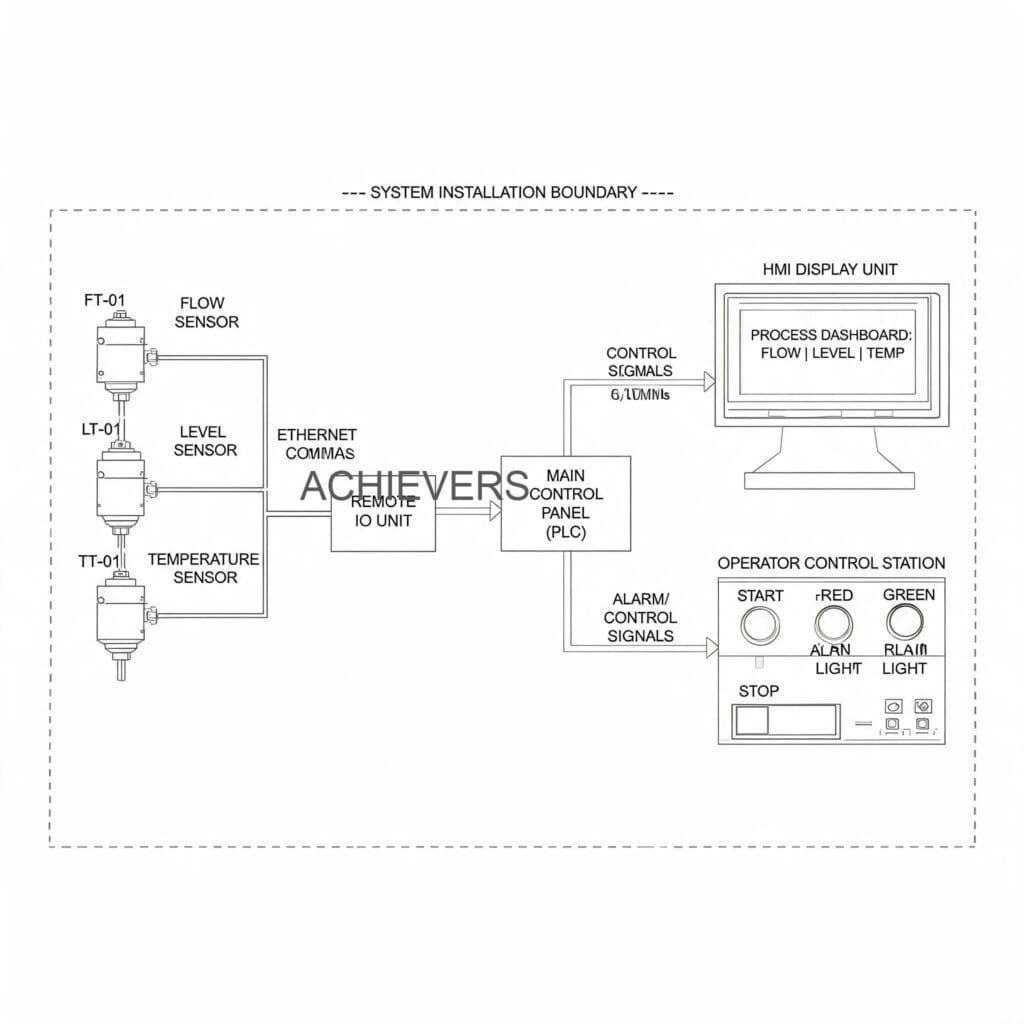
Before calculating the Total Cost of Ownership (TCO), it is vital to understand the technical architecture of the equipment. A dedicated Liquid Batching System is not simply a pump attached to a hose; it is an integrated, precision-engineered assembly designed to deliver exact, pre-determined volumes of fluid repeatedly without human intervention.
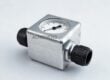
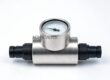
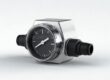
Manufactured in adherence to strict industry norms, the Achievers system comes equipped with a heavy-duty pump, high-precision flow sensors, a programmable controller with variable presets, and a highly responsive solenoid valve. The system's core measurement relies on an oval gear meter. Oval gear technology is a type of positive displacement meter uniquely suited for maximum viscosity fluids like heavy motor oils and transmission fluids. Because these fluids inherently lubricate the gears, the meter offers exceptional durability and a staggering accuracy of ±0.2%.
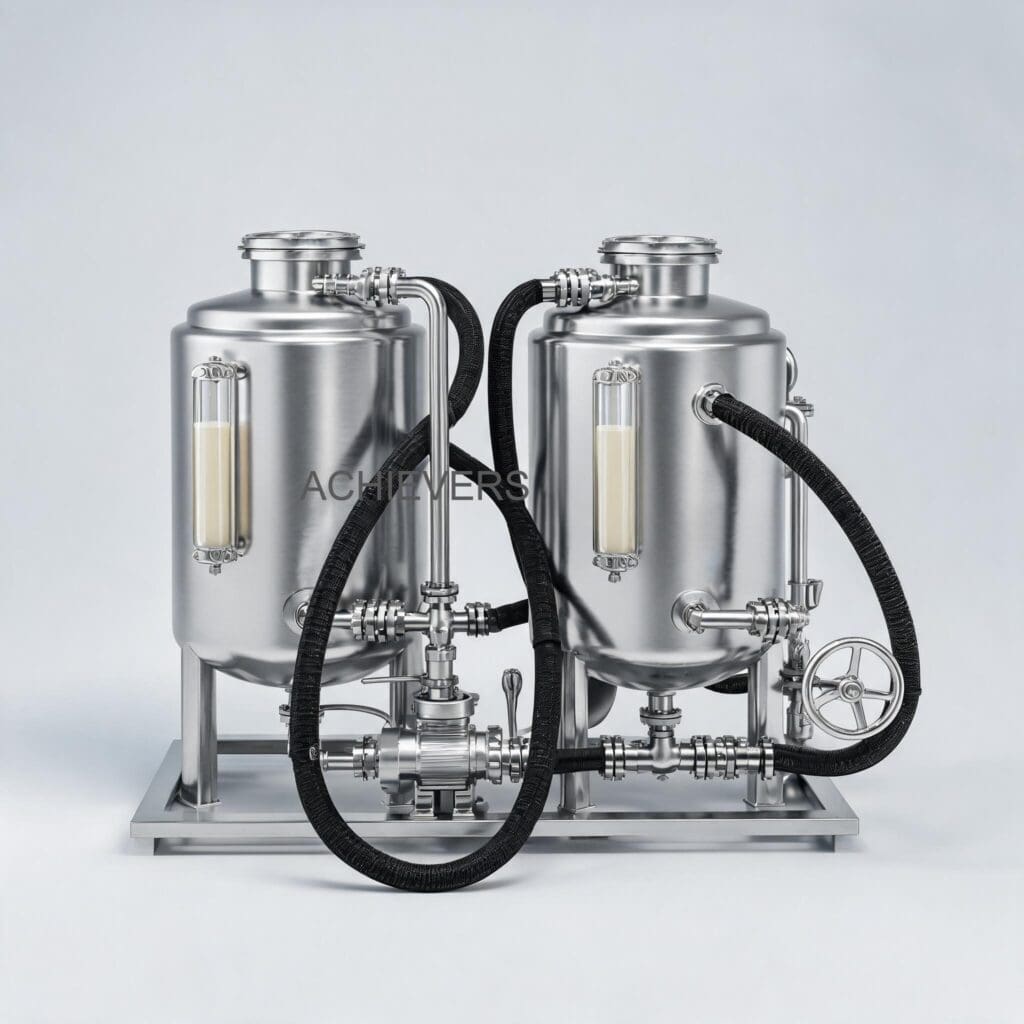
Operating on a standard 220 V AC power source and capable of a 60 Litre/Min flow capacity, this Liquid Batching System eliminates the guesswork from automotive filling requirements. When an operator needs to dispense exactly 14.5 liters of 15W-40 engine oil into a commercial vehicle, they simply select the preset on the controller and press start. The pump engages, the oval gear meter precisely tracks the flow, and the controller instantaneously snaps the solenoid valve shut the microsecond 14.5 liters is reached. This ±0.2% accuracy is where the financial value is generated, transforming unpredictable fluid losses into tightly controlled, predictable operating expenses.
2. Total Cost of Ownership Breakdown
Total Cost of Ownership (TCO) is a financial estimate intended to help buyers determine the direct and indirect costs of a product over its entire operational life. When Indian procurement teams evaluate dispensing systems, they often compare the ₹15,000 cost of a basic motorized pump against the higher cost of an automated batching system, concluding the latter is "too expensive." This is a deeply flawed calculation.
A proper TCO model must account for the lifetime cost of fluid waste, rework labor, and equipment longevity. Below is a realistic TCO breakdown for a workshop operating a high-precision Liquid Batching System over a 5-year lifecycle.
| Cost Component | Typical Range (INR) | Frequency | Notes |
| — | — | — | — |
| Initial Purchase Price | ₹80,000 – ₹2,50,000 | Once (Year 0) | Includes pump, oval gear meter, controller, and solenoid valve. Price varies by automation levels. |
| Installation & Plumbing | ₹15,000 – ₹35,000 | Once (Year 0) | Upgrading pipework, installing isolation valves, and hardwiring electricals. |
| Commissioning & Calibration | ₹5,000 – ₹12,000 | Initial + Annual | Verifying ±0.2% accuracy against NABL certified standards using master volume proving. |
| Consumables (Filters/Strainers) | ₹3,000 – ₹8,000 | Biannually | Y-strainers and inline filters to protect oval gears from particulate contamination. |
| Annual Maintenance Contract (AMC) | ₹10,000 – ₹25,000 | Annually | Professional servicing, solenoid cleaning, and gear inspection to prevent sudden failure. |
| Energy Consumption | ₹4,000 – ₹9,000 | Annually | Based on a 220 V AC pump running cumulatively for 2-3 hours per day. |
| Downtime Losses (Unplanned) | ₹0 – ₹10,000 | Variable | Minimized entirely by AMC. A manual pump failure can cost ₹20,000+ per day in delayed vehicle deliveries. |
| Lifespan / Replacement Cost | ₹0 | Over 5-8 years | Sturdy construction ensures long operational life, eliminating the need for frequent replacements. |
Common Mistake to Avoid: Failing to install adequate upstream filtration. Indian industrial sites often suffer from dust ingress and contaminated bulk oil deliveries. If dirt, metal shavings, or hard particulates enter the oval gear meter, they can jam the precision-machined rotors, leading to inaccurate readings and potentially burning out the pump motor. Always budget for high-quality Y-strainers prior to the fluid entering the metering block.
3. ROI Calculation: Real-World Indian Example
To understand how rapidly a Liquid Batching System pays for itself, we must look at a practical scenario. Consider an authorized heavy commercial vehicle (HCV) service center in Chennai. This workshop services 40 trucks per day, performing engine oil changes.
Here is the exact 8-step calculation to model the financial bleed of their current manual dispensing method and the resulting Return on Investment (ROI) of upgrading to automation.
Step 1: Define Baseline Consumption
The workshop changes oil for 40 trucks daily. Each truck requires exactly 15 liters of high-grade synthetic diesel engine oil.
Total required daily volume: 40 trucks x 15 liters = 600 liters per day.
Monthly required volume (25 working days): 15,000 liters.
Step 2: Quantify Over-Dispensing Losses
Operators currently use a standard nozzle and basic flow meter, manually releasing the trigger when they think they hit 15 liters. Due to operator fatigue, poor visibility, and basic meter lag, they routinely overfill by an average of 3% (450 ml extra per truck) to "be safe" and avoid low-oil warnings.
Daily over-dispensed volume: 40 trucks x 0.45 liters = 18 liters per day.
Monthly lost volume: 18 liters x 25 days = 450 liters per month.
Step 3: Calculate Spill and Wastage Costs
The workshop purchases synthetic engine oil in bulk at ₹350 per liter.
Monthly cost of over-dispensing: 450 liters x ₹350 = ₹1,57,500 per month.
Step 4: Factor in Quality Rejection and Rework
Occasionally, operators under-fill a vehicle, leading to warning lights during the test drive. The vehicle must be brought back, put on the lift, and topped up. This happens approximately 5 times a month. Each rework event costs ₹800 in lost bay time and labor.
Monthly rework cost: 5 events x ₹800 = ₹4,000 per month.
Step 5: Determine Total Monthly Financial Bleed
Total Monthly Loss = Oil wastage (₹1,57,500) + Rework (₹4,000) = ₹1,61,500 per month.
Annual Unseen Loss = ₹19,38,000.
Step 6: State the Equipment Capex
The procurement head approves the purchase of an advanced Liquid Batching System to eliminate this issue. The cost of the complete system, including pump, ±0.2% accuracy meter, controller, solenoid, and installation, comes to ₹1,80,000.
Step 7: Project Post-Installation Savings
With the batching system installed, the operator punches in "15.00 L" and walks away to perform other checks. The solenoid valve shuts off instantly at exactly 15 liters. The ±0.2% accuracy means maximum variation is just 30 ml, functionally eliminating the 3% overfill and completely eradicating under-fill rework.
New monthly loss (0.2% variation): 30 liters x ₹350 = ₹10,500.
Monthly savings generated: ₹1,61,500 (old loss) – ₹10,500 (new loss) = ₹1,51,000 per month.
Step 8: Compute the Simple Payback Period
Payback Period = Total Investment / Monthly Savings
Payback Period = ₹1,80,000 / ₹1,51,000 = 1.19 months.
In fewer than 40 days, the equipment has paid for itself entirely. For the remaining 7+ years of its life, that ₹1.5 Lakhs drops directly to the workshop's bottom line as pure profit every single month. Whether you are dealing with oil or integrating dedicated Oil Flow Meters into your lube trucks, the mathematics of precision remain undefeated.
4. Cost Comparison: Available Approaches
When upgrading your fluid handling infrastructure, it is helpful to weigh the alternatives to build a concrete business case.
| Dispensing Approach | Upfront Cost (INR) | Annual Operating Cost (Wastage + Labor) | Accuracy / Variance | Reliability in Industrial Conditions | Best Suited For |
| — | — | — | — | — | — |
| Manual Buckets / Jugs | Under ₹5,000 | Very High (Frequent spills, severe inaccuracy) | ± 10 – 15% | Moderate (prone to physical breakage) | Small roadside garages with low volume. |
| Basic Pump + Manual Nozzle | ₹15,000 – ₹35,000 | High (Operator dependency, fatigue-induced errors) | ± 3 – 5% | Good, but relies entirely on operator attention | Medium workshops with no strict inventory control. |
| Timer-Based Dispensing | ₹40,000 – ₹75,000 | Medium (Fluid viscosity changes alter volume over time) | ± 2 – 4% | Moderate (Timers ignore pump wear and tear) | Water transfer; NOT recommended for oils or fuels. |
| Liquid Batching System | ₹80,000 – ₹2,50,000 | Very Low (Near-zero wastage, low labor requirement) | ± 0.2% | Excellent (Oval gear design handles harsh usage) | Assembly lines, large service centers, industrial manufacturing. |
Decision Note: Timer-based dispensing is a dangerous trap for Indian workshops handling oils. Because oil viscosity changes dramatically between cold winter mornings and 45°C summer afternoons, the same 30-second pump run time will deliver significantly different volumes of oil. Only a true volumetric flow measurement system, utilizing precision oval gear technology, guarantees accurate delivery regardless of temperature, viscosity, or system pressure.
5. Hidden Costs to Budget For
While the ROI of automated batching is undeniable, Indian plant managers must factor in localized challenges that can inflate implementation costs if ignored. Integrating dispensing solutions into existing infrastructure requires proactive budgeting for the following six hidden costs:
- Voltage Fluctuation Protection: Industrial estates in India frequently suffer from erratic power supply. Because the batch controller relies on sensitive microprocessors and a 220 V AC power source, voltage spikes can fry the logic board, or cause the solenoid valve to chatter and fail. Budgeting for a dedicated Servo Voltage Stabilizer or high-grade UPS (approx. ₹8,000–₹15,000) is mandatory.
- Upstream Filtration Systems: Indian supply chains for bulk diesel and base oils often introduce particulate matter during decanting. Protecting the oval gear meter requires industrial Y-strainers and possibly secondary inline filter housings (10 to 25 microns) before the fluid reaches the pump.
- Piping Modifications and Specialized Hoses: Upgrading to a 60 Litre/Min automated system often means existing half-inch manual pipework acts as a bottleneck, causing pump cavitation. You must budget for larger diameter seamless pipes, heavy-duty suction hoses, and appropriate PESO-compliant fittings where flammable fluids are involved.
- NABL Calibration Access: For ISO-certified assembly plants or workshops requiring strict audit trails, the meter must be periodically calibrated by an NABL-accredited laboratory. Factoring in the annual cost of a master meter calibration visit ensures you maintain that critical ±0.2% accuracy year after year.
- Operator Training and Handover: While the system is designed for ease of use, high attrition in the Indian workshop labor force means continuous training is required. While training itself may not have a hard invoice cost, the time taken by your floor supervisors to train new recruits on setting batch presets should be factored into operational planning.
- Spare Parts Inventory: To guarantee zero downtime, operations managers must keep critical spares on site. Even the highest quality solenoid valves eventually wear out after hundreds of thousands of cycles. Budgeting for a "spares kit" (which includes replacement controller relays, an extra solenoid coil, and replacement filter meshes) during the initial Capex phase saves expensive express shipping later.
6. How to Justify the Purchase to Management
If you are a maintenance engineer or a workshop floor manager, knowing the technical benefits isn't enough; you must secure budget approval from procurement or plant management. Use this structured, 6-step checklist to build an airtight business case for a Liquid Batching System:
- Audit Current Baseline Losses: Do not guess your wastage. Spend one week physically measuring the discrepancy between what your bulk tank level indicator says was used, and what your ERP/billing software says was dispensed into vehicles.
- Present the Cost of Rework and Rejection: Detail the specific instances where wrong fills caused operational headaches over the last six months. Attach a hard labor cost to every hour spent draining overfilled gearboxes or topping up under-filled sumps.
- Highlight Labor Efficiency Gains: Explain that automated dispensing allows one operator to press a button and walk away to perform a 20-point inspection while the machine precisely fills the 15 liters. This multitasking effectively increases bay throughput without hiring additional manpower.
- Emphasize Compliance and Inventory Tracking: Show management that the batch controller inherently acts as a strict inventory checkpoint, preventing unauthorized dispensing or "shrinkage" of expensive synthetic oils.
- Show the Comprehensive TCO Calculation: Present a clear table demonstrating that while the initial Capex is ₹1,50,000, the annual oil savings alone will be ₹10,00,000, meaning the system is an income-generating asset, not an expense.
- Propose a Phased Implementation Plan: If management balks at outfitting all 10 service bays at once, propose outfitting the two highest-volume bays first. Measure the ROI over 60 days, and use those guaranteed savings to fund the remaining units.
Investing in precision fluid handling is no longer optional for Indian industries aiming to remain competitive. The era of manual buckets, visual guesswork, and acceptable losses is over. By recognizing the true total cost of ownership and transitioning to intelligent, automated batching, operations managers can instantly stem financial bleeding, ensure absolute quality control, and turn a previously chaotic process into a predictable, highly profitable operation.
FAQ
Q: What is the recommended maintenance interval for the oval gear meter?
A: In standard automotive and diesel dispensing applications, the internal oval gears should be inspected every 12 months. However, the Y-strainers and upstream filters must be cleaned monthly (or bi-weekly in high-dust environments) to ensure the gears remain protected from abrasive particles.
Q: Can this system handle highly viscous transmission fluids during cold winter mornings?
A: Yes. The system is specifically engineered utilizing positive displacement oval gear technology. Unlike turbine meters that fail with thick fluids, oval gear meters actually perform better with high viscosity oils, maintaining the guaranteed ±0.2% accuracy regardless of ambient temperature drops.
Q: How will Indian power grid fluctuations affect the electronic batch controller?
A: The controller requires a stable 220 V AC power source. Because voltage drops or spikes can reset the controller mid-batch or damage the solenoid coil, it is strictly recommended to run the system through a dedicated UPS or industrial servo voltage stabilizer.
Q: What happens if our bulk oil storage contains heavy particulate contamination?
A: If unfiltered contaminants enter the system, they will jam the precision rotors of the flow meter and cause the pump motor to overload. You must install a heavy-duty, cleanable strainer immediately before the pump suction inlet to trap any debris.
Q: Can this batching system be integrated with our existing diesel storage tanks?
A: Absolutely. It can be plumbed directly to your existing bulk tanks. If you require a fully standalone mobile solution for moving around a large site, you may also consider exploring a dedicated Diesel Dispenser setup depending on your layout.
Q: How long does standard installation and commissioning take?
A: Assuming your site's plumbing and electrical points are ready, the physical installation of the pump, meter, controller, and solenoid takes roughly 4 to 6 hours. Calibration and volume proving with master measuring cans take an additional 2 to 3 hours.
Q: Are Legal Metrology certifications required for this equipment?
A: If you are using the equipment strictly for internal industrial use (e.g., filling your own gearboxes, or servicing vehicles where fluid is billed as a service package rather than traded commercially by the liter to the public), Legal Metrology Act stamping is generally not required. However, for complete compliance, NABL traceability certificates for the meter are highly recommended.
Ready to stop wasting expensive fluids and take absolute control of your workshop's profitability? Contact the Achievers Pumps and Valves engineering team today with details about your required flow capacity, specific fluid types, and site conditions, and we will custom-design a dispensing solution guaranteed to maximize your ROI.