In the heavy industrial sectors of construction and mining, moving earth and extracting minerals require massive, continuous inputs of energy. For most global operations, that energy takes the form of diesel fuel. Managing the logistics of diesel delivery across vast, unpaved, and highly dynamic topographies is one of the most persistent challenges faced by plant managers and fleet operators. When heavy machinery—such as 100-ton excavators, articulated dump trucks, and continuous miners—must stop working to travel back to a central, static refueling station, the resulting operational downtime immediately erodes project profitability.
Generic transfer pumps and ad-hoc refueling methods often deployed as workarounds fail to solve the underlying problems. They lack precision metering, expose the fluid to severe contamination, and create an environment ripe for fuel pilferage and inventory discrepancies. To achieve strict fluid accountability and maximize asset uptime, operations must transition from static fueling to mobile, metered dispensing. Integrating a highly engineered Mobile Fuel Dispenser changes the paradigm: you bring the fuel securely to the equipment, rather than forcing the equipment to tram back to the fuel.
1. Industry Overview: The Fluid Challenge
Heavy industrial environments demand uncompromising durability from fluid handling equipment. A standard construction site or open-pit mining operation exposes equipment to extreme ambient temperatures, high levels of airborne particulate matter (dust, silica), and severe mechanical vibration.
Furthermore, diesel fuel in these environments is highly susceptible to thermal expansion, aeration, and contamination. Heavy earth-moving machinery consumes fuel at prodigious rates, often requiring hundreds of liters per shift. The primary fluid challenges in these sectors include:
- Asset Utilization and Tramming Costs: Every minute a bulldozer or loader spends tramming (driving) to a static bulk tank is a minute of lost production. The diesel burned purely to transport the machine to the fuel source is wasted overhead.
- Inventory Accountability: Fuel is a high-value, highly liquid asset. Without commercial-grade metering at the point of transfer, "shrinkage" (a polite industry term for pilferage and undocumented dispensing) can consume 5 to 10 percent of a site's total fuel budget.
- Harsh Operating Conditions: Equipment is exposed to deep cyclical vibrations when mounted on service trucks navigating corrugated haul roads. Standard commercial forecourt dispensers simply vibrate to pieces under these stresses.
- Custody Transfer and Regulatory Compliance: Discrepancies between bulk fuel deliveries and point-of-use consumption must be reconciled. Procurement heads need defensible, legally approved metering data to audit fuel usage per asset, calculate exact operating costs, and claim fuel tax rebates where applicable globally.
Quick ROI Snapshot
- Typical Payback Period: 4 to 8 months (based on fuel shrinkage reduction and recovered asset uptime).
- Uptime Gain: Saves an average of 45 to 60 minutes per shift, per machine in eliminated tramming and queuing time.
- Inventory Accuracy: Replaces ±5.0% error rates from dipstick/sight-glass estimates with ±0.5% precision metered data.
2. Product Capabilities Matched to Industry Needs
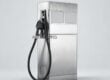
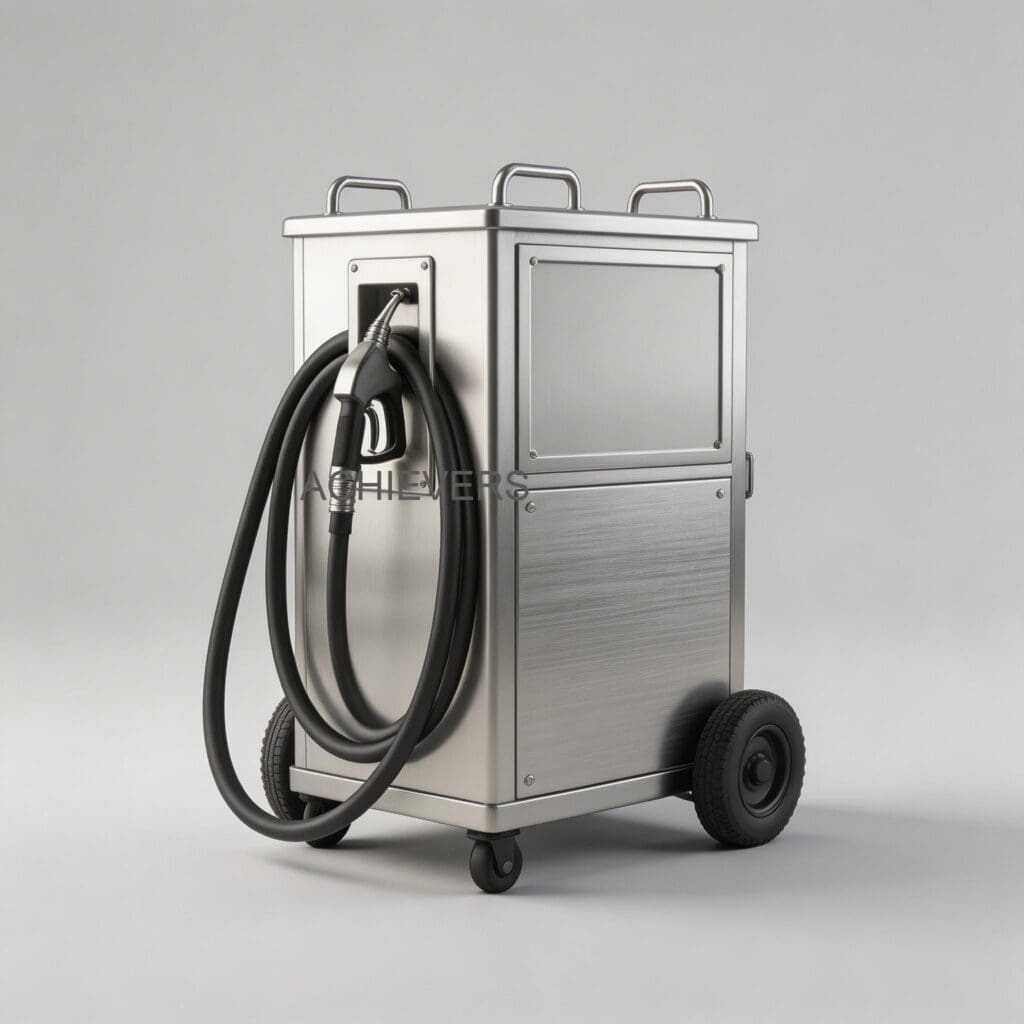
Generic centrifugal pumps and uncalibrated flow meters cannot meet the stringent demands of high-throughput industrial refueling. A purpose-built Mobile Fuel Dispenser is engineered as a self-contained unit, combining a robust transfer pump, high-accuracy positive displacement flow meter, delivery hose, and automated shut-off nozzle.
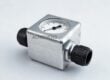
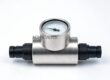
Achievers Pumps and Valves manufactures the CE-204 and CE-130 models specifically to handle these demanding applications. The CE-204 utilizes a highly precise digital oval-gear flow meter, while the high-capacity CE-130 is structurally reinforced for bulk fleet fueling. Both maintain a working pressure of 3 Bar and achieve ±0.5% accuracy with an exceptional ±0.1% repeatability.
Here is how the core capabilities of these units align directly with the needs of the construction and mining sectors:
| Industry Requirement | Mobile Fuel Dispenser Feature | How It Addresses the Need |
| :— | :— | :— |
| High-Speed Refueling | 60 LPM to 200 LPM flow rates | The CE-130 model can push up to 200 liters per minute, drastically reducing the time it takes to fill large 1,000+ liter machinery tanks at the pit face. |
| Volumetric Accuracy | Oval-gear positive displacement meter | Unlike inferential turbine meters, oval-gear meters sweep a fixed volume of fluid per rotation, ensuring ±0.5% accuracy regardless of minor viscosity changes due to temperature fluctuations. |
| Vibration Tolerance | Heavy-duty steel chassis and powder-coated finish | Protects internal metering and pumping components from torsional stress and road shock when mounted on mobile service bowsers navigating unpaved haul roads. |
| Power Flexibility | 12V DC, 24V DC, 220V AC, and 440V AC options | Can be powered directly from a service truck's battery (12V/24V DC) or from site generators/mains power (220V/440V AC) without requiring external power conversions. |
| Spill Prevention | Auto shut-off nozzle with brass fittings | Prevents environmental contamination and wasted fuel by automatically stopping flow when the machinery tank reaches capacity. |
| Data Retention | Resettable batch and cumulative totalizer | Allows operators to record exact fuel dispensed per shift (batch) while management monitors the tamper-proof lifetime throughput (cumulative) for auditing. |
| Documentation | Optional receipt printer | Generates a physical ticket at the point of transfer, enabling operators to hand over immediate proof of fuel volume to the machinery driver, eliminating disputes. |
| Installation Versatility | Wall-mount, tank-mount, or skid-mount configurations | The compact footprint allows the dispenser to be retrofitted onto existing IBC totes, bulk trailer tanks, or custom mobile lube trucks. |
3. Typical Installation Scenarios in This Industry
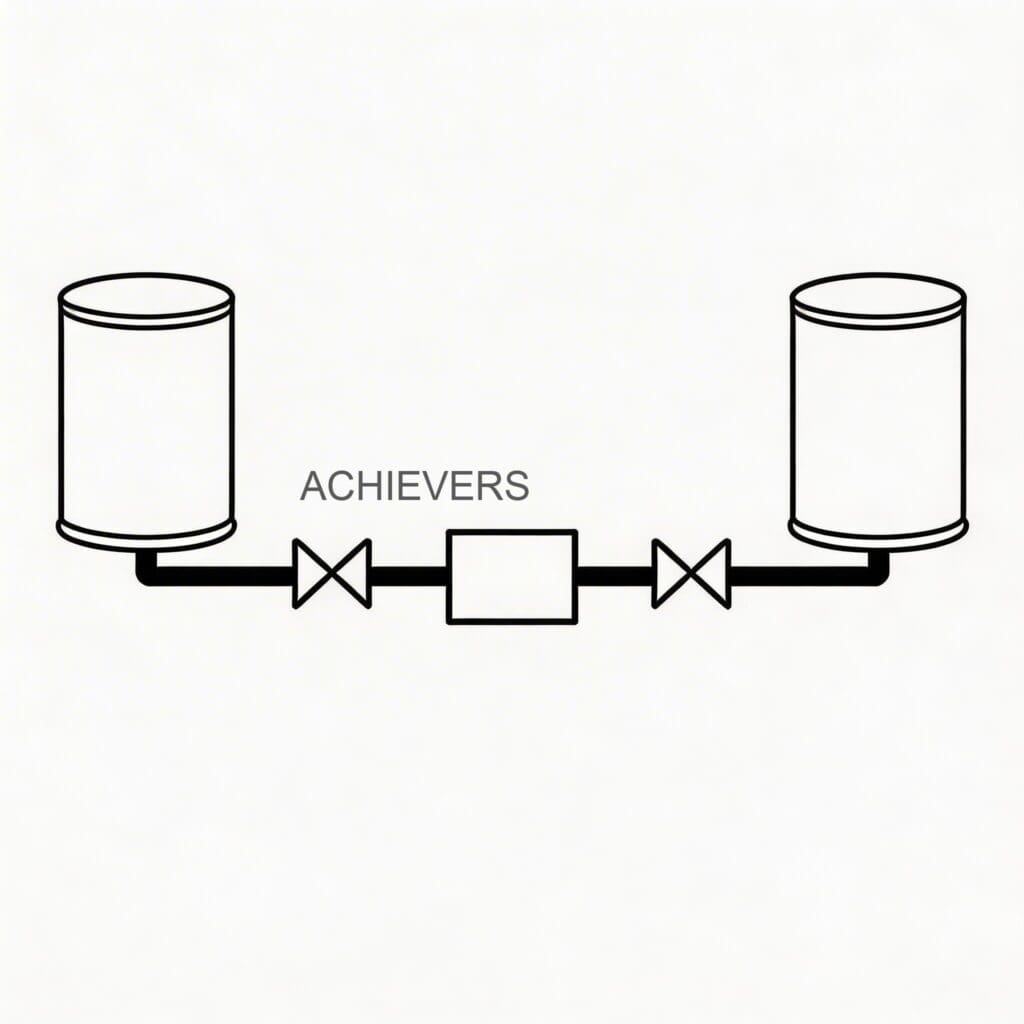
The deployment of mobile dispensing systems varies based on the scale of the operation and the mobility of the fleet. Below are three of the most common installation configurations optimized for industrial sites:
Scenario A: The Off-Road Service Bowser (Lube Truck)
In open-pit mining and large-scale highway construction, heavy equipment rarely leaves the workface. Operations managers utilize off-road service trucks (bowsers) equipped with multiple fluid compartments (diesel, hydraulic oil, coolant).
- Setup: A 24V DC CE-204 or CE-130 dispenser is hard-mounted to the rear deck of the service truck.
- Power: Wired directly into the truck's heavy-duty electrical system.
- Operation: The truck drives to the excavator. The operator pulls the 4-meter delivery hose, engages the 24V pump, and dispenses fuel at high speed. The oval-gear meter records the exact volume, which is noted against the excavator's asset number for daily OEE (Overall Equipment Effectiveness) tracking.
Scenario B: Temporary Construction Camp Skid-Mounts
During infrastructure development, temporary operational camps are established and moved as the project advances linearly (e.g., rail networks, pipelines).
- Setup: A customized steel skid houses a 10,000-liter double-walled diesel tank paired with a 220V AC Mobile Fuel Dispenser.
- Power: Powered by the camp's local diesel generator set.
- Operation: Light commercial vehicles, personnel transport buses, and smaller loaders return to the camp at shift change to refuel. The unit acts as a fully functional, highly accurate mini-fuel station that can be lifted by crane and transported to the next camp site in a single afternoon.
Scenario C: Trailer-Mounted Fast-Response Units
For agricultural contractors, forestry operations, or dispersed construction sites (like wind farm installations), refueling demands are highly decentralized.
- Setup: A towed trailer carries a 1,000 to 3,000-liter baffled tank. A CE-204 dispenser is bolted directly to the tank's reinforced dispensing plate.
- Power: Driven by a 12V DC connection utilizing an Anderson plug connected to the towing vehicle's electrical circuit.
- Operation: Provides highly agile, legally metered dispensing to isolated equipment like stationary generators, dewatering pumps, or remote harvesters.
Common Mistake to Avoid
Failing to specify the correct power supply for the intended environment.
Connecting a 12V DC pump to a 24V DC truck electrical system will immediately burn out the motor. Conversely, attempting to run a high-capacity 220V AC pump via a cheap, modified-sine-wave mobile inverter will result in poor pump performance, overheating, and premature failure of the digital metering electronics. Always match the dispenser's power specification directly to the primary power source available at the installation point.
4. Compliance, Accuracy, and Certification Requirements
Fuel dispensing is a highly regulated activity globally due to the financial value of the fluid, its flammability, and the environmental risks associated with spills.
For industrial operations, accuracy is not just an internal accounting desire; it is often a regulatory requirement. When custody of fuel transfers from a supplier to a contractor, or when an internal department cross-charges another for fuel consumption, the measurement device must be legally defensible.
Our digital oval-gear flow meters provide an accuracy of ±0.5%. Because oval gear technology relies on positive displacement—physically dividing the fluid into discrete volumetric parcels—it remains highly accurate even if the diesel's viscosity changes due to sub-zero mornings or blistering afternoon heat.
When operating internationally, compliance landscapes vary. Operations may require ISO standard adherence, CE marking for European market safety, ATEX or UL certifications for hazardous explosion-proof environments, or local weights and measures approvals. Whether a site requires CE certification or a Mobile Fuel Dispenser in India legal metrology approved for exact custody transfer, ensuring your dispensing hardware meets the relevant statutory frameworks protects your business from compliance fines and internal audit failures.
5. ROI and Operational Benefits
The justification for upgrading to specialized mobile dispensing equipment goes far beyond simple convenience. It is a calculated operational expenditure that yields immediate capital returns through loss prevention and operational efficiency.
When investing in a mobile fuel dispenser for construction sites on-site diesel dispensing becomes a highly controlled, measurable process. Rather than relying on operator honesty or inaccurate sight-glasses, management gains complete visibility into fluid logistics.
| Benefit Area | Typical Improvement | Global Industry Context |
| :— | :— | :— |
| Idle Time Reduction | Reclaims 5 to 10 hours of heavy equipment uptime weekly. | Eliminating the need for slow-moving tracked vehicles to drive to static tanks improves overall site productivity and reduces undercarriage wear. |
| Inventory Shrinkage | Drops fuel discrepancy rates from ~8% down to <1%. | Precision metering provides hard data, eliminating unrecorded fluid transfers, "ghost" fueling events, and employee pilferage. |
| Fluid Cleanliness | Reduces injector failures by ensuring a closed-loop transfer. | Moving fuel with sealed pumps, approved hoses, and auto shut-off nozzles prevents ingress of airborne silica dust, a primary cause of modern common-rail diesel engine failure. |
| Safety & Environment | Drastic reduction in ground spills. | Automated nozzles and rated working pressures (3 Bar) prevent hose bursts and overfills, mitigating the risk of costly environmental cleanup operations. |
| Data Accuracy | 100% accurate shift consumption data. | Enables precise calculation of cost-per-ton (mining) or cost-per-cubic-meter (construction) by linking metered fuel volumes to specific asset numbers. |
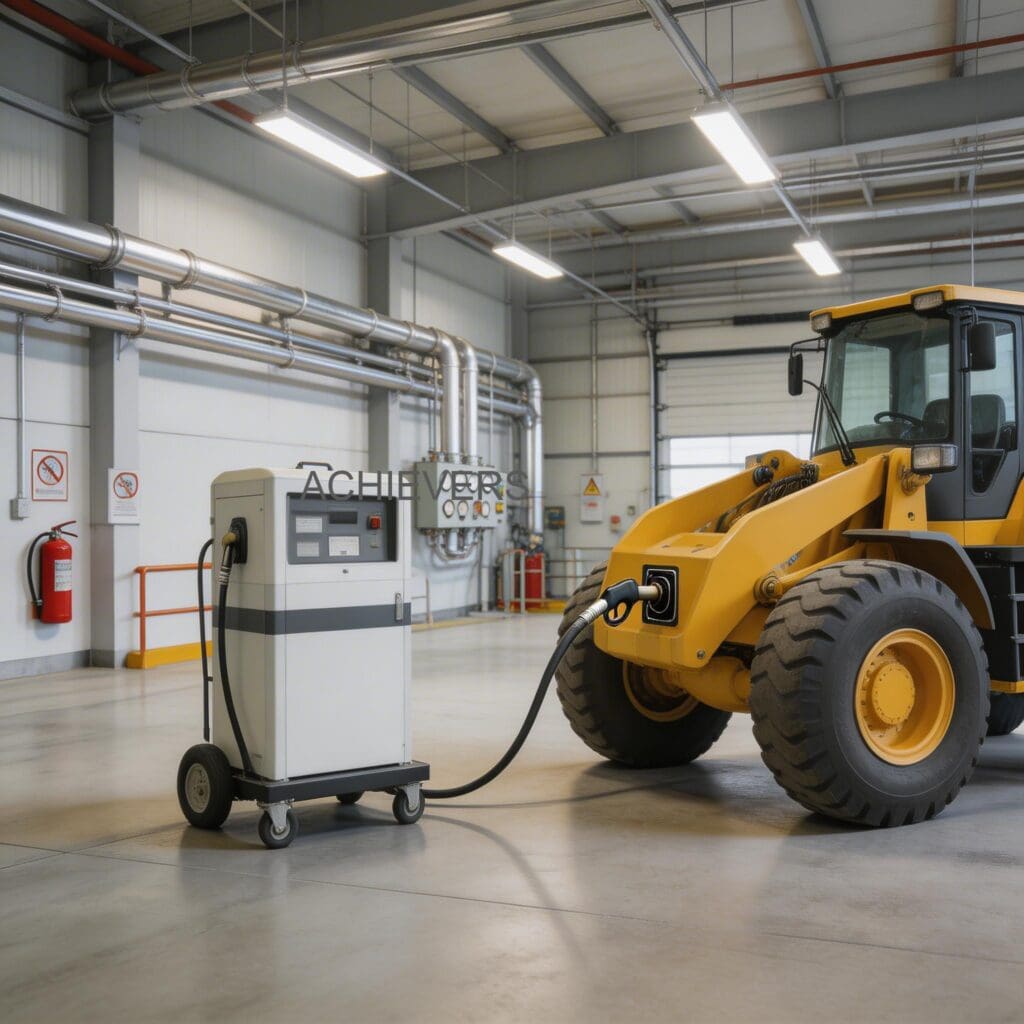
For operations requiring even more granular data, pairing a mobile dispensing system with a vehicle-mounted Fuel Consumption Meter provides a definitive cross-reference between fuel delivered and fuel combusted.
6. Selection Checklist for This Industry
To ensure you procure the exact system required for your site's demands, use this comprehensive 8-step technical evaluation checklist. Partnering with an experienced mobile fuel dispenser supplier for fleet operators industrial buyers trust ensures you receive a robust, high-uptime system.
- Calculate Peak Dispensing Volume: Determine the fuel tank capacity of your largest machine and your acceptable fueling time limits. Choose the CE-204 (60 LPM) for standard fleets, or the CE-130 (up to 200 LPM) for high-capacity mining trucks and bulk transfers.
- Define Power Availability: Identify the exact power source at the point of installation. Specify 12V DC or 24V DC for vehicle/battery mounting, or 220V AC/440V AC for stationary generator-powered skids.
- Specify Structural Mounting Requirements: Will the unit be bolted to a flatbed trailer, welded to a bulk tank, or wall-mounted in a depot? Ensure the chassis design matches the vibration and mounting profiles of the asset.
- Select Delivery Hose Length: The standard is a 4-meter rubber hose, which balances reach with manageable pressure drop. If your application requires a longer reach, calculate the associated frictional pressure loss to ensure the pump can maintain flow rate.
- Verify Inlet and Outlet Sizing: Ensure your plumbing matches the dispenser's specs to prevent cavitation. The CE-204 utilizes 25 mm (1") connections, while the CE-130 can be configured with 25–50 mm (1"–2") fittings depending on required flow.
- Establish Data Capture Needs: Decide if a physical paper trail is required at the point of transfer. If so, specify the integration of a receipt printer to hand off to machinery operators.
- Identify Fluid Type Constraints: While designed primarily for Diesel, verify compatibility if you intend to pump Biodiesel or Kerosene, as differing chemical properties may affect elastomer seals.
- Confirm Regulatory Approvals: Verify that the metering unit possesses the necessary local weights and measures approvals (e.g., Legal Metrology) if the fuel volume data will be used for commercial billing, tax rebates, or custody transfer.
If you are looking to install static systems back at your main fuel depot, you may also consider our heavy-duty Diesel Dispenser models engineered for bulk terminal applications.
FAQ
Q: Can these dispensers handle extreme temperatures and dusty environments typical of mining sites?
A: Yes. The units are built with heavy-duty steel chassis and powder-coated finishes to resist corrosion and impact. The internal oval-gear flow meters are mechanically sealed, preventing dust ingress, and are highly tolerant of the viscosity changes in diesel caused by extreme temperature fluctuations.
Q: What is the difference between the CE-204 and CE-130 models?
A: The CE-204 is a compact, 60 LPM unit ideal for standard fleets, service trucks, and smaller construction sites. The CE-130 is a high-capacity unit capable of 60 to 200 LPM, designed specifically for rapid refueling of heavy mining equipment and bulk fuel transfers, featuring larger 25–50 mm inlet/outlet options.
Q: Do I need a 220V power supply to run the pump?
A: Not necessarily. We offer 12V DC and 24V DC configurations specifically designed to wire directly into the battery banks of commercial trucks, tractors, and service bowsers, allowing for completely off-grid mobile dispensing. 220V and 440V AC options are available for camp skids and depot installations.
Q: How often does the oval-gear flow meter need to be calibrated?
A: Positive displacement oval-gear meters are incredibly stable and hold their calibration for millions of liters under normal use. We recommend a standard preventative maintenance check and calibration verification every 12 months, or in accordance with your local regulatory body's statutory requirements.
Q: Will the auto shut-off nozzle work with varying fuel tank designs?
A: Yes, the standard auto shut-off nozzle equipped with brass fittings detects the pressure change when fluid covers the spout, instantly stopping flow. It works reliably across standard machinery fuel tanks, generators, and commercial vehicle filler necks.
Q: What happens if the delivery hose is longer than 4 meters?
A: While 4 meters is standard, we can provide custom hose lengths. However, extending the hose increases fluid friction and pressure drop, which may slightly reduce your maximum LPM output. We can assist in calculating pump sizing to compensate for longer hoses.
Q: Is it possible to pre-set the volume of diesel to be dispensed?
A: Yes, preset dispensing is available as an optional configuration. This allows the operator to input a specific volume (e.g., 200 liters), and the pump will automatically shut down once that exact volume is metered, preventing overfilling and allowing the operator to step away safely during the fill.
Upgrading your fluid logistics ensures that every drop of fuel is accounted for and your heavy machinery remains exactly where it belongs: at the workface. Contact our technical team today with your target flow rate, mobile application requirements, and intended installation setup. We will consult with you to configure a Mobile Fuel Dispenser built specifically to secure your fuel inventory and accelerate your on-site operations.