Every month, industrial plants, transport fleets, and construction sites across India bleed thousands of rupees through unaccounted diesel consumption, pilferage, and inaccurate generator logging. When fuel accounts for up to 40% of operating expenses in heavy industries, relying on dipsticks, rudimentary sight glasses, or outdated procurement logs is a massive financial risk. You need a reliable method to monitor fuel transfers.
For plant managers and procurement heads, the debate almost always boils down to one critical hardware choice: should you install a mechanical Fuel Flow Meter or a digital one?
Buyers often get confused between these options, assuming "digital is always better" or "mechanical is bulletproof." The truth is far more nuanced, especially when dealing with Indian site conditions—sweltering heat, monsoon humidity, high dust environments, voltage spikes, and occasionally contaminated fuel. Choosing the wrong display and registering mechanism for your specific site can lead to frozen screens, jammed gears, and ultimately, disputed fuel logs.
This comprehensive guide serves as your definitive mechanical vs digital fuel flow meter comparison, breaking down when mechanical counters outperform digital displays (and vice versa) based on accuracy stability, serviceability, power needs, and total operating risk.
1. Overview of the Fuel Flow Meter Family
At their core, both mechanical and digital variants of a high-quality Fuel Flow Meter rely on the exact same internal measurement principle: positive displacement.
Whether measuring diesel, kerosene, or gasoline, the fluid enters a precision-machined measuring room (shell). Inside, two curved gears (often referred to as oval gears) mesh with each other. The pressure of the fluid forces these gears to rotate. Because the cavity between the gears and the outer shell is of a fixed, known volume, every complete revolution represents an exact, repeatable volume of liquid passing through.
The divergence between mechanical and digital meters lies entirely in how those gear rotations are translated into human-readable numbers.
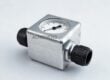
- Mechanical Models: Utilize a magnetic coupling or direct drive shaft to mechanically turn a series of numbered wheels (the totalizer). These are self-lubricating, completely independent of electricity, and feature a vacuum-sealed, dry totalizer to prevent fogging and leakages.
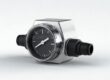
- Digital Models: Utilize a magnetic sensor (Hall effect switch or reed switch) that detects the passing of a magnet embedded in the rotating gears. This generates an electronic pulse. A microprocessor counts these pulses, applies a calibration factor, and displays the volume on an LCD screen, often allowing for remote data transmission.
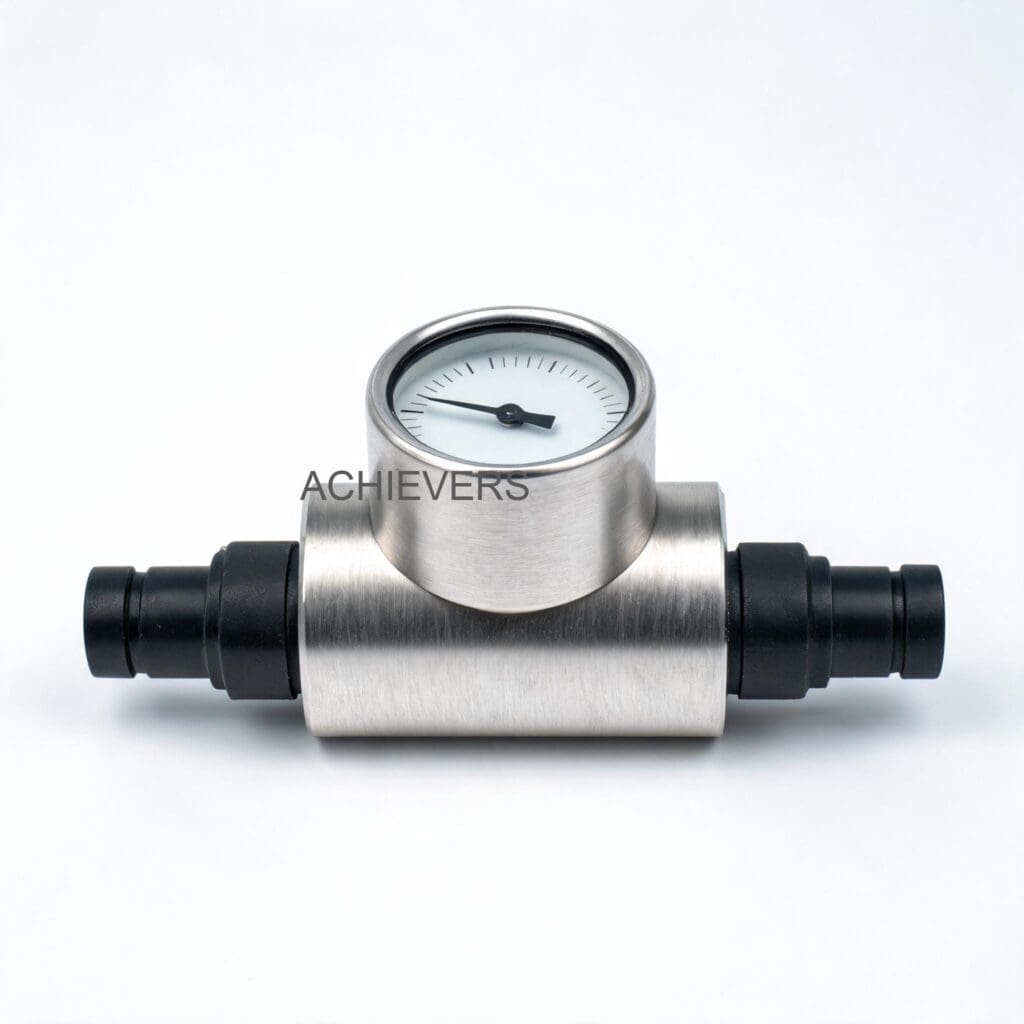
If you are looking for the best fuel flow meter in India for diesel monitoring, understanding this shared internal DNA is crucial. The fluid mechanics remain highly sensitive to low flow rates and provide a low head loss regardless of the display type. Your decision rests purely on environmental robustness versus data integration needs.
2. Head-to-Head Specification Comparison
When making a Fuel Flow Meter selection for industrial buyers, you must look beyond the basic brochure. Below is a detailed technical comparison based on the CE-104 model specifications and how they adapt across mechanical and digital configurations.
| Technical Specification | Mechanical Variant (CE-104 Base) | Digital Variant (CE-104 Electronic) |
| :— | :— | :— |
| Measurement Principle | Positive Displacement (Curved Gear) | Positive Displacement (Curved Gear) |
| Inlet/Outlet Size | BSPT / NPT 1" | BSPT / NPT 1" |
| Optimum Flowrate | 0 – 120 Liters/Min | 6 – 100 Liters/Min |
| Metric Accuracy | ± 1% | ± 1% (Higher resolution on display) |
| Display Type | 8-Digit Accumulative Mechanical Counter | LCD Screen (Resettable Batch + Accumulative) |
| Power Requirement | None (Fluid-driven) | Internal Battery (Lithium) or 12/24V DC / 230V AC |
| Operating Environment | Extreme heat, dust, rain, high vibration | Climate-controlled or strictly weather-shielded |
| Calibration Method | Mechanical gear ratio adjustment / screw | Electronic K-Factor adjustment via keypad |
| Data Output Options | Visual reading only | Pulse Output, RS485, 4-20mA (optional) |
| Maintenance Profile | Periodic greasing of register, zero electronic failure | Battery replacement, sensitive to voltage spikes |
As the table shows, both offer precision within a ± 1% tolerance margin. The mechanical unit boasts a slightly wider raw flow acceptance (0-120 L/Min) without screen blanking risks, while the digital unit provides precise batch control features essential for process automation.
3. Application Comparison Table
Selecting the right meter requires matching the hardware to the brutal realities of your site. Here is a definitive application matrix to guide your choice.
| Application Scenario | Recommended Option | Technical Reason |
| :— | :— | :— |
| Mobile Fuel Bowsers / Tankers | Mechanical | High vibration from Indian roads easily damages LCD ribbon cables. Mechanical counters are structurally immune to transit shocks. |
| Process Batching & Automation | Digital | Allows integration with PLCs and batch controllers via pulse output to shut off valves at exact litrages. |
| Remote Mining & Construction Sites | Mechanical | Grid power is non-existent or dirty. Batteries degrade rapidly in 45°C+ summer heat. Mechanical units guarantee continuous logging. |
| High-Security Fuel Depots | Digital | Can be wired to a centralized SCADA or fuel management system to instantly flag unauthorized dispensing or fuel theft. |
| Backup DG Sets (Basement/Indoor) | Digital | Controlled environment protects electronics. Digital screens are easier to read in low-light basement generator rooms. |
| Monsoon-Exposed Outdoor Rigs | Mechanical | Vacuum-sealed dry mechanical totalizers never suffer from LCD screen blackout caused by heavy condensation or water ingress. |
| High-Volume Fleet Dispensing | Digital | Often paired with a Mobile Fuel Dispenser to track exact fueling per vehicle using RFID or keypad inputs. |
| Hazardous / Explosive Areas (Zone 1/2) | Mechanical | Inherently intrinsically safe. Requires no expensive ATEX/PESO certified flameproof enclosures since there are no electrical components. |
4. Total Cost Comparison and Operational Risk
When calculating fuel flow meter accuracy vs maintenance cost, buyers must look at the Total Cost of Ownership (TCO) over a 3-to-5-year cycle, not just the initial procurement invoice.
| Option Type | Estimated Purchase Range (INR) | Annual Maintenance Cost (Est. INR) | Expected Lifespan | Best Value For |
| :— | :— | :— | :— | :— |
| Standard Mechanical (1") | ₹12,000 – ₹25,000 | ₹1,500 (Basic cleaning, calibration check) | 7–10 Years | Rugged environments, budget-conscious buyers, zero-power sites. |
| Standard Digital (Battery) | ₹18,000 – ₹35,000 | ₹3,000 (Battery replacements, board checks) | 5–7 Years | Indoor dispensing, precise batching, clean environments. |
| Advanced Digital (Pulse/RS485) | ₹30,000 – ₹65,000 | ₹5,000 (Sensor calibration, IT integration) | 5–8 Years | SCADA integration, automated fuel management systems. |
Quick ROI Snapshot
- Typical payback period: 2 to 4 months.
- Justification: For a site consuming 10,000 liters of diesel monthly at ₹90/liter, a 3% discrepancy due to manual dipstick errors or pilferage costs you ₹27,000 per month. An industrial-grade meter instantly eliminates this gray area, recovering its capital cost almost immediately.
Common Mistake to Avoid
Installing a digital flow meter on an outdoor mobile bowser without adequate weather shielding and vibration isolation. The intense Indian summer sun will bake the LCD screen, turning it black, while continuous road vibrations will loosen internal wiring, leading to intermittent pulse drops. Always default to mechanical for unsprung mobile applications unless using specialized military-grade digital registers.
5. Decision Guide: Which One for Your Plant?
To further simplify your procurement strategy, here are 8 specific decision scenarios that dictate which meter belongs in your facility.
1. The Highway Transport Fleet Depot
Decision: Digital with Fuel Management System
If you are fueling 50+ trucks daily, a standalone mechanical meter relies on the operator writing down the numbers honestly. A digital meter tied to a central system eliminates human error and immediately logs the transaction against the specific truck's registration.
2. The Remote Quarry/Mining Excavator Suppy
Decision: Mechanical
In heavy dust environments with zero reliable power, complex electronics fail. A sturdy mechanical flow meter bolted to a manual hand pump or gravity-fed tank ensures you never stop fueling just because a battery died or a circuit board fried in the dust.
3. The Pharmaceutical Clean-Room Generator
Decision: Digital
If you need to track fuel consumption for regulatory compliance and integrate the data directly into your building management system (BMS), a digital meter with a pulse output is mandatory. For highly accurate consumption tracking on the engine's supply and return lines, consider a dedicated Fuel Consumption Meter.
4. The Coastal Port / Marine Bunkering Setup
Decision: Mechanical
High humidity and salt-laden sea air are highly corrosive to printed circuit boards. A vacuum-sealed, leak-proof, dry mechanical totalizer will outlast a standard digital display by years in a marine environment.
5. The Ready-Mix Concrete (RMC) Batching Plant
Decision: Mechanical
RMC plants are notorious for cement dust coating everything and frequent high-pressure water washdowns. A mechanical meter withstands rough handling by contract laborers and aggressive cleaning protocols far better than standard electronic variants.
6. Automated Chemical or Additive Dosing
Decision: Digital
When injecting precise amounts of fuel additives or blending fuels, you need the capability to program a batch size (e.g., exactly 25.5 liters) and have the meter trigger a solenoid valve to close. Only a digital meter provides this logic output.
7. Hazardous Chemical and Petrochemical Zones
Decision: Mechanical (or PESO-certified Digital)
For Zone 1/Zone 2 hazardous areas, introducing any electrical device requires expensive flameproof (FLP) enclosures. A pure mechanical positive displacement meter is intrinsically safe by nature, saving you lakhs in certification and specialized wiring costs.
8. Agricultural Estates and Tractor Fueling
Decision: Mechanical
For agricultural setups where equipment is exposed to monsoon rains, mud, and unskilled labor, the simplicity of "read the numbers on the dial" combined with the self-lubricating gears of a mechanical meter provides the lowest total cost of ownership.
6 Steps to Commissioning Your Fuel Flow Meter for Zero-Dispute Accuracy
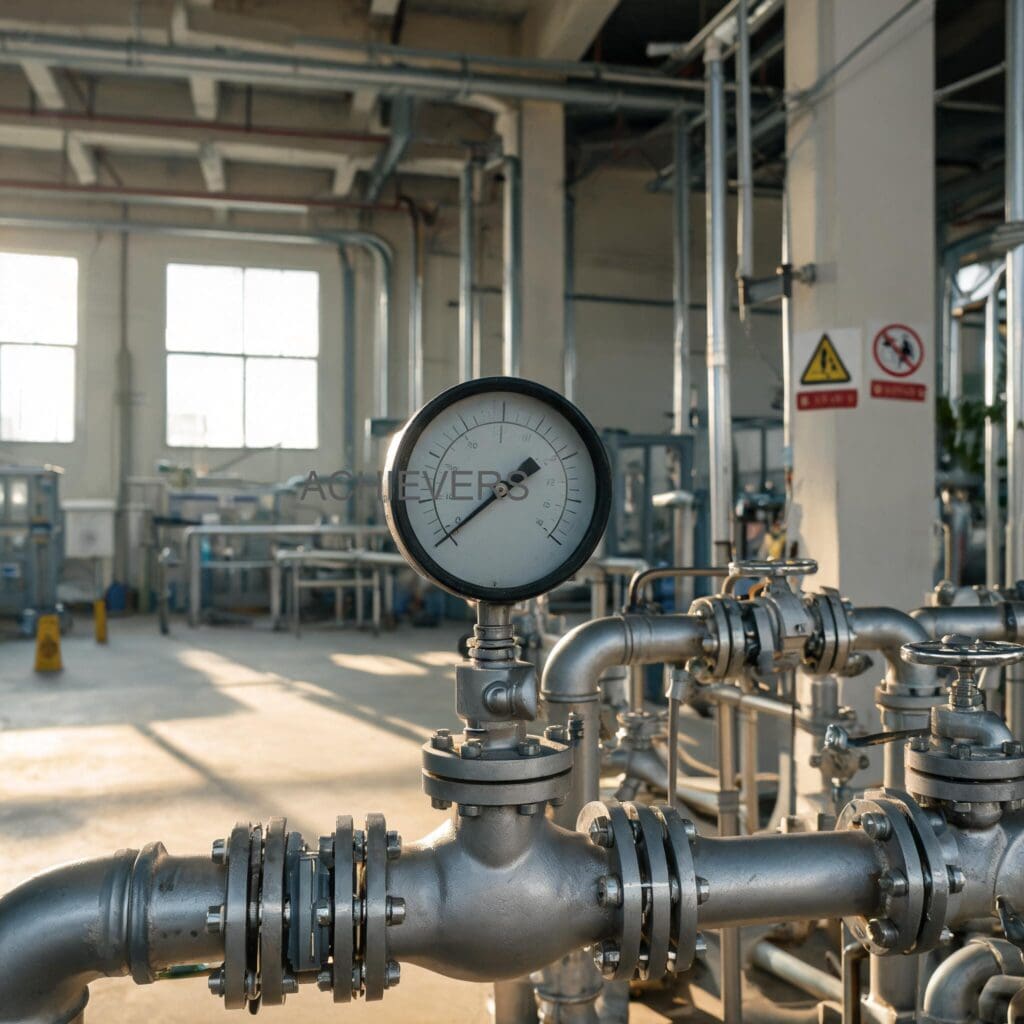
Whether you choose digital or mechanical, improper installation will ruin your accuracy. As a leading Fuel Flow Meter supplier for Indian industrial applications, we recommend this strict 6-step commissioning procedure.
- Install a Pre-Filter (Y-Strainer): Positive displacement meters have microscopic clearances between the curved gears and the measuring room. Indian diesel often contains suspended rust and dirt from aging storage tanks. You must install a 10-micron to 30-micron strainer directly upstream of the meter. If debris jams the gears, the meter will block flow entirely or suffer catastrophic gear damage.
- Ensure Proper Line Sizing: Do not force a 1-inch (120 L/Min) meter into a 2-inch, high-velocity pumping line using reducers. This will cause extreme pressure drop, cavitation, and premature gear wear. Match the meter's optimum flow range to your pump's actual output.
- Install an Air Eliminator: Flow meters measure volume, not liquid state. If your pump sucks in air (due to a low tank level or a leaky suction line), the meter will read the air as fuel, leading to inflated numbers. An air eliminator installed upstream vents out air pockets before they hit the measuring chamber.
- Execute the 20-Liter Bucket Test: Never trust factory calibration out of the box after transport. Dispense exactly 20 liters into a Legal Metrology certified, calibrated proving measure. Compare the meter reading to the proving measure.
- Adjust the Calibration Factor:
- For Mechanical: Adjust the calibration screw/gear mechanism according to the manual until the reading matches the proving measure perfectly.
- For Digital: Enter the programming mode and adjust the K-Factor (pulses per liter) until the electronic display aligns with the physical volume.
- Apply Anti-Tamper Seals: Once calibrated, run a lead-wire seal through the calibration adjustment ports and the meter body bolts. In the Indian market, fuel theft often occurs by tampering with the calibration. A broken seal immediately alerts management to unauthorized interference.
Conclusion: Securing Your Liquid Assets
Fuel is essentially liquid cash flowing through your plant's pipes. Allowing it to be managed by guesswork, faulty sight glasses, or easily damaged equipment is an operational oversight no modern business can afford.
The choice between mechanical and digital isn't about which technology is "better" in a vacuum—it is about which technology survives your specific site conditions. If you operate in harsh, outdoor, dusty, or power-starved environments, the rugged, vacuum-sealed mechanical meter is your undisputed champion. If you operate in controlled environments, require automated batching, or need remote SCADA integration to stop pilferage at a large depot, the digital meter is the necessary evolution.
By prioritizing robust pre-filtration, proper air elimination, and strict calibration protocols, either choice will provide the ± 1% accuracy required to bring total transparency to your fuel consumption logs.
FAQ
Q: Do I need a power connection to run a digital fuel flow meter?
A: It depends on the specific model. Many standalone digital flow meters operate on internal lithium batteries that last 2 to 5 years. However, if you require pulse output or remote data transmission (RS485), you will need an external power source, typically 12V DC, 24V DC, or 230V AC.
Q: How often should I calibrate my flow meter in Indian working conditions?
A: Due to temperature variations, gear wear, and variations in fuel viscosity, we recommend verifying calibration every 6 months using a certified 20-liter proving measure. If the meter is used for commercial custody transfer, it must be verified and stamped annually by the local Legal Metrology department.
Q: Why does my mechanical flow meter stop reading, but fuel still flows?
A: This usually indicates that the internal magnetic coupling between the measuring chamber gears and the external display register has failed, or the register gears have stripped. The fluid is bypassing the measurement mechanism. The meter requires immediate servicing or replacement of the register head.
Q: Can these meters be used to measure high-viscosity oils or corrosive chemicals?
A: The CE-104 model is specifically designed for Diesel, Kerosene, and Gasoline. For highly viscous fluids like gear oil or hydraulic fluid, you should look at specialized Oil Flow Meters. Corrosive chemicals are strictly forbidden as they will destroy the internal aluminum/cast iron components and require specialized stainless steel or PTFE meters.
Q: Does installing a flow meter reduce the flow rate of my pump?
A: Positive displacement meters do introduce a slight pressure drop (head loss). However, high-quality units are designed with very low head loss. If sized correctly (e.g., using a 1" meter for up to 120 L/min), the reduction in flow rate is negligible and will not impact operational efficiency.
Q: Are digital screens prone to failure in the Indian summer?
A: Standard LCD screens can black out or suffer contrast degradation if exposed directly to 45°C+ direct sunlight for prolonged periods. If using a digital meter outdoors, it must be installed inside a weather-proof, shaded enclosure or a dedicated dispenser cabinet to protect the electronics.
Q: What happens if water or mud gets into the fuel line?
A: Positive displacement meters have very tight tolerances. Solid mud or rust will physically jam the self-lubricating gears, requiring a complete teardown and cleaning. Water passing through can cause internal rusting if the meter is left dormant. Always use a high-quality water-separating fuel filter upstream of the meter.
Ready to lock down your fuel expenses and eliminate discrepancies? Contact our engineering team at Achievers Pumps and Valves today with your required flow rate, fluid type, and site conditions, and we will help you select, size, and commission the perfect flow metering solution for your facility.