Industrial fuel handling in India presents a unique set of challenges. Between staggering ambient temperatures in summer, heavy monsoon humidity, fine dust in mining zones, and frequent power grid instability, equipment must be exceptionally robust. For operations managers and fleet owners looking to replace messy, hazardous barrel-filling operations with automated, mobile refuelling, investing in a DC-powered Diesel Dispenser is one of the most effective upgrades available.
However, a critical engineering decision awaits every buyer: Should you specify a 12V or a 24V system? While both eliminate idle time and prevent pilferage, selecting the wrong voltage for your specific fleet or yard setup can lead to motor burnout, severe voltage drops, erratic flow rates, and compromised accuracy.
This comprehensive 12V vs 24V Diesel Dispenser comparison breaks down exactly how to match DC dispensing technology to your vehicle electrical systems, cable runs, and site conditions. Whether you are managing a remote mining operation, a construction site, or a factory yard, this guide provides the technical framework you need to make a highly profitable procurement decision.
QUICK ROI SNAPSHOT
Typical Payback Period: 6 to 8 months
Primary Savings: Elimination of 3-5% daily fuel pilferage, zero manual spillage, and a 60% reduction in vehicle idle time during refuelling.
Operational Gain: Legal Metrology Govt. of India approved tracking ensures 100% audit-ready fuel consumption data.
1. Overview of Diesel Dispenser Family
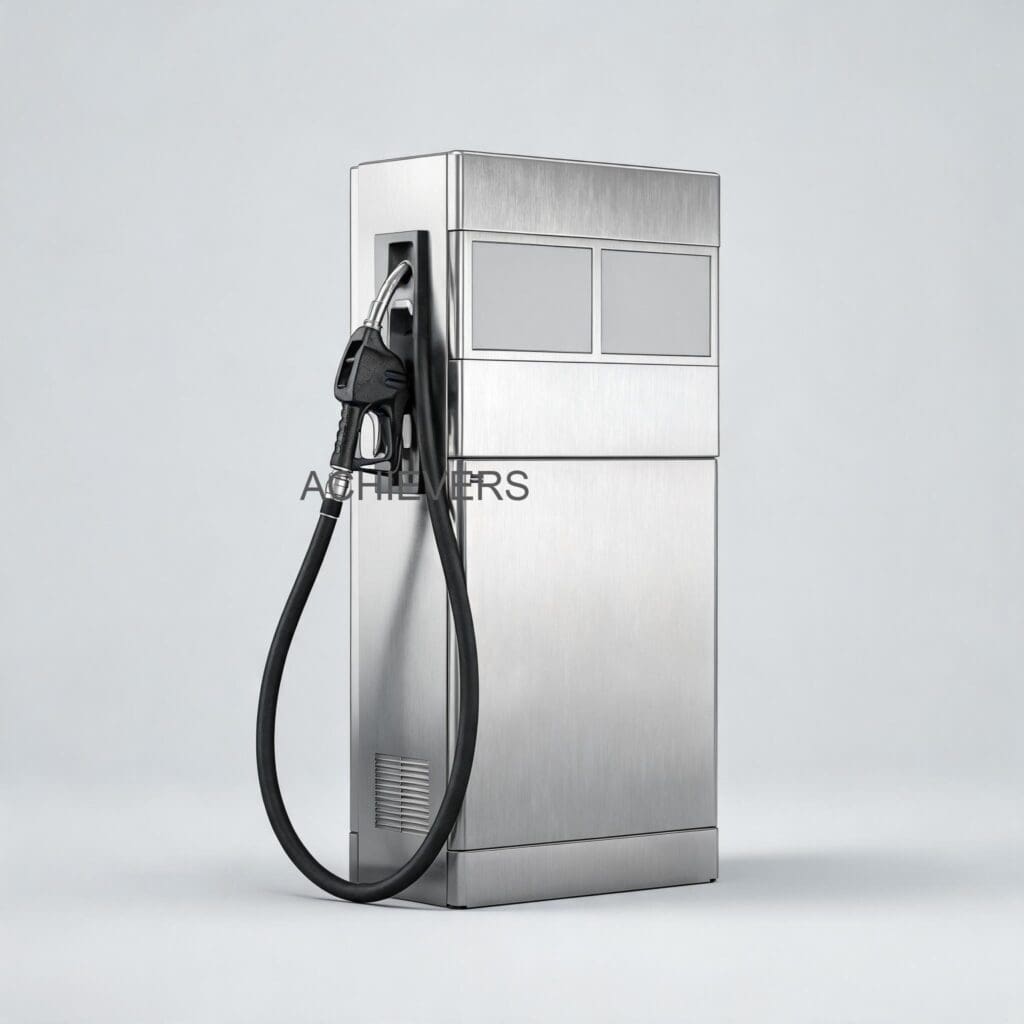
At its core, a Diesel Dispenser designed for mobile or off-grid use relies on a direct current (DC) power source—typically tapping into the battery of the vehicle carrying the fuel bowser or a dedicated stationary battery bank.
These units are engineered to safely store, transport, and transfer diesel in working ranges where permanent petroleum pumps are unavailable. They integrate a self-priming rotary vane pump, a precision flow meter, a continuous-duty motor, and an electronic controller into a single, skid-mounted or tank-mounted package.
The Achievers DC dispenser family is characterized by its robust 20 to 60 L/min flow rate, ensuring fast turnaround times for heavy machinery. Crucially, these systems boast an accuracy of ±0.5% and come with Weights and Measures Approval by the Legal Metrology Department of India. This certification is non-negotiable for industrial buyers who need exact volume tracking (up to 99999.99 Liters) and amount tracking (up to 999999.99 INR) to prevent theft and reconcile fleet fuel consumption accurately.
While the mechanical pumping components and the precision metering electronics remain largely identical across the product family, the primary variant lies in the motor winding and electrical architecture: 12V DC, 24V DC, and AC 220V. For mobile bowsers and remote sites lacking grid power, the choice is strictly between the two DC options.
2. Head-to-Head Specification Comparison
When evaluating a Diesel Dispenser for your site, understanding the electrical and mechanical limits of the equipment is essential. The following table contrasts the 12V, 24V, and 220V models based on their technical parameters and operational behavior under Indian site conditions.
| Feature / Specification | 12V DC Variant | 24V DC Variant | AC 220V Variant |
| :— | :— | :— | :— |
| Flow Rate | 20-60 L/min | 20-60 L/min | 20-60 L/min |
| Metering Accuracy | ±0.5% | ±0.5% | ±0.5% |
| Current Draw (Approx) | 20 to 30 Amps | 10 to 15 Amps | 2 to 4 Amps |
| Voltage Drop Sensitivity | High (Requires thick, short cables) | Low (Tolerates longer cable runs) | Very Low |
| Continuous Duty Cycle | ~30 minutes (Higher heat buildup) | ~45-60 minutes (Runs cooler) | Continuous |
| Inlet / Outlet Size | 25mm (1 inch) | 25mm (1 inch) | 25mm (1 inch) |
| Hose Length Provided | 4 meters (Rubber) | 4 meters (Rubber) | 4 meters (Rubber) |
| Totalizer Digits | Vol: 9 digits, Amount: 11 digits | Vol: 9 digits, Amount: 11 digits | Vol: 9 digits, Amount: 11 digits |
| Ideal Power Source | LCV Batteries (e.g., Tata Ace, Bolero) | HCV Batteries (Dumpers, Volvo trucks) | Grid Power / DG Set |
| Approvals | Legal Metrology Govt. of India | Legal Metrology Govt. of India | Legal Metrology Govt. of India |
Engineering the Electrical Difference
The fundamental engineering difference between 12V and 24V comes down to Ohm's Law and the power equation (Watts = Volts × Amps). To achieve the same mechanical pumping power to push 60 Liters per minute through a 25mm inlet, a 12V motor must draw twice the electrical current (Amps) of a 24V motor.
Higher current generates significantly more heat in the motor windings and requires much thicker copper cabling to prevent voltage drop. In the blazing 45°C heat of a Rajasthan mining site, a 12V motor drawing 30 amps will hit its thermal overload limit much faster than a 24V motor drawing 15 amps.
3. Application Comparison Table
Selecting the best diesel dispenser for a factory yard or mobile fleet isn't just about matching the battery; it is about matching the application demands. This table maps specific Indian industrial scenarios to the highly recommended dispenser configuration.
| Application Scenario | Recommended Option | Technical Reason |
| :— | :— | :— |
| Heavy Mining Equipment (Dumpers/Excavators) | 24V DC Dispenser | Heavy earthmoving equipment universally uses 24V electrical systems. The 24V motor handles the high-volume transfer required for large tanks efficiently without overheating. |
| Light Commercial Vehicles (LCV) Mobile Bowsers | 12V DC Dispenser | Smaller trucks (like Tata 407 or Mahindra Bolero Camper) operate on 12V systems. Attempting to step up to 24V requires expensive converters or secondary batteries. |
| Stationary Yard Tanks with Grid Access | AC 220V Dispenser | If reliable grid or DG power is available, 220V eliminates battery drain, allows continuous duty cycles without thermal cutoffs, and simplifies installation. |
| Remote Telecom Tower DG Refuelling | 12V or 24V DC Dispenser | Depends on the service vehicle. Often 12V is preferred as service pickup trucks carry the fuel. Short, intermittent dispensing (filling small DG day tanks) suits the 12V duty cycle. |
| Long Cable Runs (>5 meters from battery) | 24V DC Dispenser | 24V suffers significantly less voltage drop over distance. A 12V system over a 6-meter cable will starve the motor of voltage, drastically reducing the 60 L/min flow rate. |
| High Accuracy & Audit Compliance | Any Legal Metrology Approved Model | All variants offer ±0.5% accuracy. The key is ensuring the specific model carries the Legal Metrology certificate to prevent regulatory issues during fuel audits. |
| Continuous Fleet Refuelling (Back-to-Back) | 24V DC Dispenser | Pulling half the current means the motor runs cooler. 24V units recover faster thermally, allowing you to refuel 4-5 machines consecutively without a cooldown period. |
| High Viscosity / Cold Weather Operations | 24V DC Dispenser | Thicker fuel (especially in northern Indian winters) requires more torque. 24V systems experience less voltage sag under heavy mechanical load, maintaining a stable flow. |
COMMON MISTAKE TO AVOID
Undersizing the Power Cables on 12V Systems: Many local installers use standard automotive wire (e.g., 2.5 sq mm) for 12V DC dispensers. Because 12V pumps draw up to 30 Amps under load, thin wires cause massive voltage drops. The motor receives only 9 or 10 volts, causing it to stall, overheat, and burn out the windings. Always use heavy-duty battery cables (minimum 6 to 10 sq mm, depending on length) and keep the cable run as short as physically possible.
4. Total Cost Comparison
Procurement heads must look beyond the initial capital expenditure (CapEx) and evaluate the total cost of ownership over a typical 5-year lifecycle. The costs below are representative estimates for the Indian market to help you budget for a Mobile Diesel Dispenser setup.
| Dispenser Option | Est. Purchase Range (INR) | Est. Annual Maintenance (INR) | Expected Lifespan | Best Operational Fit |
| :— | :— | :— | :— | :— |
| 12V DC Dispenser | ₹35,000 – ₹55,000 | ₹3,000 – ₹4,500 | 4 to 6 Years | Small contractors, agricultural use, LCV-mounted bowsers. |
| 24V DC Dispenser | ₹38,000 – ₹58,000 | ₹2,500 – ₹4,000 | 5 to 8 Years | Mining operations, large infrastructure projects, HCV bowsers. |
| AC 220V Dispenser | ₹40,000 – ₹65,000 | ₹2,000 – ₹3,500 | 7 to 10+ Years | Fixed factory yards, transport hubs, permanent fuel farms. |
Note: Pricing variables depend heavily on the inclusion of the 11-digit electronic totalizer, preset flow capabilities, and the presence of the Legal Metrology certification. Extended 2-year warranties also marginally adjust the CapEx.
While the 24V system might carry a marginally higher initial cost in some configurations due to heavier duty contactors and relays, its annual maintenance is often lower. Because it draws less current, the electrical components (switches, relays, carbon brushes) suffer less arcing and degradation over time.
5. Decision Guide: Which One for Your Plant?
To make the best diesel dispenser selection for factory yard or off-road fleet operations, map your exact operational reality to these eight distinct decision scenarios.
1. You are Mounting the Dispenser on a Heavy Commercial Vehicle (HCV)
Recommendation: 24V DC Dispenser
Large trucks like Tata Signa, Ashok Leyland U-Trucks, or Volvo dumpers run on 24V electrical architectures (two 12V batteries in series). Using a 24V dispenser allows you to tap directly into the vehicle's native power grid without risking uneven battery drain.
2. You are Mounting the Dispenser on a Pickup or Light Truck
Recommendation: 12V DC Dispenser
If your mobile bowser is built on a Mahindra Bolero Camper, Tata Yodha, or a small tractor trolley, you only have a 12V battery available. Attempting to run a 24V pump requires installing a dedicated second battery in series, adding unnecessary weight, cost, and charging complexity. Stick to the native 12V.
3. Your Setup Requires Long Cable Runs from Battery to Pump
Recommendation: 24V DC Dispenser
If the fuel tank and dispenser are mounted at the rear of a long trailer, and the battery is at the front cabin, the DC cable run might exceed 5 meters. At 12V, a 30-amp load over 5 meters results in a severe voltage drop, slowing the flow rate from 60 L/min down to 30 L/min. A 24V system easily handles this distance with standard gauge wire.
4. High Duty Cycle and Continuous Refuelling
Recommendation: 24V DC Dispenser (or AC 220V if stationary)
If your shift change involves lining up five excavators and refuelling them back-to-back, a 12V motor will quickly hit its thermal limits and trigger an overload trip. A 24V motor handles sustained loads much better, reducing downtime during critical shift-change refuelling windows.
5. Standby DG Set Refuelling in Manufacturing Plants
Recommendation: AC 220V Dispenser
If you are transferring diesel from a main underground storage tank to the day tanks of factory generators, do not use a DC pump. Since the factory has grid power (and the DG sets provide backup), an AC 220V pump offers continuous, maintenance-free operation without worrying about battery health.
6. High-Value Fuel Auditing and Anti-Theft Requirements
Recommendation: Either DC Voltage, but MUST be Legal Metrology Approved
If your primary pain point is diesel pilferage—a massive issue in Indian transport and mining—the voltage matters less than the certification. Ensure the unit has the ±0.5% accuracy meter and preset capabilities. The Achievers preset diesel dispenser allows the operator to input an exact volume (e.g., 50 Liters), and the pump automatically shuts off, leaving no room for manual "topping off" or skimming.
7. Integrating with Fleet Management Systems (FMS)
Recommendation: 24V DC Dispenser paired with a Diesel Flow Meter
Modern mining and logistics companies use GPS and FMS to track fuel. 24V systems generally offer more stable electrical platforms for integrating advanced telemetry devices, pulse output flow meters, and RFID vehicle tags without suffering from the deep voltage sags that 12V systems experience during pump startup.
8. Agricultural and Farm Operations
Recommendation: 12V DC Dispenser
Farm tractors and harvesting combines in India predominantly use 12V systems. For farmers or rural contractors buying diesel in bulk and dispensing it to their equipment in the fields, a 12V pump connected to the tractor battery with heavy-duty alligator clips is the most flexible and cost-effective solution.
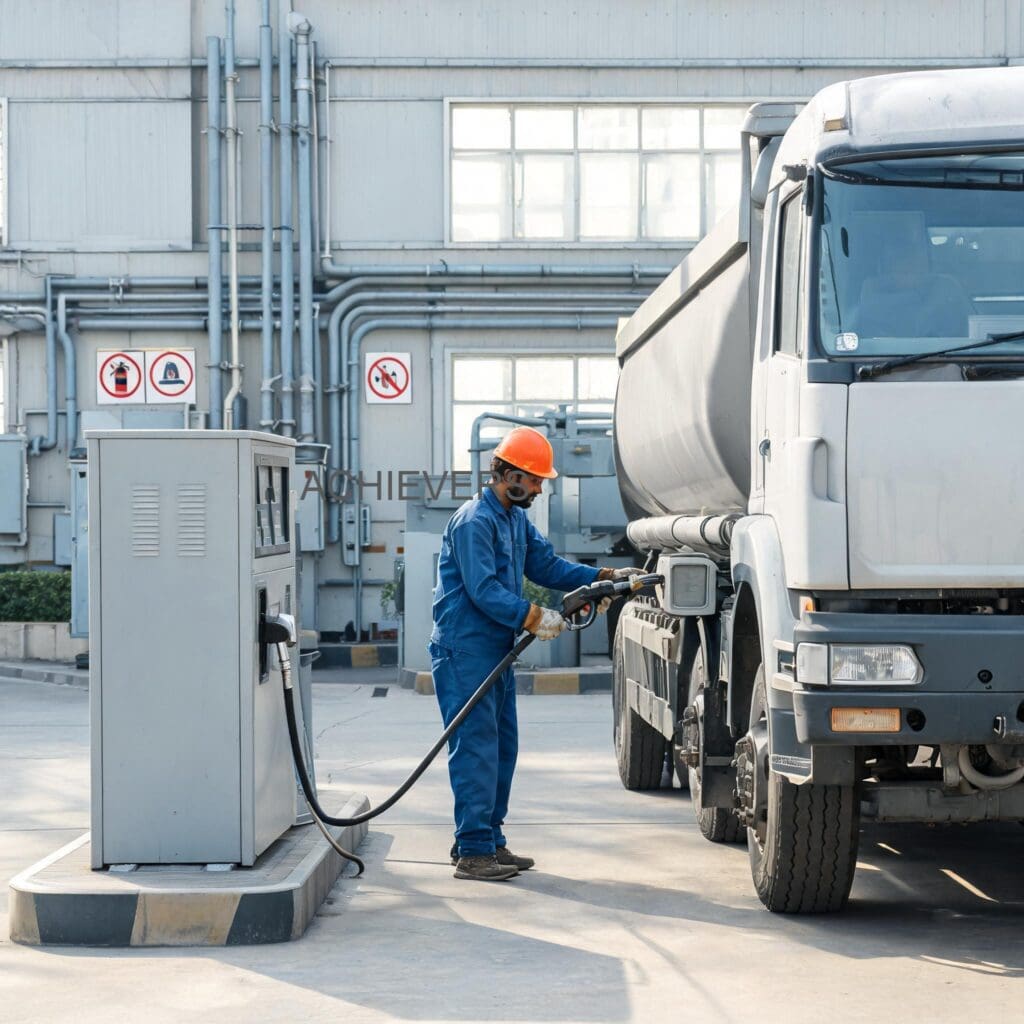
Best Practices Checklist: Installing a DC Diesel Dispenser in India
To ensure your investment lasts its full 5-8 year lifecycle despite extreme Indian site conditions, mandate this 6-step installation procedure for your maintenance team:
- Verify Electrical Compatibility: Before unboxing, test the host vehicle's battery voltage with a multimeter. A healthy 12V system should read ~12.6V resting, and a 24V system should read ~25.2V resting. Never connect a 12V pump to a 24V system, as it will instantly fry the motor controller.
- Size the Power Cables Correctly: Discard flimsy wires. Use a minimum of 6 sq mm multi-strand copper cable for 24V setups, and 10 sq mm for 12V setups if the run is under 3 meters. If longer, increase the gauge to prevent voltage drop.
- Install an Inline DC Breaker: Never wire the pump directly to the battery without protection. Install a DC-rated circuit breaker (e.g., 40A for 12V, 20A for 24V) as close to the battery positive terminal as possible to prevent electrical fires in case the pump motor stalls.
- Mount with Vibration Isolation: Mobile bowsers on Indian mining roads or rural unpaved tracks endure violent shocks. Mount the dispenser skid onto the tank using industrial rubber vibration dampeners to protect the delicate electronic totalizer and flow meter circuitry.
- Install a Primary Inline Filter: While the pump has internal bypass mechanisms, contaminated diesel (common in rural India) will destroy the precision rotary vanes and the flow meter. Install a 10-micron water-absorbing fuel filter on the suction side (inlet) of the pump.
- Prime the System: Never run a DC vane pump completely dry for more than a few seconds. Ensure the 25mm suction line is sealed tightly with Teflon tape, and manually prime the line if necessary before the first startup to protect the internal seals.
FAQ
Q: Can I run a 12V DC dispenser on a 24V truck by just connecting it to one of the two batteries?
A: It is highly discouraged. Tapping 12V from just one battery in a 24V series bank causes uneven discharge. The alternator will overcharge the unused battery while failing to fully charge the depleted one, leading to premature battery failure. Always match the dispenser voltage to the vehicle's native system.
Q: How long can I run the DC diesel dispenser continuously?
A: A 12V DC pump typically has a safe continuous duty cycle of about 30 minutes, after which it should be allowed to cool for 15-20 minutes. A 24V DC pump, drawing less current and generating less heat, can often run for 45 to 60 minutes continuously depending on ambient temperatures.
Q: Does the equipment come with Weights and Measures certification?
A: Yes, Achievers Diesel Dispensers are approved by the Legal Metrology Department, Govt. of India. This means the 9-digit volume and 11-digit amount totalizers can be legally used for commercial accounting, billing, and strict internal audits, keeping you compliant with Indian regulations.
Q: What happens if the delivery nozzle is shut off but the DC pump is still running?
A: The dispensers are equipped with an internal bypass valve. If the automatic fuel nozzle clicks shut, the pump recirculates the diesel internally. However, you should not leave the pump running in bypass mode for more than 2-3 minutes, as the friction will rapidly heat the fuel and damage the pump seals.
Q: Is the 4-meter rubber hose sufficient for heavy machinery?
A: The standard high-quality 4-meter rubber hose is sufficient for most LCV bowsers and standard yard setups. However, for refuelling exceptionally tall equipment like excavators or large DG sets, you can request custom hose lengths. Keep in mind that longer hoses slightly increase discharge friction, which may marginally reduce the 60 L/min flow rate.
Q: Will extreme Indian summers (45°C+) affect the electronic totalizer display?
A: The electronic controllers and displays are built for rugged industrial use. However, prolonged direct exposure to intense UV and high heat can degrade LCD screens over years. It is a best practice to mount a small metal weather shade over the dispenser to protect it from direct summer sun and monsoon rain.
Q: How often does the flow meter need to be calibrated?
A: For internal fleet use, checking calibration once a year is standard practice. If the system is used for commercial sale, Legal Metrology rules in India dictate annual re-stamping and calibration by certified professionals to maintain the ±0.5% accuracy standard.
Achieving absolute control over your fluid handling investments starts with selecting the right core technology. If you are ready to eliminate fuel pilferage, speed up your fleet turnaround times, and ensure your site operations run flawlessly, it is time to upgrade. Contact Achievers Pumps and Valves today with your specific application, vehicle battery setup, and flow rate requirements, and our engineering team will custom-configure the perfect Diesel Dispenser to secure your bottom line.