For industrial operations managers and plant engineers in India, diesel and industrial fuels are often the second-largest operational expense after raw materials. When diesel prices hover around ₹90 per liter, even a 2% variance in your daily fuel reconciliation can translate to lakhs of rupees in annual losses. Yet, when Indian businesses procure fluid measurement equipment, the purchasing decision is frequently driven entirely by the upfront sticker price rather than the Total Cost of Ownership (TCO). This shortsighted approach leads to inaccurate billing, undetected pilferage, frequent breakdowns due to harsh site conditions, and ultimately, a negative return on investment.
This comprehensive technical guide breaks down the true cost of owning and operating a Fuel Flow Meter. By moving away from basic unit costs and examining the full lifecycle—from initial installation and Legal Metrology calibration to maintenance, filtration, and operational downtime—you can build a robust business case for precision measurement. We will walk through a realistic Indian ROI calculation, helping you justify your investment in accuracy-driven savings and operational reliability.
Quick ROI Snapshot
- Typical Application: Diesel generator feeding, heavy earth-moving equipment dispensing, fleet refueling.
- Primary Savings Driver: Elimination of 2-5% volume loss due to theft, manual dipstick errors, and temperature-induced density changes.
- Estimated Initial Investment (including accessories): ₹25,000 – ₹60,000 (depending on automation needs).
- Typical Payback Period: 3 to 6 months for sites consuming >1,000 liters of diesel daily.
- Lifecycle Expectancy: 5-7 years with proper upstream filtration.
1. Product Overview and Cost Context
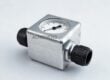
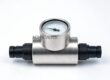
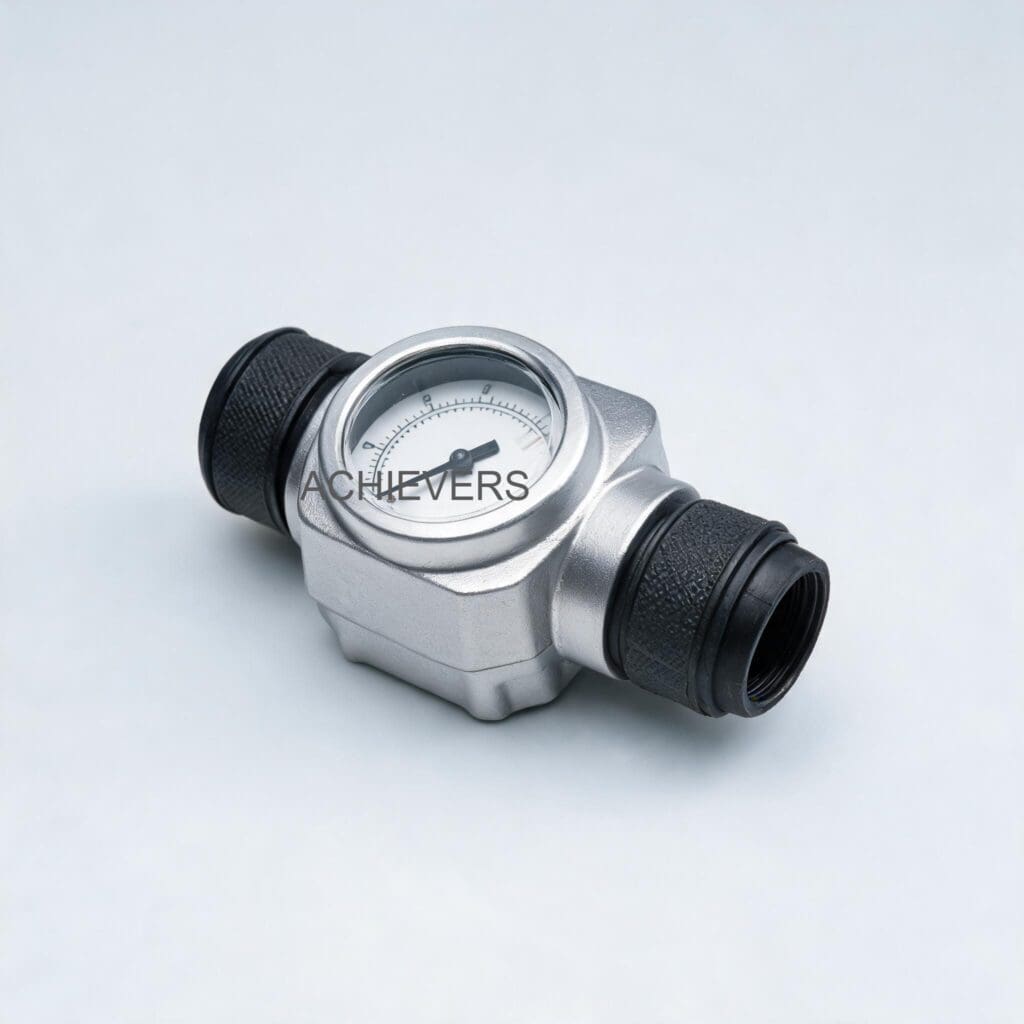
Before calculating the financial returns, it is critical to understand the engineering behind the Fuel Flow Meter. The equipment we are evaluating is a positive displacement meter operating on a curved/oval gear mechanism. Unlike basic turbine meters which lose accuracy at low flow rates or when fluid viscosity changes, a positive displacement meter physically traps and measures exact volumes of fluid, ensuring high precision (±1% metric accuracy) regardless of moderate fluctuations in pressure or diesel viscosity.
In the Indian industrial context—whether you are operating a remote mining site in Jharkhand or a pharmaceutical plant in Gujarat—site conditions are notoriously harsh. High ambient temperatures alter fuel density, dust compromises mechanical seals, and poorly refined or adulterated diesel introduces abrasive particulates. The Fuel Flow Meter is engineered to handle these realities. It features self-lubricating gears, a vacuum-sealed, leak-proof dry totaliser, and low head loss, making it highly reliable for continuous industrial applications.
Below are the core technical specifications that directly impact your operational costs and system compatibility:
| Specification Parameter | Technical Detail | Operational Impact |
| — | — | — |
| Model Number | CE-104 | Standardized spare parts availability across India. |
| Compatible Media | Diesel, Kerosene, Gasoline | Versatile across multiple fuel types (Forbidden for corrosive/acidic liquids). |
| Inlet/Outlet Size | BSPT / NPT 1” | Standardized threading reduces custom piping and installation costs. |
| Operating Flowrate | 0-120 L/Min (Optimized: 6-100 L/Min) | Covers standard dispensing speeds for both DG sets and fleet vehicles. |
| Metric Accuracy | ±1% over the entire flow range | Guarantees precise billing and exact reconciliation for loss prevention. |
| Totaliser Display | 8 Digits Accumulative Counting | Prevents rollover issues during high-volume monthly audits. |
| Internal Mechanism | Positive Displacement (Curved/Oval Gears) | Highly sensitive to low flows; unaffected by upstream flow profile turbulence. |
Common Mistake to Avoid
Skipping the Upstream Strainer: Indian diesel frequently contains suspended rust, tank sludge, and dust. Installing a positive displacement Fuel Flow Meter without a dedicated upstream Y-strainer (usually 60-100 mesh) is the most common reason for premature gear jamming and catastrophic failure. The upfront cost of a ₹1,500 strainer saves tens of thousands in replacement gears and emergency downtime.
2. Total Cost of Ownership Breakdown
Total Cost of Ownership (TCO) is a financial estimate intended to help buyers and owners determine the direct and indirect costs of a product or system. For a Fuel Flow Meter, the initial purchase price typically represents less than 30% of the total financial footprint over a 5-year lifecycle.
When presenting budgets to procurement or finance heads, failing to account for integration, calibration, and maintenance often results in stalled projects. By mapping out the TCO accurately, you transition the conversation from "spending capital" to "protecting operational expenditure."
Below is a detailed lifecycle cost breakdown for an industrial fuel flow measurement system in an Indian plant environment:
| Cost Component | Typical Range (INR) | Frequency | Notes / Justification |
| — | — | — | — |
| Initial Purchase Price | ₹15,000 – ₹45,000 | Once | Varies based on mechanical vs. digital outputs and build materials. |
| Upstream Filtration (Strainer) | ₹1,500 – ₹4,000 | Once | Mandatory for positive displacement meters to prevent gear damage from debris. |
| Installation & Piping Modifications | ₹3,000 – ₹8,000 | Once | Flanges, BSPT/NPT threading, welding, and contract labor for pipe modification. |
| Initial Legal Metrology Calibration | ₹2,500 – ₹5,000 | Once | Required if the meter is used for commercial custody transfer or billing contractors. |
| Periodic Re-Calibration (Annual) | ₹3,000 – ₹6,000 | Annually | Maintains the ±1% accuracy guarantee and satisfies ISO/PESO audit requirements. |
| Consumables (Filter Elements) | ₹1,000 – ₹2,500 | Bi-Annually | Routine replacement of strainer meshes or inline filters to prevent pressure drops. |
| Annual Maintenance (Spares & Labor) | ₹2,000 – ₹5,000 | Annually | Minor servicing, inspecting self-lubricating gears, and verifying vacuum seals. |
| Unplanned Downtime Risk | ₹0 – ₹15,000+ | Variable | Cost of halted operations if the meter jams (mitigated heavily by proper filtration). |
| End of Life Replacement (Lifecycle) | 100% of Unit Cost | Every 5-8 Years | Total replacement due to eventual mechanical wear of the measuring chamber. |
3. ROI Calculation: Real-World Indian Example
To understand the financial justification of this equipment, we must run a practical calculation. Let us consider a mid-sized construction and earth-moving site in Maharashtra. The site operates a fleet of excavators and two 500 kVA diesel generator sets, dispensing fuel via a centralized storage tank.
They currently use manual dipstick measurements and written logbooks to track fuel consumption.
The ROI Procedure and Calculation:
- Establish Baseline Consumption: The site consumes an average of 1,500 liters of diesel per day. At a conservative rate of ₹90 per liter, the daily fuel expenditure is ₹1,35,000.
- Identify Unaccounted Fuel Losses: Historical audits show a persistent discrepancy of about 2.5% between fuel purchased and fuel recorded in equipment logs. This loss is attributed to "topping off" spillages, unauthorized withdrawal (theft), and dipstick reading errors (parallax errors).
- Calculate Daily Monetary Loss: 2.5% of 1,500 liters equals 37.5 liters per day.
- 37.5 liters x ₹90/liter = ₹3,375 lost every single day.
- Calculate Annual Monetary Loss: Operating 300 days a year, the site loses:
- ₹3,375 x 300 = ₹1,012,500 annually.
- Determine Total Investment Cost (TCO Year 1): The site decides to upgrade their dispensing system. They purchase a heavy-duty Fuel Flow Meter (₹25,000), a high-quality strainer (₹3,000), installation labor (₹5,000), and Legal Metrology certification (₹4,000).
- Total Upfront Investment = ₹37,000.
- Estimate System Accuracy and Loss Recovery: The new positive displacement meter guarantees ±1% accuracy. Furthermore, the 8-digit accumulative totaliser cannot be easily tampered with, acting as a psychological deterrent to theft. The system reduces unaccounted losses from 2.5% down to a tightly controlled 0.5%.
- Calculate New Daily Savings: The recovered 2.0% of fuel equates to 30 liters per day saved.
- 30 liters x ₹90/liter = ₹2,700 saved per day.
- Determine the Simple Payback Period: Divide the Total Investment by the Daily Savings.
- ₹37,000 / ₹2,700 = 13.7 days.
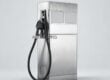
In less than two working weeks, the investment has completely paid for itself. For the remainder of the meter's 5 to 7-year lifespan, the equipment generates a net positive financial return, literally paying the salary of the site operator through recovered fuel costs. This logic applies equally whether you are filling earthmovers or integrating the meter into a stationary Diesel Dispenser.
4. Cost Comparison: Available Approaches
Engineers often face the dilemma of choosing between different measurement technologies. While high-end Coriolis mass flow meters offer incredible precision, their price point is rarely justifiable for basic diesel dispensing. Conversely, cheap water-grade turbine meters fail rapidly in industrial fuels. The decision table below compares the most common approaches found in Indian industrial setups.
| Measurement Approach | Upfront Cost Range (INR) | Annual Operational Cost | Typical Accuracy | Best Application Profile |
| — | — | — | — | — |
| Manual Dipstick & Logbook | ₹500 – ₹1,000 | Very High (Hidden losses, theft, labor time) | ±3% to ±5% | Small, low-value storage tanks with negligible daily movement. |
| Basic Turbine Flow Meter | ₹3,000 – ₹10,000 | High (Frequent replacement, poor low-flow accuracy) | ±2% to ±3% | Temporary setups, clean water, or non-critical fuel transfer. |
| Oval Gear Fuel Flow Meter | ₹15,000 – ₹45,000 | Low (Filter changes, minimal calibration drift) | ±1% | DG sets, fleet dispensing, Oil Flow Meters, construction sites. |
| Coriolis Mass Flow Meter | ₹3,00,000+ | Medium (Requires highly trained instrumentation techs) | ±0.1% to ±0.2% | High-value custody transfer, chemical blending, refinery pipelines. |
For the vast majority of Indian SMEs, logistics companies, and manufacturing plants, the positive displacement (oval gear) meter represents the mathematical "sweet spot" between acceptable accuracy and justifiable TCO.
5. Hidden Costs to Budget For
When executing a procurement order, industrial buyers often fail to foresee secondary integration costs, leading to project budget overruns. Indian site conditions necessitate specific precautions. Be sure to budget for the following six hidden costs when upgrading your fuel handling systems:
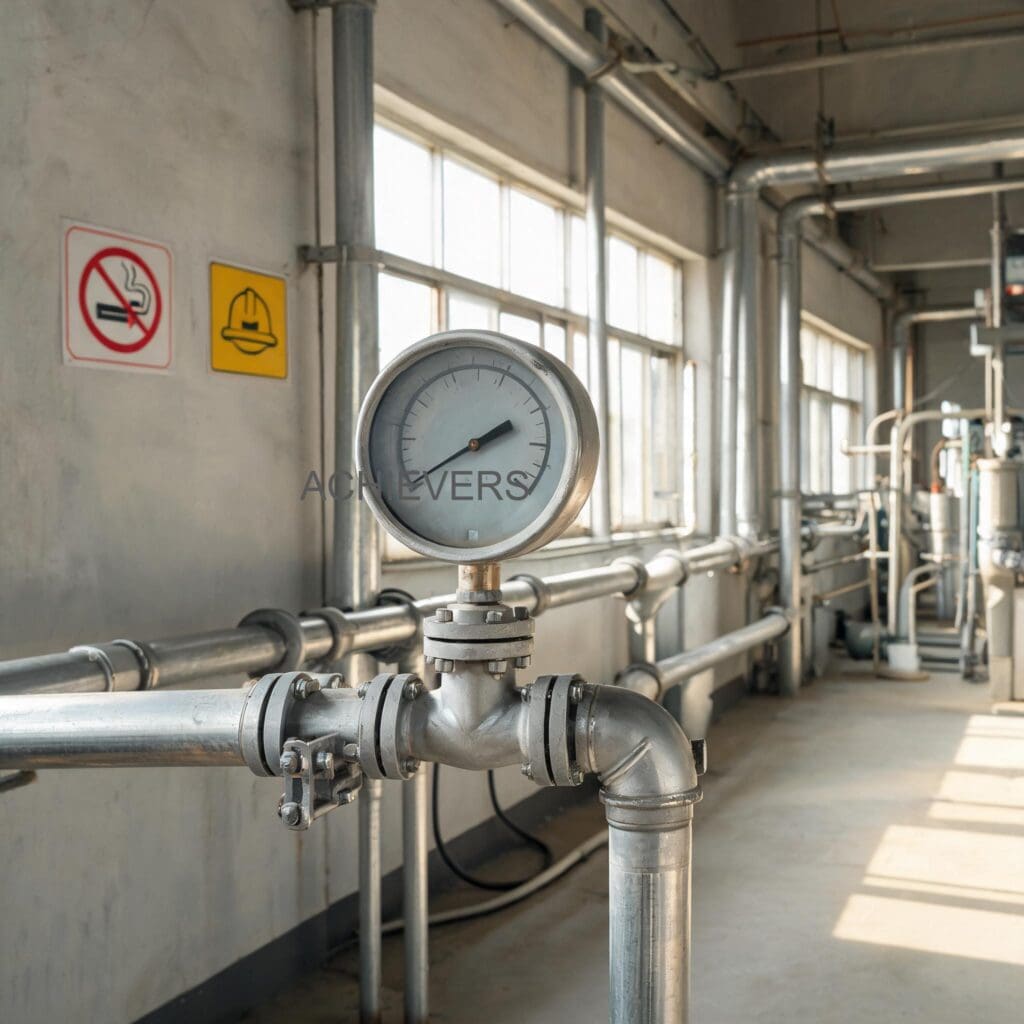
- Heavy-Duty Upstream Filtration: Standard diesel supplied in remote areas often sits in rusted storage tankers. Budget for a Y-strainer or a basket filter, and account for the labor cost to clean these filters monthly.
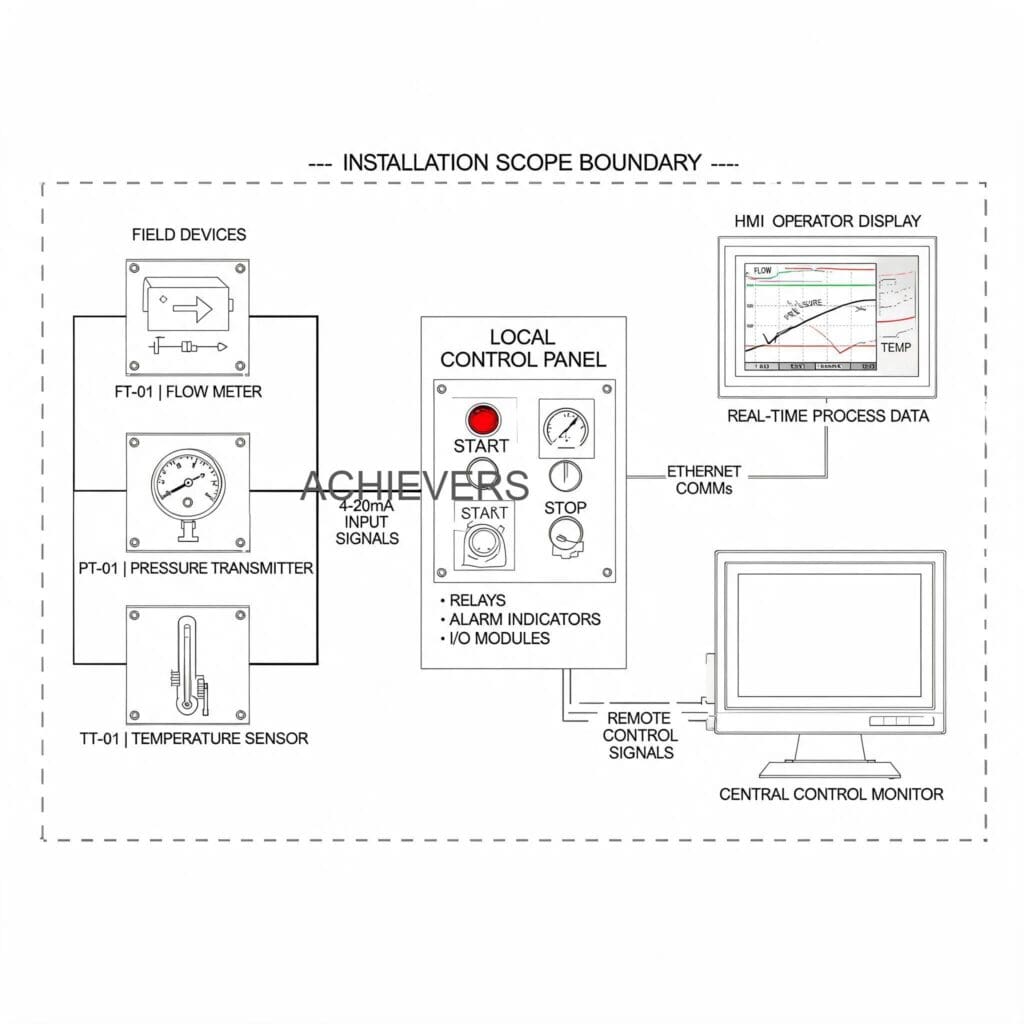
- Electrical Power Conditioning: If you opt for a digital output version of the meter to connect to a PLC or SCADA system, Indian grid fluctuations can fry sensitive electronics. Budget for localized voltage stabilizers or robust SMPS (Switched-Mode Power Supply) units.
- Legal Metrology Stamping and Agent Fees: If you are dispensing fuel to third-party contractors and charging them based on the meter reading, the Legal Metrology Act requires periodic government stamping. Factor in the testing fees and potential liaison costs.
- Piping and Flange Adaptations: The meter comes with standard BSPT/NPT 1" threads. If your existing pipeline is 2", you will need eccentric or concentric reducers. Budget for the welding, fabrication, and pressure-testing of these modifications.
- Air Elimination Systems: If your fuel pump occasionally sucks in air (e.g., when the underground tank runs low), a positive displacement meter will measure that air as fuel, artificially inflating the total. For highly accurate dispensing, budget for an air eliminator tank installed before the meter.
- Operator Training and Change Management: Installing accurate meters often uncovers historical "favors" or theft among staff. Budget time and resources to train operators on the new protocol, ensuring they cannot bypass the meter via parallel bypass lines.
6. How to Justify the Purchase to Management
Technical correctness is rarely enough to secure capital expenditure approval from finance directors. Plant managers must translate engineering benefits into financial language. Use the following structured procedure to build an irrefutable business case for your management team:
- Conduct a 30-Day Baseline Audit: Do not guess your losses. For one month, rigorously document the volume of diesel purchased from the supplier versus the total hours run by DG sets or kilometers driven by vehicles. Highlight the missing gap.
- Map Out Points of Reconciliation Failure: Identify exactly where the data breaks down. Is it the manual dipping of the underground tank? Is it the unmetered transfer pump? Show management the exact physical locations where lack of instrumentation creates a blind spot.
- Present the Complete TCO, Not Just the Unit Price: Quote the full installation cost including the meter, strainers, piping, and labor. Finance teams reject proposals that look like they have hidden future costs. Transparency builds trust.
- Quantify the Cost of Doing Nothing: Show the annual monetary loss calculated in Section 3. Frame the current situation as a continuous, bleeding operational expense. Emphasize that the cost of not having the meter is significantly higher than the cost of buying it.
- Highlight Risk Mitigation and Compliance: Beyond fuel theft, accurate measurement helps in tracking engine efficiency. A sudden spike in fuel consumption (tracked by a Fuel Consumption Meter or flow meter) indicates engine wear or clogged injectors. This prevents catastrophic engine failure.
- Deliver the Simple Payback Calculation: End the proposal with the specific timeline in which the investment will pay for itself (e.g., "ROI achieved in 14 days"). Once the payback period is shown to be less than a financial quarter, approval becomes a procedural formality rather than a debate.
FAQ
Q: What is the expected accuracy of this Fuel Flow Meter in real-world conditions?
A: When properly installed with upstream filtration and operated within its specified flow range of 6-120 L/Min, the meter delivers a metric accuracy of ±1%. Its positive displacement mechanism ensures this accuracy remains stable even if fluid viscosity changes slightly due to temperature.
Q: What types of fluids can this meter safely handle?
A: The CE-104 model is explicitly designed for petroleum-based fluids such as Diesel, Kerosene, and Gasoline. It is strictly forbidden to use this meter for corrosive chemicals, acids, or highly abrasive slurries, as these will destroy the internal curved gears.
Q: Does the meter require a straight run of pipe before and after installation?
A: Unlike turbine or ultrasonic flow meters, positive displacement (oval gear) meters do not require straight pipe runs to condition the flow profile. They can be installed immediately after a pump, elbow, or valve, making them ideal for cramped industrial skids or mobile browsers.
Q: How does dust and high ambient temperature in India affect the meter's lifespan?
A: The meter features a vacuum-sealed, leak-proof dry totaliser, which prevents dust ingress and prevents the display from fogging up during monsoon humidity. The metallic housing easily withstands Indian summer ambient temperatures without deformation.
Q: Can this flow meter handle a free-fall (gravity) dispensing setup?
A: Yes, the meter features very low head loss. However, you must ensure the gravity head generates a minimum flow rate of at least 6 liters per minute to maintain the ±1% precision. If the flow drops below this, fluid may slip past the gears unmeasured.
Q: How frequently does the meter require maintenance?
A: The gears are self-lubricating via the fuel itself, leading to a very long maintenance-free working life. The primary maintenance required is simply cleaning the upstream Y-strainer basket every month to ensure dirt does not enter the measuring chamber.
Q: What happens if water is mixed in with the diesel?
A: Trace amounts of water will pass through without damaging the gears, but large quantities of water (common in poorly maintained Indian tanks during monsoons) can cause long-term corrosion. It is highly recommended to use a water-separator filter upstream if your fuel source is heavily contaminated.
Stop letting unaccounted fuel losses erode your operational margins. Whether you are upgrading a single diesel generator, outfitting a fleet of earthmovers, or designing a complex liquid batching system, precision measurement is an investment that pays for itself in weeks. Contact Achievers Pumps and Valves today with your required flow rate, fluid type, and specific site challenges, and our engineering team will help you select the exact configuration needed to secure your fluid handling investments.