When industrial engineers, plant managers, and procurement heads evaluate fluid handling investments, the initial capital expenditure (CapEx) is often the focal point of the discussion. However, treating diesel and other industrial fuels as mere consumables rather than high-value liquid assets is a critical operational blind spot. Fuel is consistently one of the largest operating expenses in heavy manufacturing, mining, power generation, and global logistics.
Relying on outdated, uncalibrated, or poorly specified dispensing equipment leads to unrecorded shrinkage, continuous spillage, and administrative inaccuracies. To truly optimize your fluid handling investments, you must implement an industrial fuel dispenser payback calculation for fuel loss control. This comprehensive analysis breaks down the total cost of ownership (TCO) of modern dispensing systems, highlighting how factors like metering accuracy, filtration, nozzle reliability, and planned downtime directly impact your monthly operating costs and overall profitability.
Quick ROI Snapshot
- Typical payback period: 4 to 8 months (highly dependent on monthly fuel volume)
- Primary savings driver: Elimination of 2% to 5% unrecorded fuel shrinkage via ±0.5% metering accuracy and ±0.1% repeatability.
- Key operational benefit: Minimized machine idling and reduced dispensing time with flow rates ranging from 60 LPM to 200 LPM.
1. Product Overview and Cost Context
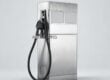
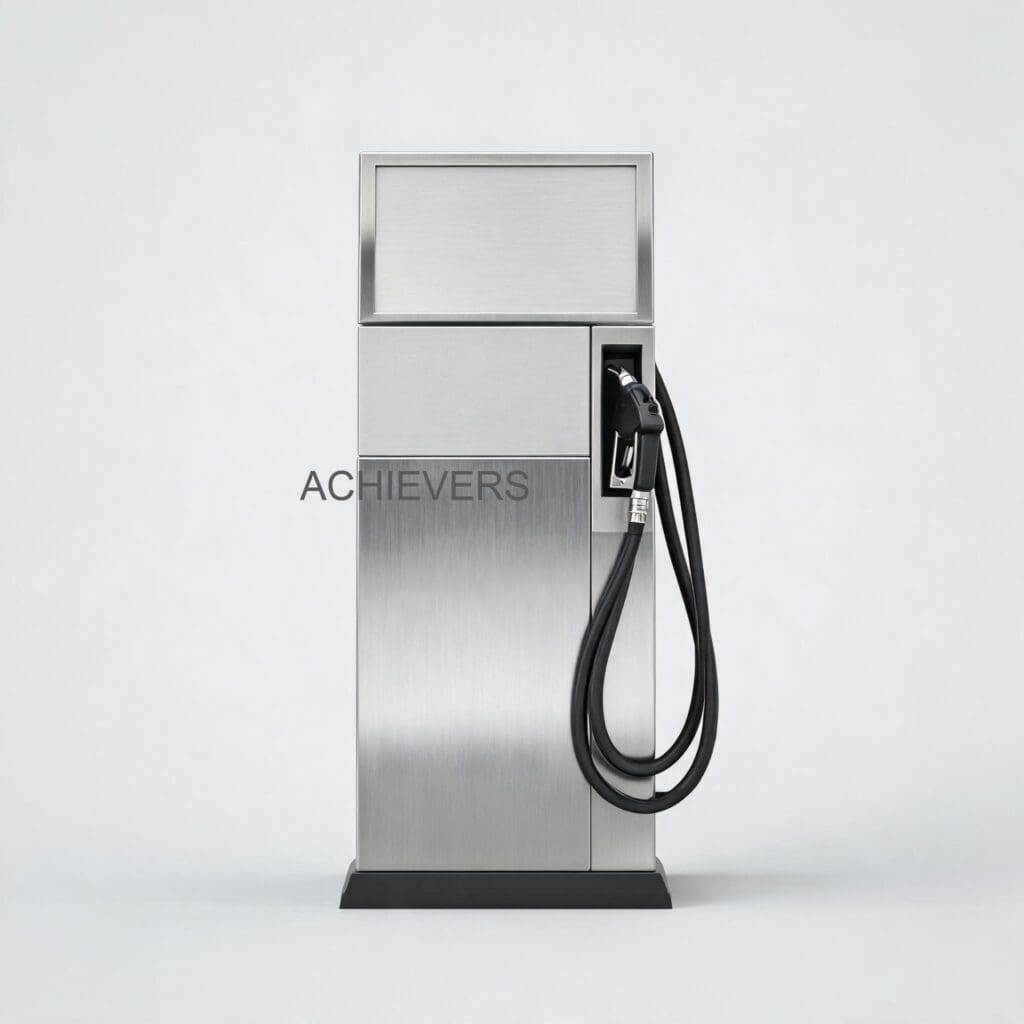
Fuel Dispensers are highly accurate, self-contained fluid transfer systems engineered for environments where measured accuracy directly equates to financial control. Unlike standard transfer pumps, a complete industrial dispenser acts as the cash register for your bulk storage tanks.
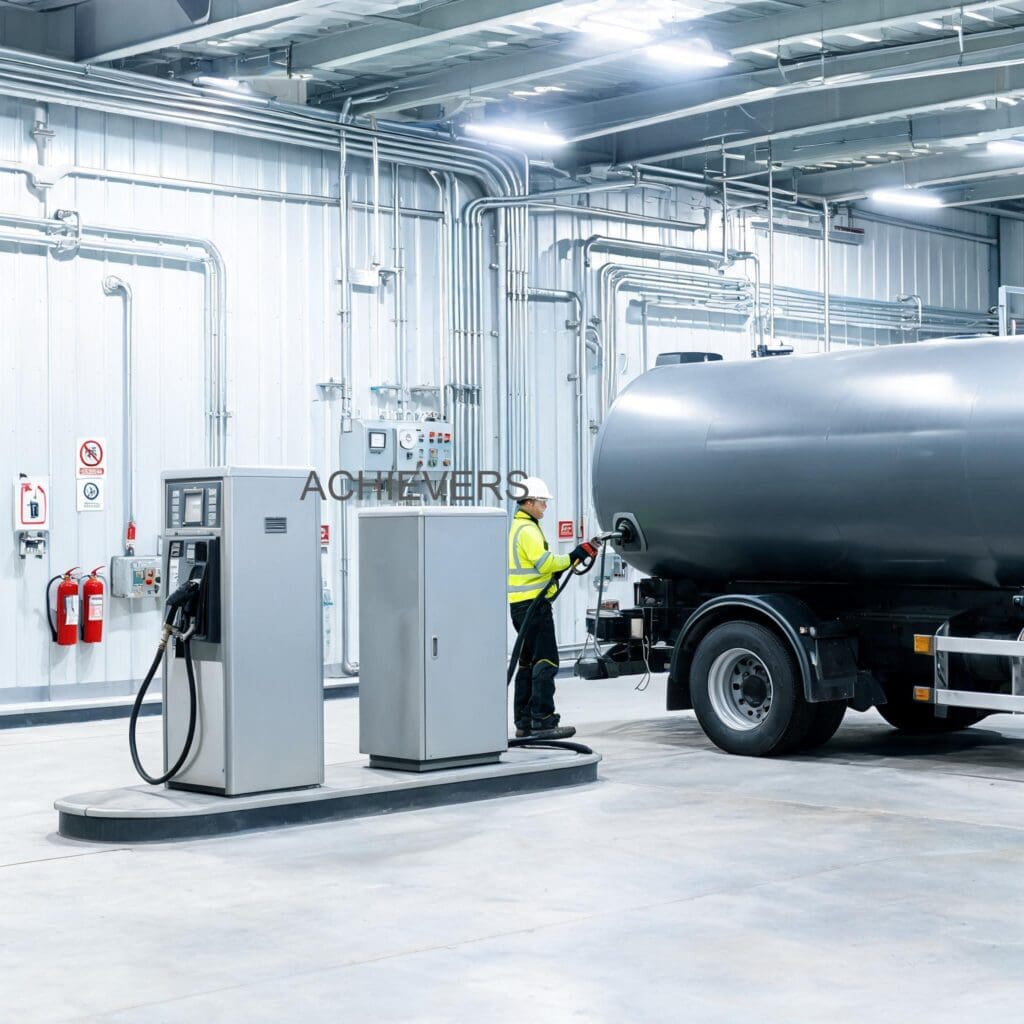
Whether you are fueling excavators at a remote construction site, heavy goods vehicles at a logistics depot, or stationary diesel generator (DG) sets inside a manufacturing plant, the requirement remains identical: every drop of diesel, biodiesel, or kerosene must be transferred safely, quickly, and with precisely tracked volume.
A high-quality dispenser integrates several critical components into a rugged, powder-coated steel enclosure designed for harsh industrial environments:
- Self-Priming Pump: Usually a durable vane or gear pump capable of pulling fuel from both above-ground and underground storage tanks.
- High-Accuracy Flow Meter: Utilizing piston or oval-gear positive displacement technology to deliver ±0.5% accuracy and ±0.1% repeatability, regardless of minor fluctuations in fuel viscosity or temperature.
- Filtration System: A built-in, large-capacity inline filter that protects the tight tolerances of the flow meter from particulate matter and extends the service life of the entire system.
- Control and Delivery: A 4-meter rubber delivery hose with brass fittings, coupled with an automatic shut-off nozzle to prevent overflow, and a backlit digital display featuring a resettable batch and cumulative totalizer.
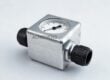
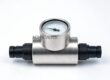
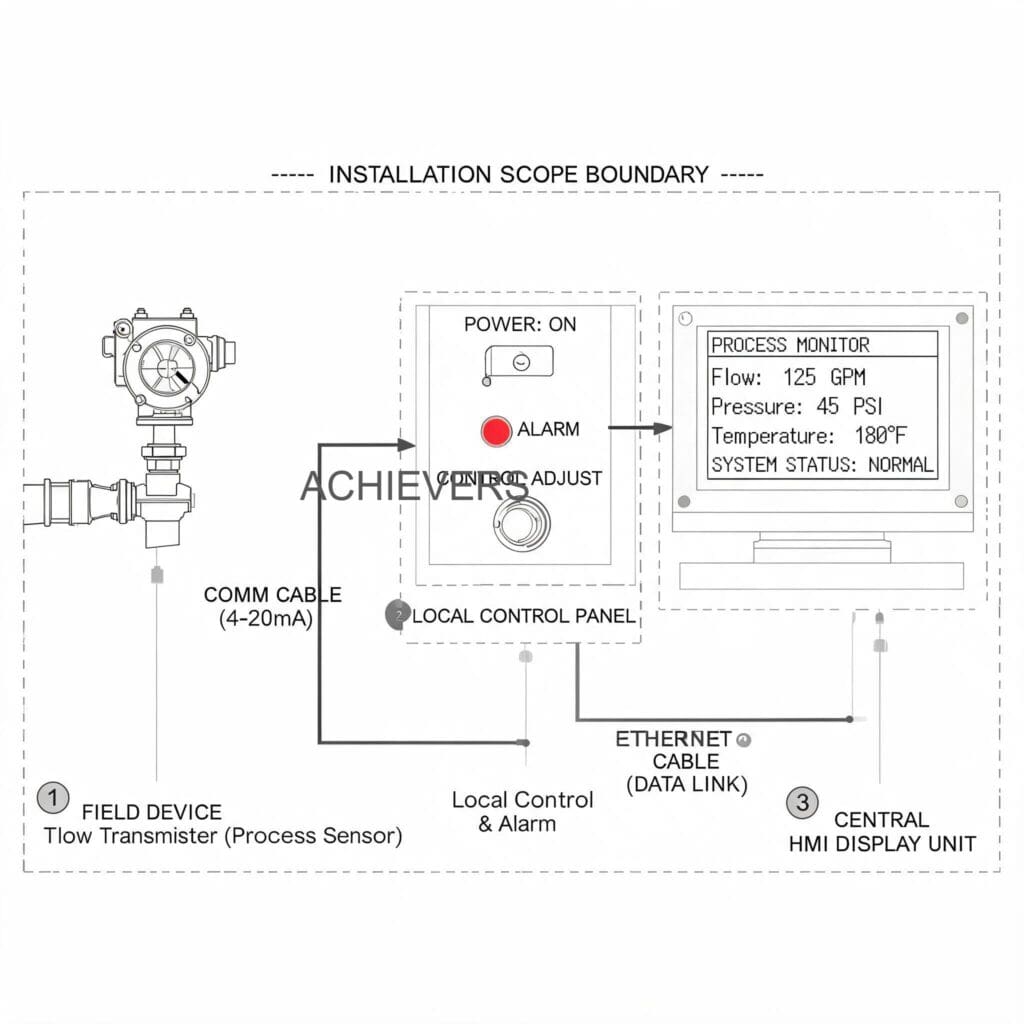
For specialized applications requiring distinct monitoring, integrating a dedicated Diesel Flow Meter into existing custom skids can also provide the necessary measurement redundancy. However, for most turn-key operational needs, a fully integrated dispenser is the most cost-effective path to fuel security.
2. Total Cost of Ownership Breakdown
Evaluating the true financial footprint of Fuel Dispensers requires looking far beyond the initial invoice. Procurement teams must calculate the lifetime TCO, factoring in installation, routine calibration, preventative maintenance, energy consumption, and the financial impact of equipment downtime.
The table below outlines the core TCO components for a standard industrial dispensing system (such as the CE-117 Standard model or the CE-202 Heavy-Duty model) over a typical 5-to-10-year operational lifespan.
| Cost Component | Typical Impact Range (Global USD Equivalent) | Frequency | Notes |
| — | — | — | — |
| Initial Equipment Purchase | $500 – $2,500+ | Once (CapEx) | Varies based on flow rate (60 to 200 LPM), power supply (AC/DC), and specialized features (e.g., Flameproof FLP motors or receipt printers). |
| Site Prep & Installation | $200 – $800 | Once (CapEx) | Includes concrete pad mounting, electrical drops, and piping connections to the bulk storage tank. |
| Initial Commissioning & Calibration | $100 – $300 | Once | Required to verify ±0.5% accuracy baseline and comply with local weights and measures standards. |
| Consumables: Inline Filters | $30 – $100 | Every 3-6 Months | Crucial OpEx. Dirty fuel is the primary cause of flow meter degradation and loss of accuracy. |
| Consumables: Hoses & Nozzles | $80 – $200 | Every 12-24 Months | High-wear items. Heavy industrial use, vehicle drive-offs, or dragging hoses causes degradation. |
| Annual Calibration Services | $150 – $400 | Annually | Essential to prevent meter drift. Over-dispensing by just 1% destroys fuel budgets over a year. |
| Energy Consumption | $50 – $150 | Annually | Highly efficient 220V/440V AC or 12V/24V DC motors consume minimal power during active transfer phases. |
| Unplanned Downtime | $500 – $5,000+ per event | Variable | The cost of idle fleet vehicles or stationary equipment while waiting for dispenser repairs or spare parts. |
| End-of-Life Replacement | $500 – $2,500+ | Every 5-10 Years | Rugged enclosures last longer, but electronic displays and internal pump vanes eventually require full overhaul or replacement. |
By understanding these figures, operations managers can shift the conversation from "finding the cheapest pump" to "investing in the lowest TCO."
3. ROI Calculation: Real-World Industrial Example
To justify capital expenditure, you must present a verifiable financial model. Calculating the fuel dispensers total cost of ownership for industrial diesel dispensing relies on contrasting the baseline losses of an unmetered or aging system against the recovered capital from a high-accuracy system.
Whether you are operating an aggregate mine in Australia or analyzing the Fuel Dispensers ROI in India for factory yards and fleet depots, the mathematical framework remains identical. Here is an 8-step payback calculation based on a mid-sized facility consuming 50,000 liters of diesel per month at an average cost of $1.00 per liter.
Step 1: Establish the Baseline Fuel Consumption
Identify the total volume of fuel pumped per month. In this scenario, the facility transfers 50,000 liters monthly.
Step 2: Identify the Current Loss Percentage
Audit your fuel receipts against actual machine consumption data. Facilities using gravity feeds, manual drum pumps, or degraded, uncalibrated meters typically experience a 3% shrinkage rate due to spillage, over-dispensing, and undocumented transfers.
Step 3: Calculate Monthly Financial Loss Before Intervention
Multiply the monthly volume by the loss percentage, then by the cost per liter.
50,000 liters x 0.03 (3%) = 1,500 liters lost.
1,500 liters x $1.00/liter = $1,500 lost per month.
Step 4: Factor in the New Equipment CapEx
Assume the procurement of a Heavy-Duty Fuel Dispensers model (like the CE-202) costs roughly $1,200, designed for high-volume accurate metering.
Step 5: Factor in Installation and Calibration Costs
Add the cost of site preparation, electrical connection, and third-party calibration. Let us allocate $500 for a total initial investment of $1,700.
Step 6: Determine the Post-Installation Loss Reduction
With an automatic shut-off nozzle preventing spills and a positive displacement meter operating at ±0.5% accuracy, shrinkage is reduced from 3% to 0.5%. The new unpreventable loss is only 250 liters per month (50,000 x 0.005).
Step 7: Calculate the Net Monthly Financial Savings
Subtract the new loss from the old loss.
1,500 liters (old loss) – 250 liters (new loss) = 1,250 liters saved.
1,250 liters x $1.00/liter = $1,250 saved per month.
Step 8: Compute the Simple Payback Period
Divide the total initial investment by the net monthly savings.
$1,700 CapEx / $1,250 monthly savings = 1.36 months.
In this highly realistic scenario, the equipment pays for itself in under six weeks. Every month thereafter, the plant recovers $1,250 that was previously leaking out of the operational budget.
Common Mistake to Avoid: Ignoring the Pre-Filter Maintenance
Running a high-accuracy piston or oval-gear meter without strict filtration maintenance is the fastest way to destroy your ROI. Debris, rust flakes, and water condensation from bulk storage tanks will quickly score the internal metering chambers, instantly ruining the ±0.5% accuracy. Always stock replacement inline filters and adhere to scheduled changeouts to protect your measurement accuracy.
4. Cost Comparison: Available Approaches
When upgrading bulk fluid transfer systems, buyers generally weigh several technological tiers. Choosing the correct approach depends on your required flow rate, necessary measurement precision, and the volatility of the operating environment.
| Approach / Technology | Upfront Cost Profile | Annual OpEx | Measurement Accuracy | Best Suited For |
| — | — | — | — | — |
| Manual / Gravity Feed dispensing | Very Low | High (Due to maximum shrinkage/spills) | None (Guesswork) | Temporary sites or highly infrequent usage where fuel security is not a concern. |
| Economy Dispenser (e.g., CE-116) | Low to Moderate | Low | ±0.5% to ±1.0% | Smaller operations, agricultural applications, or facilities needing cost-effective daily reliability. |
| Heavy-Duty Dispenser (e.g., CE-202) | Moderate | Low | ±0.5% | Large transport depots, high-volume manufacturing plants, and continuous fleet fueling. |
| Custom FLP (Flameproof) Dispenser | High | Moderate (Requires specialized maintenance) | ±0.5% | Hazardous environments (ATEX zones), refineries, chemical plants, and explosive atmospheres. |
For temporary or highly transient operations, you might also consider a Mobile Fuel Dispenser utilizing 12V or 24V DC power, allowing heavy machinery to be fueled directly in the field, further reducing the downtime associated with driving equipment back to a central depot.
5. Hidden Costs to Budget For
Finding a reliable fuel dispensers supplier for manufacturers and logistics depots means looking for a partner who is transparent about the lifecycle costs of the equipment. A cheap upfront price tag often conceals long-term operational friction. When budgeting for your next purchase, ensure you account for these six hidden costs:
- Power Conditioning and Electrical Infrastructure: In many remote industrial sites, voltage fluctuations and power spikes are common. Standard 220V AC or 440V AC motors can suffer premature failure if they are not protected by adequate power conditioning or motor protection circuit breakers.
- Periodic Calibration Lab Fees: A flow meter is only as good as its last calibration. Depending on regulatory frameworks and internal ISO requirements, you must budget for annual or bi-annual recertification by qualified metrology technicians to ensure the batch and cumulative totalizers remain legally compliant and technically accurate.
- Consumable Degradation (Hoses & Nozzles): Delivery hoses drag across abrasive concrete, and automatic shut-off nozzles are frequently dropped. These are consumable items. Opting for high-quality rubber hoses with brass fittings reduces the replacement frequency compared to cheap PVC alternatives.
- Piping and Infrastructure Modifications: Installing a new, high-flow dispenser (up to 200 LPM) may require upgrading your suction lines from the bulk tank. Trying to pull a high volume of fluid through undersized pipework will cause pump cavitation, destroying the vanes and invalidating warranties.
- Logistics and Spare Parts Availability: Purchasing an imported, unbranded kit may seem cost-effective until a simple component fails. If spare parts are not held locally, you may face weeks of expensive downtime while waiting for customs clearance on a replacement circuit board. Working with an established manufacturer ensures ready access to in-house spare parts.
- Downtime During Routine Maintenance: Even planned maintenance costs money. However, systems designed with easily accessible inline filters and modular meter components allow technicians to perform preventative maintenance rapidly, minimizing the time fleet vehicles spend waiting for fuel.
6. How to Justify the Purchase to Management
Engineers and plant managers often recognize the necessity of upgrading their fluid handling systems, but securing budget approval requires building a bulletproof business case. When you need to buy fuel dispensers for industrial captive fuel storage, present the investment not as a cost center, but as a robust loss-prevention strategy. Follow these steps to justify the expenditure to your management team:
- Establish a Data-Driven Baseline: Do not rely on estimates. Perform a strict 30-day audit comparing bulk fuel delivery invoices against the logged consumption of your fleet or DG sets. Calculate the exact volume of missing fuel.
- Quantify the Financial Impact: Translate that missing volume into annual currency losses. Management responds to hard financial data. Show them exactly how much cash is evaporating through shrinkage, uncalibrated over-dispensing, and minor daily spills.
- Highlight Regulatory and Compliance Risks: Emphasize that accurate tracking is often a regulatory requirement for environmental compliance and tax reporting. Utilizing equipment approved by Legal Metrology standards eliminates the risk of compliance fines.
- Present the ROI Payback Model: Utilize the 8-step calculation detailed in Section 3. Show that the proposed CapEx will pay for itself within a fraction of the fiscal year, transitioning the purchase into a net-positive investment.
- Factor in Productivity Gains: Detail the labor hours saved by upgrading from a slow, 30 LPM manual pump to a high-speed 60 LPM or 200 LPM automated dispenser. Faster fueling means fleet vehicles spend more time generating revenue and less time idling at the depot.
- Propose a Scalable Pilot Program: If management is hesitant to upgrade the entire facility, propose installing a single high-quality dispenser on the highest-volume bulk tank. Use the localized data from this pilot to prove the ROI before rolling out the standard across all operational sites.
FAQ
Q: What flow rates can I expect from industrial fuel dispensers?
A: Standard models typically deliver up to 60 LPM, which is ideal for standard fleet and plant machinery. Custom and heavy-duty configurations can be engineered to deliver up to 200 LPM for rapid filling of bulk transport vehicles and massive earth-moving machinery.
Q: Can these systems withstand extreme industrial environments?
A: Yes. High-quality dispensers feature rugged, powder-coated steel enclosures designed to resist harsh weather, corrosive atmospheres, and heavy industrial wear. Flameproof (FLP) models are also available for highly volatile environments.
Q: How often does the flow meter require calibration?
A: For optimal accuracy (±0.5%) and to meet commercial or regulatory weights and measures standards, it is recommended to calibrate the meter annually, or more frequently if dispensing exceptionally high volumes or abrasive fluids.
Q: What power options are available for these dispensers?
A: Systems can be configured for stationary mains power (220V AC or 440V AC). For mobile setups on fuel bowsers or service trucks, 12V DC or 24V DC battery-powered options are readily available.
Q: Do the dispensers keep a permanent record of fuel usage?
A: Yes. They come equipped with a digital or mechanical display that includes both a resettable batch totalizer (for tracking individual fills) and a non-resettable cumulative totalizer (for auditing total lifetime throughput).
Q: Are these systems compatible with fluids other than diesel?
A: While primarily designed for diesel, many models are compatible with kerosene and biodiesel. Specialized versions constructed with distinct seals and materials are available for dispensing AdBlue and highly corrosive chemicals.
Q: How difficult is it to source spare parts if the system breaks down?
A: By sourcing directly from an established manufacturer with an in-house spare parts inventory—rather than a third-party importer—replacement hoses, nozzles, filters, and electronic boards are readily available to ensure minimal operational downtime.
If your facility is still relying on uncalibrated pumps and outdated transfer methods, you are losing money on every shift. Stop treating fuel loss as an inevitable cost of doing business. Contact Achievers Pumps and Valves today with your required flow capacity, specific application details, and site power conditions, and our engineering team will help you configure a dispensing system that guarantees measurable financial return.