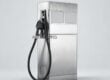
In industrial diesel transfer, unaccounted fuel isn't just an administrative headache—it is a direct drain on your operating margins. For Indian plant managers and procurement heads overseeing fleets, generators, or mining equipment, maintaining accurate fuel measurement is critical. A standard Fuel Flow Meter handling 10,000 liters of high-speed diesel (HSD) daily with a hidden 2% accuracy drift can cost your operation over ₹1,60,000 a month in "lost" fuel.
Unplanned downtime, erratic readings, and fuel theft can be almost entirely eliminated with a robust preventive maintenance plan. This Fuel Flow Meter maintenance guide provides a comprehensive framework to ensure your fluid handling infrastructure remains highly accurate, perfectly calibrated, and resilient against punishing Indian site conditions.
Quick ROI Snapshot
- Typical Maintenance Cost: ₹3,000 – ₹5,000 annually (consumables and labor).
- Fuel Savings (Preventing 1% Drift on 5k Liters/Day): ₹1,35,000+ per month.
- Typical Payback Period: Less than 7 days for every rupee spent on scheduled calibration and cleaning.
Whether your Fuel Flow Meter is installed on a stationary storage tank, a waterway vessel, or integrated into a heavy-duty transport fleet, following this guide will extend its life and protect your baseline profitability.
1. Product Overview and Critical Wear Components
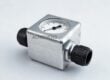
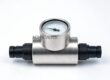
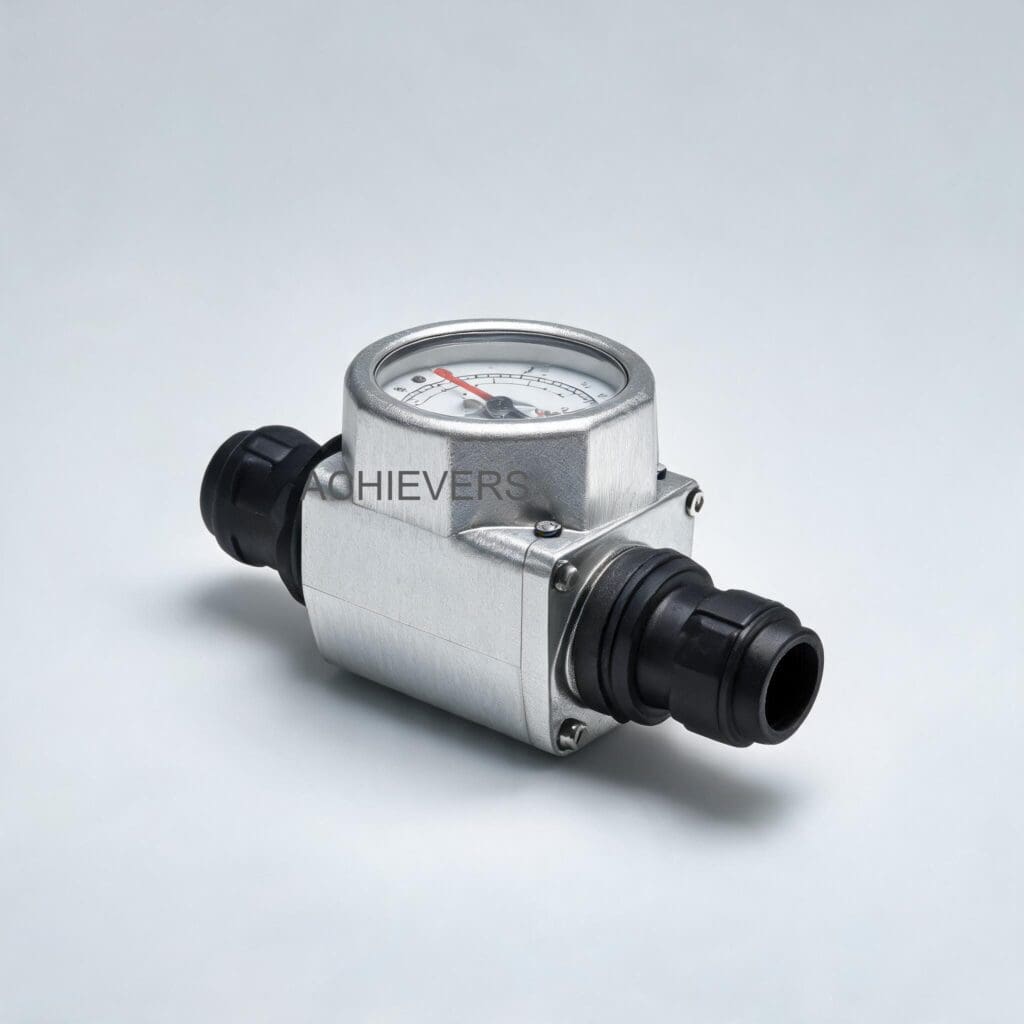
To understand how to maintain a Fuel Flow Meter, you must first understand how it works. Industrial fuel flow meters, particularly our CE-104 model, operate on a positive displacement principle using two precisely machined curved gears (oval gears) that interlock within the measuring chamber. Because these gears represent a fixed volume of fluid with every rotation, the meter delivers exceptional accuracy regardless of fluid viscosity changes.
While these meters feature self-lubricating gears and vacuum-sealed dry totalisers to minimize wear, continuous exposure to industrial environments means certain parts require scheduled attention.
Critical Wear Components Include:
- Curved Gears: Susceptible to scoring from micro-particulates if the strainer fails.
- O-Rings and Seals: Can degrade over time due to chemical exposure or severe heat.
- Measuring Chamber Shell: Can accumulate sludge or varnish from poor-quality diesel.
- Digital Totaliser Assembly: While vacuum-sealed, the external terminals and display screen can be compromised by heavy impact or severe monsoon humidity if improperly housed.
Technical Specifications: CE-104 Series
Understanding your meter's operational limits is the first step in preventive maintenance. Do not operate the meter outside these parameters.
| Specification Parameter | Technical Details | Maintenance Implication |
| — | — | — |
| Medium Compatibility | Diesel, Kerosene, Gasoline | Do not use for acids, water, or highly viscous oils. |
| Flow Rate Range | 6 – 120 L/Min | Operating below 6 L/min or above 120 L/min will skew metric accuracy and accelerate wear. |
| Metric Accuracy | ±1% | If drift exceeds ±1%, immediate recalibration is required. |
| Inlet Size | BSPT/NPT 1” | Ensure pipeline connections use correct thread sealant to prevent air ingress. |
| Totaliser Display | 8 Digits (Digital) | Accumulative tracking helps schedule maintenance based on volume transferred, not just time. |
2. Preventive Maintenance Schedule
Waiting for a Fuel Flow Meter to fail before servicing it guarantees inaccurate dispensing and disrupted operations. For industrial fuel transfer, proactive scheduling based on Indian operating conditions is mandatory.
Below is a master preventive maintenance schedule for fuel flow meter installations.
| Task | Frequency | Responsible | Est. Time | Notes |
| — | — | — | — | — |
| Visual Leak Inspection | Daily | Pump Operator | 5 mins | Check flanges, BSPT threads, and meter body for weeping fuel. |
| Display Verification | Daily | Pump Operator | 2 mins | Ensure the 8-digit digital totaliser reads zero before starting the batch. |
| Strainer/Filter Draining | Weekly | Maintenance Tech | 10 mins | Drain water and heavy sludge from the primary pre-filter housing. |
| Fuel Flow Meter Strainer Cleaning | Monthly (or every 50k Liters) | Maintenance Tech | 30 mins | Remove and wash the internal mesh strainer with clean solvent. |
| Accuracy / Proving Check | Monthly | Quality Control | 45 mins | Dispense 20L into a calibrated, PESO-certified measure to verify ±1% accuracy. |
| Electrical Terminal Check | Quarterly | Electrician | 15 mins | Ensure digital totaliser power connections are tight and corrosion-free. |
| Seal and O-Ring Inspection | Bi-Annually | Maintenance Eng. | 60 mins | Inspect internal seals during a scheduled line shutdown. Replace if hardened. |
| Formal Recalibration | Annually | Certified Tech | 2 Hours | Comprehensive calibration. Essential for compliance with Legal Metrology. |
| Internal Gear Inspection | Annually | Maintenance Eng. | 2 Hours | Check curved gears for scoring, pitting, or excess clearance. |
| Housing Bolt Re-Torque | Annually | Maintenance Eng. | 15 mins | Expansion and contraction from Indian summer heat can loosen housing bolts. |
3. Step-by-Step Procedures for Key Tasks
Proper execution of maintenance tasks dictates the longevity of your equipment. Below are the definitive procedures for the two most critical maintenance activities.
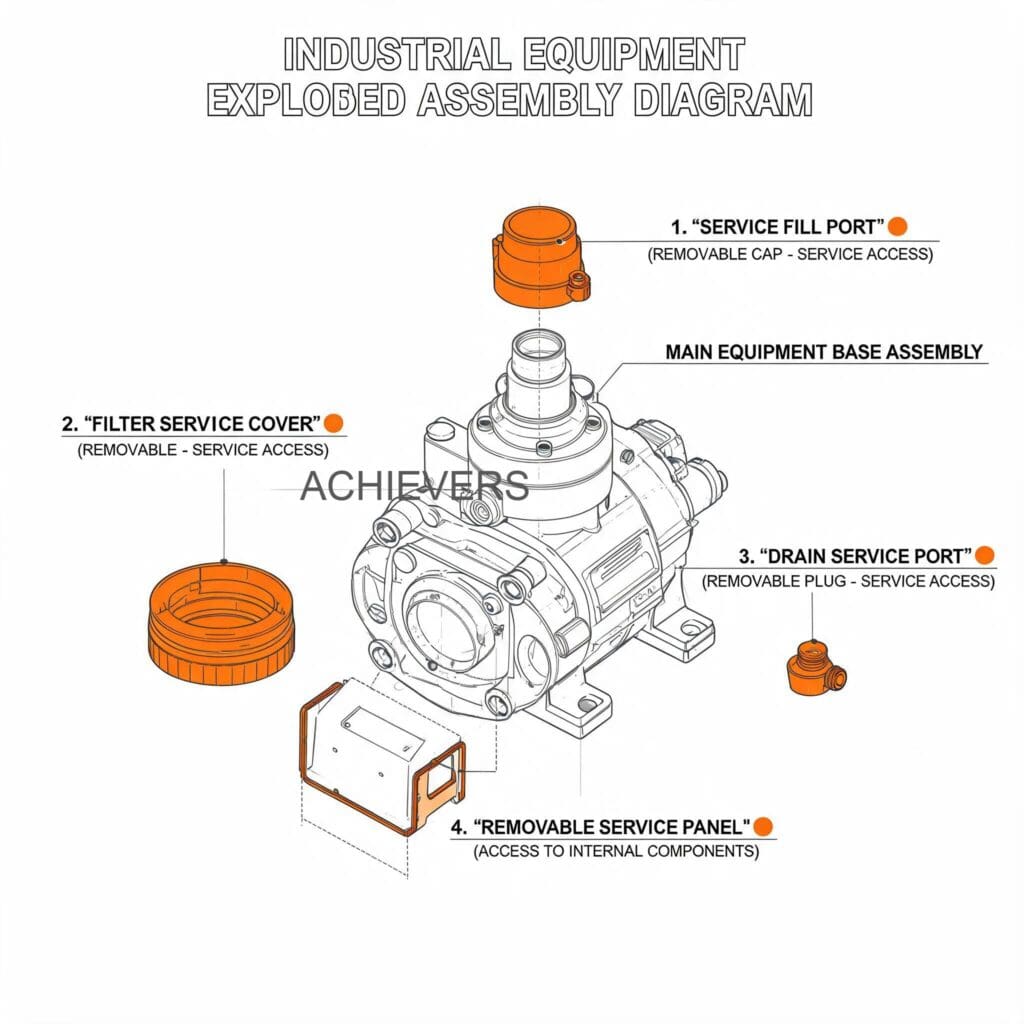
Procedure 1: Fuel Flow Meter Strainer Cleaning Checklist
Contaminated diesel is the leading cause of internal gear scoring. A blocked strainer causes flow restriction, low head pressure, and pump cavitation.
- Isolate the System: Shut off the main power to the dispensing pump. Close the upstream and downstream isolation valves to block fuel flow to the meter.
- Relieve Line Pressure: Open the dispensing nozzle into a safe container to depressurize the fuel line.
- Open Strainer Housing: Using the correct spanner, slowly loosen the bolts on the strainer cover. Keep an oil-absorbent pad underneath to catch residual diesel.
- Extract the Mesh Strainer: Carefully pull out the stainless steel mesh filter. Do not use pliers that might crush the delicate mesh.
- Wash and Inspect: Wash the strainer in a bath of clean kerosene or a dedicated solvent. Use a soft bristle brush (never a wire brush) to dislodge embedded particulates.
- Check for Damage: Hold the mesh up to a light source. If you see any rips, tears, or holes, the strainer must be replaced immediately. Bypassing it will destroy the meter.
- Clean the Housing: Wipe the inside of the strainer housing with a lint-free cloth. Inspect the housing cover O-ring and replace it if it feels brittle or flat.
- Reassemble and Prime: Insert the clean strainer, tighten the cover bolts in a star pattern, and slowly open the upstream valve to prime the meter and check for leaks.
Procedure 2: Calibration Verification & Accuracy Check
Understanding fuel flow meter calibration frequency in India depends heavily on usage, but verifying accuracy should happen monthly.
- Prepare the Proving Measure: Obtain a Legal Metrology / PESO certified 20-liter or 50-liter volumetric proving can. Ensure it is placed on a perfectly level surface.
- Wet the Measure: Dispense a small amount of fuel into the proving can to "wet" the internal walls, then drain it completely for the exact drip time specified on the can's certificate.
- Zero the Meter: Reset the Fuel Flow Meter's digital totaliser to exactly zero.
- Dispense Fuel: Open the nozzle and dispense fuel into the proving can at a normal operating flow rate (e.g., 60 L/Min). Do not dispense at an artificially slow rate, as this skews the test.
- Stop at Target: Stop dispensing exactly when the totaliser display reads 20.00 liters.
- Read the Proving Can: Check the fluid level against the graduated neck of the proving can. Record the actual physical volume dispensed.
- Calculate the Error: Use the formula:
((Meter Reading - Actual Volume) / Actual Volume) * 100. - Adjust if Necessary: If the error is outside the ±1% specification, follow the manufacturer's manual to adjust the digital calibration factor. Retest to confirm accuracy.
4. On-Site Spare Parts to Stock
Supply chain delays shouldn't force your heavy equipment to idle. Keeping a strategic inventory of spare parts ensures you can resolve 90% of maintenance issues within hours.
| Part Description | Component Type | Recommended Stock Qty | When to Replace |
| — | — | — | — |
| Inlet Strainer Mesh | Consumable | 2 per meter | If torn, crushed, or heavily varnished. |
| Complete Seal / O-Ring Kit | Wear Part | 1 per meter | Every 12-18 months, or if weeping occurs. |
| Replacement Oval Gears | Critical Internal | 1 set per 5 meters | If flow rate drops heavily or gears show deep scoring. |
| Display Battery/Module | Electronics | 1 per site | If digital readout becomes faint or goes blank. |
| Calibration Sealing Wire | Compliance | 1 Roll | Every time the meter is recalibrated. |
Common Mistake to Avoid
Removing the internal strainer entirely because it "clogs too fast." If your strainer is clogging weekly, the problem is your bulk tank's fuel quality, not the meter. Removing the strainer allows hard particulates to enter the measuring chamber, instantly destroying the interlocking curved gears and voiding your warranty.
5. Diagnosing Maintenance-Related Failures
When operators report that a meter is "broken," the issue is usually tied to a missed maintenance task. Use this diagnostic table to quickly identify and resolve common faults.
| Failure Symptom | Most Likely Missed Task | Corrective Action |
| — | — | — |
| Sudden drop in flow rate (< 6 L/min) | Monthly Strainer Cleaning | Isolate meter, remove strainer, clean or replace clogged mesh. |
| Meter totaliser is under-reading actual volume | Annual Gear Inspection | Internal gears are worn, allowing "blow-by." Replace gears and recalibrate. |
| Meter is stuck; fluid won't pass through | Strainer Integrity Check | Foreign object bypassed torn strainer and jammed the oval gears. Disassemble and clean chamber. |
| Erratic or jumping digital display | Electrical Terminal Check | Check for loose wiring or voltage fluctuations. Clean contacts. |
| Fuel weeping from meter body joints | Annual Bolt Torque/Seal Check | Replace crushed or hardened O-rings; re-torque housing bolts to spec. |
| Totaliser counts air as fuel | Suction Line Leak Inspection | Check upstream plumbing. Tighten BSPT threaded joints and ensure pump isn't pulling air. |
6. Extending Service Life in Indian Conditions
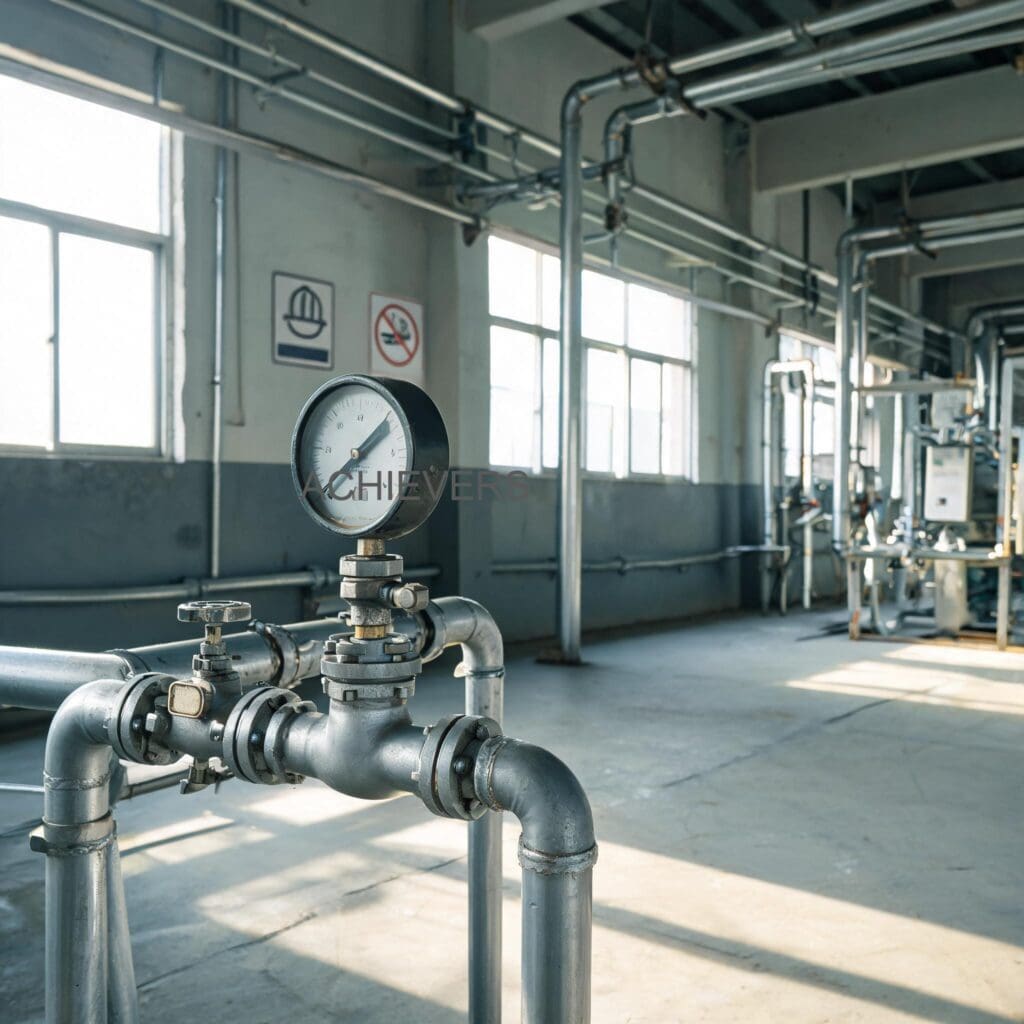
Operating industrial fluid handling equipment in India presents a unique set of challenges. By adapting your maintenance strategy to local conditions, you can significantly extend the life of your meters.
Managing Heat and Voltage Fluctuations
During peak Indian summers, ambient temperatures in open-air industrial sites can exceed 45°C. Heat causes metal expansion and can degrade internal seals faster. Ensure your meter is shaded where possible. Furthermore, industrial grids are prone to voltage spikes. While standalone digital meters with internal batteries are insulated from this, if your meter outputs a pulse signal to a PLC or is integrated into Diesel Dispensers, ensure you use a high-quality surge protector.
Combating Dust and Monsoon Humidity
Mining sites and construction yards are heavily laden with abrasive silica dust. The CE-104 meter features a vacuum-sealed dry totaliser, which protects the internal gears from environmental dust. However, during the monsoon, extreme humidity can penetrate unsealed electrical enclosures. Always ensure that the terminal covers are tightly secured and that waterproof cable glands are intact.
Dealing with Poor Fuel Quality
Unfortunately, adulterated diesel or fuel stored in rusty, poorly maintained tanks is a common reality. Water in diesel accelerates oxidation and causes internal gear corrosion. Hard particulates score the measuring chamber. In sites with known fuel quality issues, upgrade your filtration strategy by installing a heavy-duty water-separating filter upstream of the flow meter.
FAQ
Q: How often should fuel flow meter calibration be done in India?
A: Under the Legal Metrology Act, commercial dispensing systems must be calibrated and stamped annually. However, for internal industrial accountability, we recommend verifying accuracy monthly with a 20L proving measure, and formally recalibrating immediately if drift exceeds 1%.
Q: Can this fuel flow meter measure water or AdBlue?
A: No. Positive displacement meters with self-lubricating metal gears rely on the lubricity of petroleum products (diesel, kerosene, gasoline). Measuring water, acids, or DEF/AdBlue will cause rapid corrosion and permanent internal damage.
Q: Why does my meter continue to spin even after the dispensing nozzle is closed?
A: This phenomenon is usually caused by air trapped in the system or fluid expansion in a highly pressurized line. Ensure there are no air leaks on the suction side of your pump and install an air eliminator before the meter if the issue persists.
Q: Do I need a filter before the meter if my pump already has one?
A: Yes. While the pump filter catches large debris (like stones or rust flakes), an internal or closely coupled Y-strainer just before the meter is essential to catch micro-particulates that can bind the tight-tolerance curved gears.
Q: My meter's digital display is completely blank. Do I need a new meter?
A: Usually, no. A blank display is often a simple battery depletion issue or a loose terminal connection due to heavy vibration. Check the power source and terminal block before assuming the entire unit is faulty.
Q: What is the maximum pressure the meter can handle?
A: Most standard aluminum body positive displacement meters are designed for standard transfer pressures (typically up to 30-50 PSI depending on the model). Refer to the technical datasheet and never subject the meter to extreme pressure spikes or water hammer.
Q: Can I repair the internal oval gears myself?
A: While cleaning the measuring chamber is standard maintenance, if the curved gears are deeply scored or damaged, they must be replaced as a matched pair. Field machining or sanding the gears will destroy their volumetric precision.
Keeping your fluid handling equipment accurate doesn't require a massive budget, just consistency and the right expertise. If your facility is experiencing unaccounted fuel losses, erratic dispensing behavior, or if you need to upgrade your current measurement infrastructure, we can help. Contact Achievers Pumps and Valves today with your application details, fluid type, expected flow rate, and site conditions, and our engineering team will provide a tailored, highly accurate dispensing solution.