Every day across Indian manufacturing plants, mining sites, and transport hubs, thousands of liters of diesel are transferred from bulk tankers and mobile bowsers into secondary storage, day tanks, and heavy machinery. While industrial engineers obsess over the capacity of their storage tanks and the power of their transfer pumps, the actual point of delivery—the nozzle—is frequently treated as an afterthought. This oversight routinely leads to expensive fuel spillage, dangerous operator fatigue, and premature equipment failure.
When you are unloading diesel in harsh Indian site conditions—where ambient temperatures regularly exceed 40°C, dust is a constant reality, and operators work long, demanding shifts—generic brass or aluminum nozzles simply do not survive. Upgrading to engineered Fuel Nozzles transforms your unloading operations from a messy, high-risk chore into a safe, rapid, and tightly controlled fluid transfer process. By focusing on practical application fit, you can significantly reduce turnaround times and virtually eliminate the environmental and financial costs of fuel spills.
1. Industry Overview: The Fluid Challenge
Handling industrial fluids, particularly bulk diesel, presents a unique set of challenges in the Indian context. Unlike retail petrol pumps where conditions are highly controlled, industrial diesel transfer often happens in the mud of a construction site, the dust of a cement plant, or the humid, corrosive environment of a coastal chemical facility.
In these environments, diesel acts differently. Heat causes volumetric expansion and increases vapor pressure, making fuel foaming a common issue during high-speed transfers. Dust and particulate matter easily cling to fuel-wetted surfaces, accelerating the wear on internal valve seals. Furthermore, operators are often dealing with outdated "jugaad" systems—forcing standard manual nozzles into bulk transfer roles, jamming them open with sticks or stones because the hold-open clips have broken off. This is a severe safety violation that inevitably leads to tank overflows, fire hazards, and regulatory scrutiny from bodies like the Petroleum and Explosives Safety Organisation (PESO).
Common Mistake to Avoid
Using generic aluminum nozzles for continuous bulk transfer. Standard aluminum spouts wear down rapidly from constant friction against tank filler necks. Once the spout becomes jagged or warped, it compromises the automatic shut-off vacuum tube, leading to catastrophic overflow failures. Always specify a stainless steel spout for heavy industrial use.
Industrial diesel transfer requires an industrial-grade solution. Plant managers and procurement heads must look beyond the initial purchase price and evaluate the total cost of ownership, which includes maintenance, operator efficiency, and spill prevention.
2. Product Capabilities Matched to Industry Needs
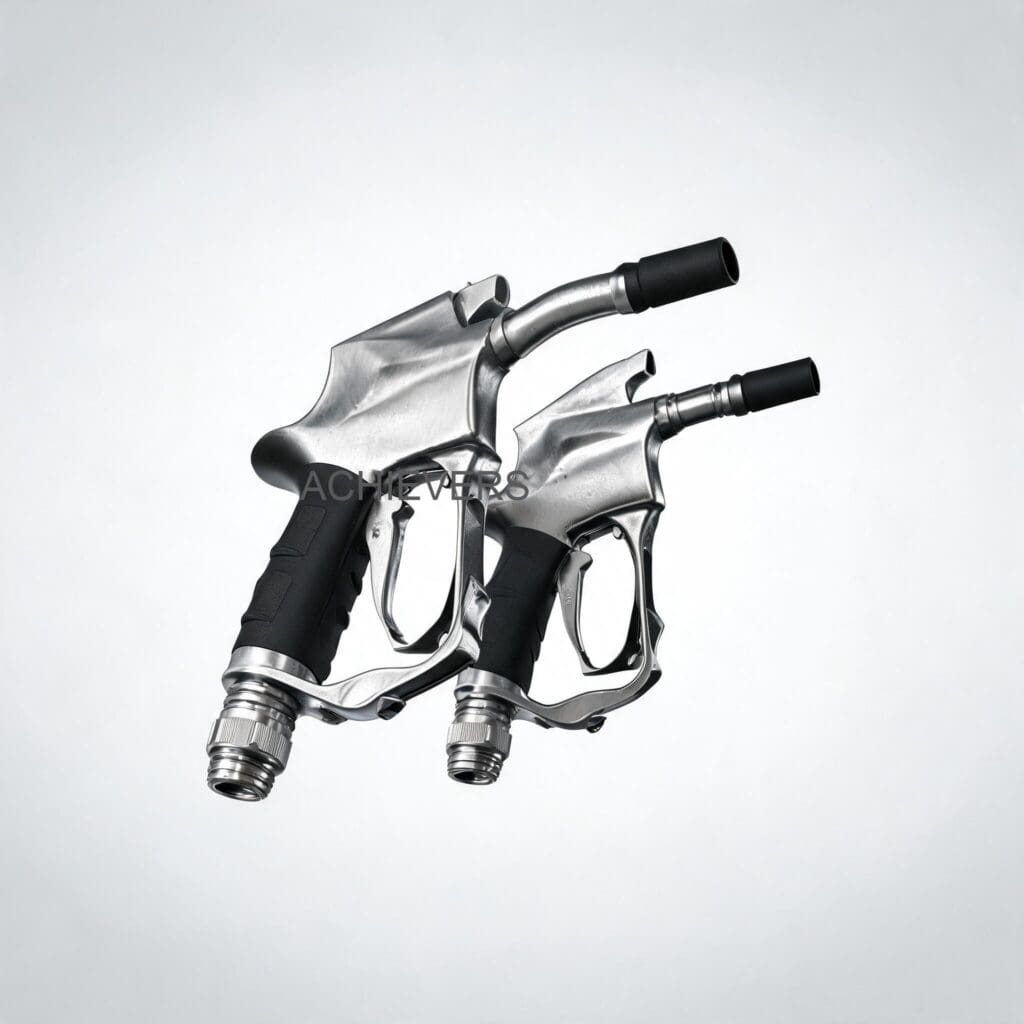
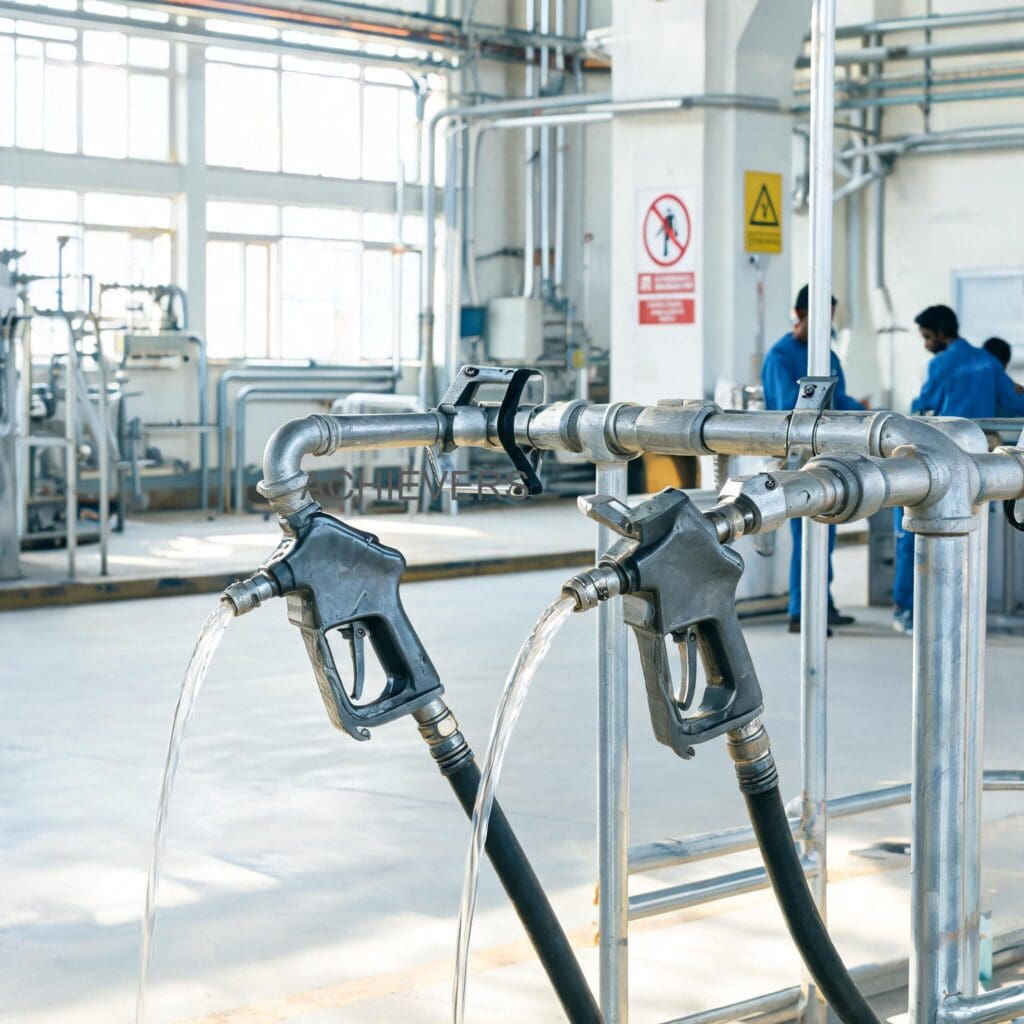
To handle these rigorous demands, modern fluid dispensing systems rely on highly engineered components. The OPW 11B series automatic Fuel Nozzles are specifically designed for retail and commercial filling applications, making them the ideal choice for bulk diesel transfer at industrial sites.
Below is a detailed breakdown of how the specific engineering features of these nozzles directly solve common industrial diesel unloading challenges:
| Industry Requirement | Fuel Nozzles Feature | How It Addresses the Need |
| :— | :— | :— |
| High-Volume Durability | Cycle-verified design | Tested to last longer than 1 million cycles, significantly outperforming standard nozzles and minimizing replacement frequency at busy transport hubs. |
| Abrasion Resistance | Stainless steel spout tip | Lasts four times longer than standard aluminum spouts, resisting the heavy friction caused by resting against metal tank filler necks. |
| Spill Prevention | No pressure – no flow device | The nozzle cannot be opened until the pumping system is pressurized, and it closes automatically when pressure is removed, preventing accidental gravity spills. |
| Operator Ergonomics | 2-piece hand protector | Provides the most comfortable grip in the industry, reducing operator fatigue during prolonged transfer shifts. |
| Equipment Protection | Duratuff lever guard | A highly rugged lever guard that withstands drops and rough handling, without scratching or damaging surrounding equipment. |
| Safety Compliance | Blocker on lever monitor | Prevents the user from jamming the nozzle in an open position, enforcing safe operational protocols and preventing unattended overflows. |
| Precision Control | Accu-stop flow control | Delivers "to-the-penny" flow control, allowing operators to safely top off day tanks without splashing or foaming over the edge. |
| Fluid Compatibility | Multi-fuel listed | Safely handles diesel, standard fuel, and up to 10% ethanol blends without degrading internal O-rings or seals. |
The technical specifications of these nozzles are perfectly calibrated for industrial applications. With a standard BSP 3/4" inlet thread and a 13/16" spout, they integrate seamlessly into existing Indian fuel dispensing infrastructure. Operating at a pressure of 0.18 Mpa and delivering a flow rate of 0-60 L/min, they provide the optimal balance between rapid unloading and controlled, splash-free delivery. Weighing just 1.14 kgs, they are lightweight enough for easy handling, yet robust enough for daily industrial abuse.
3. Typical Installation Scenarios in This Industry
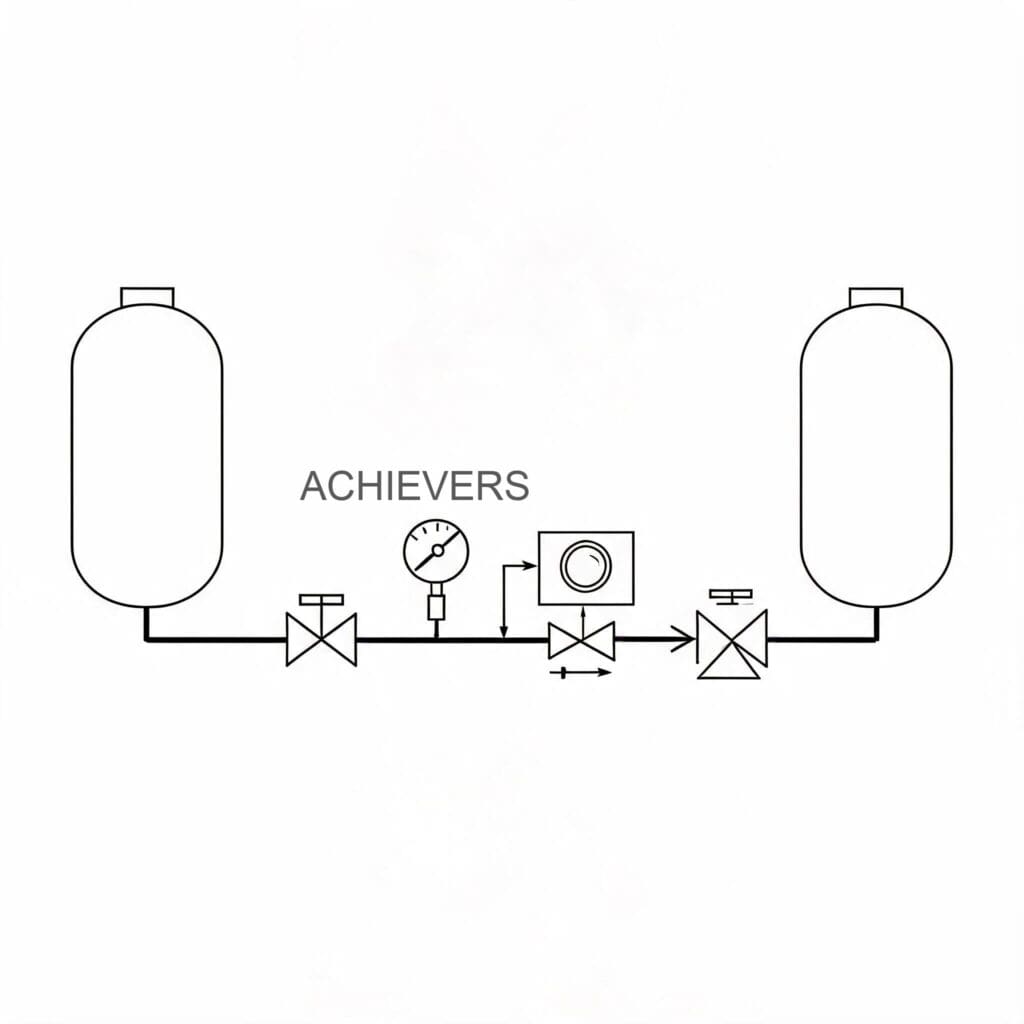
The versatility of industrial Fuel Nozzles allows them to be deployed across a wide variety of site setups. Here are three typical scenarios where these nozzles drastically improve operational efficiency:
Scenario 1: Mining and Earthmoving Equipment Refueling
In open-cast mines across Jharkhand or Odisha, heavy earthmoving machinery (HEMM) cannot travel back to a central fuel depot. Instead, mobile diesel bowsers drive directly to the equipment. The environment is intensely dusty, and operators are often working in harsh sunlight.
- Setup Description: A 10KL mobile bowser equipped with an integrated 12V/24V DC pump and a 15-meter dispensing hose.
- Product Configuration: The OPW 11B style nozzle with a highly visible red insulator, equipped with a durable hold-open clip.
- Key Settings: Flow rate optimized near the 60 L/min maximum. The stainless steel spout is critical here, as dust and grit would rapidly destroy an aluminum spout. The no pressure – no flow mechanism ensures that if the DC pump fails or is shut off, the nozzle won't leak residual diesel into the mud.
Scenario 2: Indoor DG Set Day Tank Replenishment
Data centers, hospitals, and pharmaceutical plants rely on massive Diesel Generator (DG) sets. Diesel is transferred from a bulk underground tank to a smaller "day tank" situated near the generator. Overfilling a day tank indoors is a catastrophic fire hazard.
- Setup Description: An AC-powered transfer pump moving fuel through overhead piping down to a dispensing station next to the day tank.
- Product Configuration: Automatic shut-off nozzle paired with a Diesel Dispenser system for exact batch control.
- Key Settings: Utilizing the Accu-stop technology, operators can monitor the flow and rely on the automatic shut-off to engage the moment fuel touches the spout tip. The blocker on the lever monitor ensures operators cannot leave the nozzle unattended during indoor transfers.
Scenario 3: Transport and Logistics Hubs
Large fleet operators require prepay or card-lock systems to track diesel consumption per truck. The transfer process must be fast to minimize vehicle downtime, but highly secure to prevent pilferage.
- Setup Description: A commercial fuel island with centralized pumps and advanced fleet management software.
- Product Configuration: The nozzle integrated seamlessly with a Diesel Flow Meter and card-lock system.
- Key Settings: The "no pressure – no flow" device is heavily utilized here. The system will not allow the nozzle to open until the card is authorized and the system is pressurized. Once the preset volume is reached, the pressure drops, and the nozzle snaps shut instantly, preventing even a single drop of unauthorized fuel delivery.
4. Compliance, Accuracy, and Certification Requirements
In the Indian industrial sector, fluid handling is strictly regulated. Non-compliance can result in severe penalties, insurance invalidations, and facility shutdowns. Selecting the correct nozzle is a vital part of your compliance strategy.
PESO Regulations and Fire Safety: The Petroleum and Explosives Safety Organisation mandates strict guidelines for the transfer of Class A, B, and C petroleum products. Diesel (Class B/C depending on exact flash point) requires equipment that mitigates static electricity and prevents unauthorized discharge. The metallic components of these automatic nozzles ensure continuous electrical continuity from the tank to the hose, preventing static buildup. Furthermore, the automatic shut-off mechanism directly satisfies fire safety requirements for preventing unattended overfills.
Legal Metrology Act: For transport hubs and commercial depots dispensing fuel for sale or internal accounting, accuracy is legally mandated. While the nozzle itself does not measure fluid, its ability to shut off instantly without dripping is critical for the accuracy of the attached flow meters. A leaking nozzle will cause discrepancies between the meter reading and the actual delivered volume, leading to audit failures under the Legal Metrology Act.
Environmental Protection: The Central Pollution Control Board (CPCB) enforces strict penalties for soil and groundwater contamination resulting from diesel spills. The reliable hold-open clip spring (which lasts longer than previous designs) and the fail-safe automatic closure provide an essential layer of environmental protection during every transfer cycle.
5. ROI and Operational Benefits
Investing in high-quality automatic nozzles is not an expense; it is a rapid-payback investment. Operations managers who upgrade from standard manual nozzles to the OPW 11B series routinely report massive improvements in site cleanliness, safety metrics, and inventory reconciliation.
Quick ROI Snapshot
Typical payback period: 3 to 6 months
Primary cost savings: Elimination of overfill spillage (saving ₹500 – ₹2,000 per incident), reduction in nozzle replacement frequency (lasting 4x longer than standard units), and faster turnaround times for tanker unloading.
The table below outlines the tangible operational benefits experienced by Indian industrial facilities:
| Benefit | Typical Improvement | Indian Industry Context |
| :— | :— | :— |
| Spill Reduction | 95% decrease in overfills | Critical for avoiding CPCB fines and maintaining safe, slip-free concrete flooring around fuel islands. |
| Equipment Longevity | 400% increase in spout life | Stainless steel spouts resist the abrasive dust found in Indian cement and mining sectors far better than aluminum. |
| Operator Efficiency | 20% faster turnaround | One-finger hold-open clips allow operators to manage the hose securely without manual hand cramping over long shifts. |
| Inventory Accuracy | Elimination of "drip loss" | Instantly shutting off flow ensures exact matching between flow meter readings and delivered volume, stopping pilferage. |
| Maintenance Uptime | >1 Million cycle reliability | Reduces emergency procurement requests and keeps remote site fueling stations operational during monsoon seasons. |
6. Selection Checklist for This Industry
When standardizing the fuel dispensing equipment across your plant or fleet, guessing is not an option. Use this rigorous 8-point checklist to ensure you are specifying the exact right product for your bulk diesel unloading operations:
- Verify Inlet Threading: Confirm that your existing dispensing hoses terminate in a matching BSP 3/4" female thread to guarantee a leak-proof connection without relying on temporary PTFE tape fixes.
- Check Flow Rate Parameters: Ensure your transfer pump operates comfortably within the nozzle's 0-60 L/min range to prevent excessive back-pressure or cavitation.
- Validate Operating Pressure: Confirm your system pressure does not exceed the rated limits (operates optimally around 0.18 Mpa) to ensure the automatic shut-off mechanism functions correctly.
- Specify Spout Material: Explicitly demand a stainless steel spout (13/16" diameter) to ensure maximum longevity against abrasive industrial tank necks.
- Assess Ergonomic Features: Verify the presence of the 2-piece hand protector and the Duratuff lever guard to protect both the equipment and the operator's hands.
- Confirm Spill-Proof Mechanisms: Check that the specific model includes the "no pressure – no flow" safety device, especially if integrating with card-lock or prepay batching systems.
- Identify Color Coding Needs: Utilize the Red insulator color to clearly visually designate the nozzle for diesel use, preventing accidental cross-contamination with petrol or chemicals on multi-fluid sites.
- Evaluate Cycle Certification: Request confirmation that the internal mechanism is cycle-verified to withstand heavy industrial usage (surpassing 1 million cycles) to ensure a long operational life.
Standard Operating Procedure for Bulk Diesel Unloading using Automatic Nozzles
To maximize the lifespan of your nozzle and ensure total site safety, operators should follow this standard procedure during every transfer:
- Pre-Transfer Inspection: Visually inspect the stainless steel spout for blockages and ensure the Duratuff lever guard is intact.
- Bonding and Grounding: Attach the anti-static grounding wire from the bulk tanker or bowser to the receiving tank to dissipate any static electricity.
- System Pressurization: Activate the transfer pump or authorize the card-lock system to supply pressure (0.18 Mpa) to the line. (The nozzle will not open until this pressure is detected).
- Insertion and Engagement: Insert the 13/16" spout fully into the receiving tank's filler neck. Squeeze the lever and engage the convenient one-finger hold-open clip.
- Monitor Transfer: Step back but remain within arm's reach. Do not attempt to jam the lever monitor with external objects. Rely on the Accu-stop technology for precise flow.
- Automatic Shut-Off Response: Once the diesel level reaches the tip of the spout, the vacuum is broken, and the nozzle will automatically snap shut. Do not attempt to manually "top off" excessively, as this defeats the safety mechanism.
- Depressurization and Storage: Turn off the pump. Squeeze the lever one final time to relieve any residual line pressure, then return the nozzle to its designated holster to protect it from environmental dust and damage.
FAQ
Q: Why is a stainless steel spout necessary for Indian industrial sites?
A: Indian sites like mines, construction zones, and cement plants have high levels of abrasive ambient dust. When an aluminum spout rubs against a metal tank neck in these conditions, it wears down rapidly. A stainless steel spout lasts four times longer, maintaining the precise geometry needed for the automatic shut-off vacuum tube to work flawlessly.
Q: Will the OPW 11B style nozzle work with gravity-fed unloading systems?
A: No, and this is by design for safety. This specific nozzle features a "no pressure – no flow" device. It requires system pressure (supplied by a pump) to open the internal valve. This prevents catastrophic spills if a hose is accidentally dropped or left open on a gravity-fed bulk tank.
Q: What is the maintenance schedule for these automatic nozzles?
A: Because they are cycle-verified to last over 1 million cycles, routine maintenance is minimal. Operators should perform daily visual inspections of the spout and lever guard. Every 6 months, the inlet swivel (if attached) and the BSP 3/4" connection should be checked for weeping, and the hold-open clip spring should be cleared of heavy mud or debris.
Q: Is a flow rate of 0-60 L/min sufficient for bulk unloading?
A: While main tanker offloading to massive underground storage uses higher flow rates, 60 L/min is the absolute optimal speed for secondary bulk offloading—such as filling DG day tanks, heavy earthmoving machinery, or fleet trucks from a mobile bowser. It ensures rapid transfer without causing dangerous diesel foaming or splash-back.
Q: Can this nozzle be integrated into an automated batching system?
A: Yes. Because of the instant, precise shut-off capabilities and the no pressure – no flow requirement, these nozzles pair perfectly with prepay terminals, card-lock security systems, and automated fluid batching controllers.
Q: What happens if an operator drops the nozzle on a concrete floor?
A: Industrial environments are tough, which is why these nozzles are equipped with a Duratuff lever guard and an attractive 2-piece hand protector. These heavy-duty polymer components absorb the impact of typical drops, protecting the delicate internal valve mechanisms from shock damage.
Q: How do I ensure compatibility with my existing hoses?
A: Simply check your hose end fittings. These nozzles come with a standard BSP 3/4" inlet thread, which is the most widely used industrial standard in India for this flow class. If your hose uses NPT or a different size, a standard brass or stainless steel reducing bush/adapter can easily bridge the connection.
Ready to stop wasting fuel and start protecting your operators? Equip your mobile bowsers, day-tank transfer stations, and fleet dispensing islands with the industry's most reliable shut-off technology. Contact the technical team at Achievers Pumps and Valves today to discuss your specific flow rate requirements, site conditions, and fluid handling applications, and let us help you configure the perfect dispensing setup for your facility.