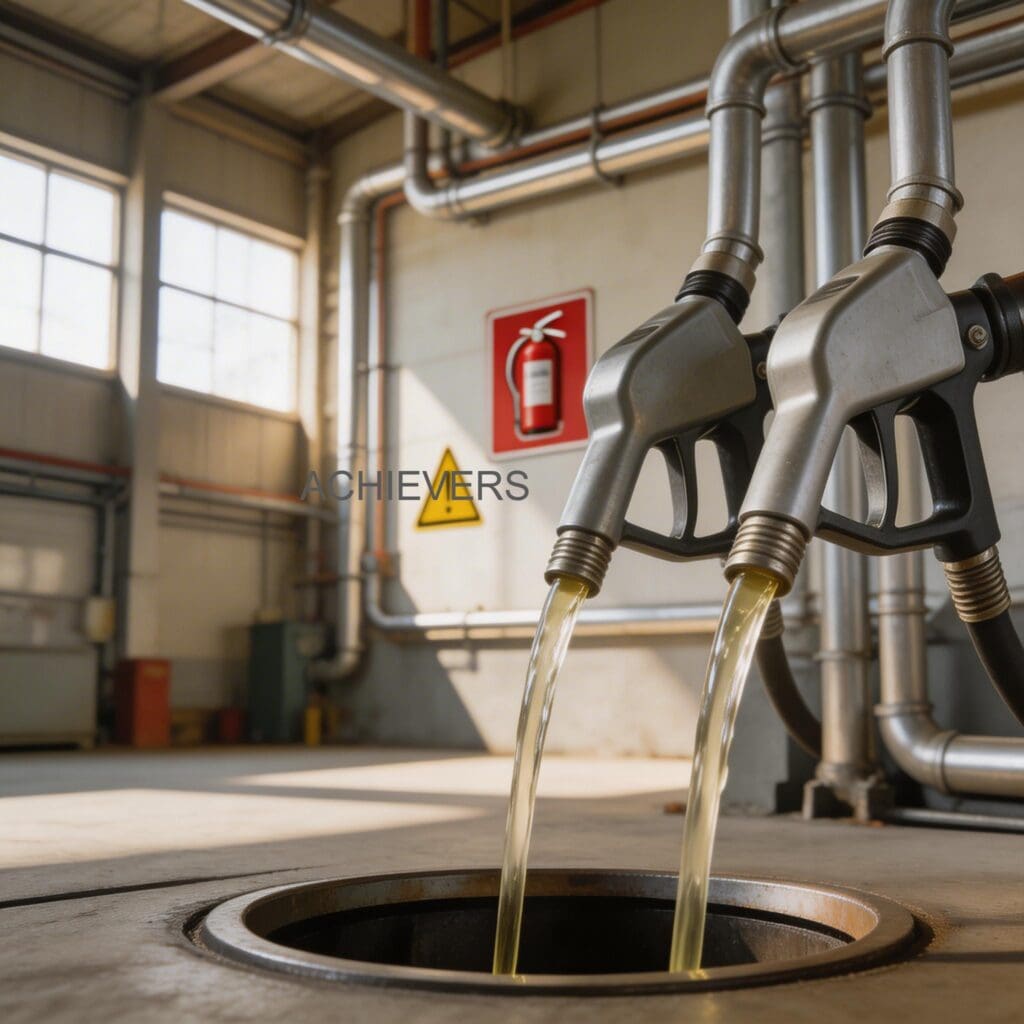
In the fast-paced world of Indian industrial operations, fleet refueling is often treated as an afterthought. Plant managers and procurement heads invest heavily in massive storage tanks and high-end pumps, only to compromise on the final point of delivery. Choosing the wrong Fuel Nozzles leads to a cascade of operational issues: premature shut-offs that frustrate operators, fuel spills that create severe fire hazards, and inaccurate dispensing that throws off your inventory accounting. At ₹90 to ₹100 per liter for diesel, even a minor daily spill of a few cups adds up to lakhs of rupees lost annually.
This buyer’s guide is designed specifically for Indian industrial and fleet operators. Whether you are managing a dusty mining site in Jharkhand, a high-humidity transport depot in Kerala, or a captive power plant in Maharashtra, you need equipment that withstands harsh local conditions. We will walk you through how to choose fuel nozzles for diesel dispensing that prevent spills, align perfectly with your flow rate needs, and keep your refueling lines moving quickly and safely.
Quick ROI Snapshot
Typical payback period: 3 to 6 months. By upgrading to a high-quality automatic nozzle with a "no pressure, no flow" safety interlock, a facility dispensing 5,000 liters daily can eliminate an average of 1.5 liters of spillage per day. At current diesel prices, the nozzle pays for itself through recovered fuel costs in under half a year, not factoring in the reduced labor downtime and safety incident avoidance.
1. What Is Fuel Nozzles and What Does It Do
At its core, a dispensing nozzle is a highly engineered mechanical valve that controls the flow of liquid from the pumping system into the receiving tank. However, modern Fuel Nozzles are sophisticated safety devices. The benchmark for industrial and commercial refueling is the OPW 11b style arrangement, designed specifically to prevent fuel spills in prepay, self-serve, or card-bolt systems.
These automatic nozzles utilize a unique "no pressure, no flow" mechanism. The nozzle simply cannot be opened until the pumping system is fully pressurized. The moment line pressure drops or the target tank is full, an internal vacuum trips the mechanism, slamming the valve shut automatically. This prevents operators from jamming the nozzle open or accidentally dispensing fuel when the pump is off, a critical feature for the best fuel nozzles for fleet refueling in India.
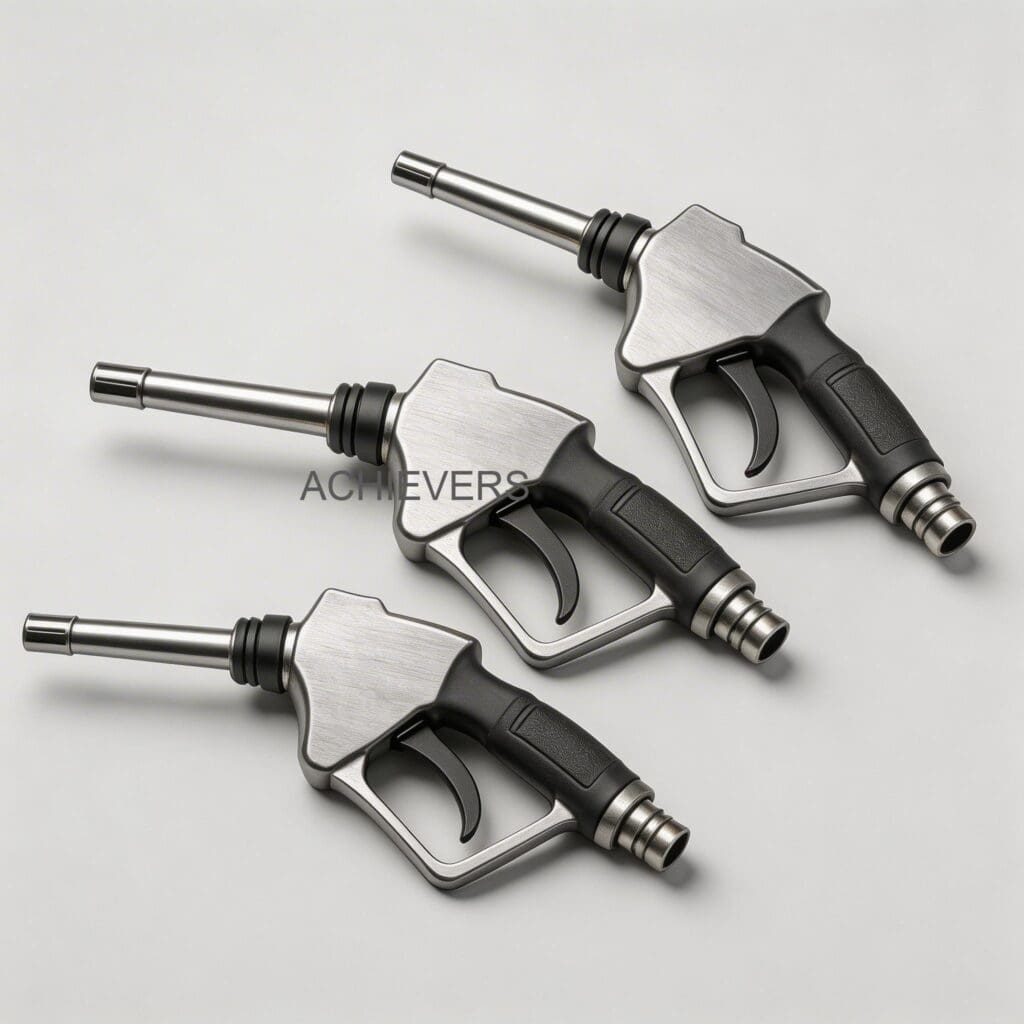
Below are the exact technical specifications of our heavy-duty Fuel Nozzles:
| Specification | Value | Engineering Notes |
| :— | :— | :— |
| Inlet Thread | BSP 3/4 Inch | Standard British Standard Pipe sizing; ensures leak-free coupling with standard Indian dispensing hoses. |
| Spout Diameter | 13/16 Inch | Optimized for standard diesel and petrol tank filler necks; prevents splash-back. |
| Flow Rate | 0 to 60 L/min | Ideal for light to medium commercial fleet vehicles and backup generators. |
| Operating Pressure | 0.18 MPa (1.8 Bar) | Calibrated for standard dispensing pumps; triggers the internal automatic shut-off reliably. |
| Lifecycle Durability | > 1 Million Cycles | Cycle-verified design; outlasts standard commercial nozzles significantly. |
| Spout Material | Stainless Steel | Lasts 4x longer than standard aluminum; highly resistant to abrasive dust and rough handling. |
| Weight | 1.14 kgs/pc | Ergonomically balanced to reduce operator fatigue during continuous shift usage. |
| Compatibility | Diesel, Fuel, up to 10% Ethanol | Safe for standard Indian market diesel and blended petrol variants. |
2. Key Selection Criteria for Indian Industrial Buyers
Selecting the right equipment requires matching technical specifications to actual site realities. An automatic fuel nozzle selection guide must account for the extreme heat, voltage fluctuations, and harsh operating conditions typical of Indian industry.
Fluid Compatibility and Contamination Resistance
Indian diesel often suffers from water ingress due to monsoon humidity and particulate contamination from dusty transport routes. While your filtration system should catch most of this, your nozzle must withstand occasional exposure to abrasive particles. Stainless steel spout tips are non-negotiable here. Unlike aluminum spouts that wear down, scratch, and eventually cause splash-back, stainless steel maintains its structural integrity, extending the nozzle's life by up to four times.
Flow Rate Sizing and Tank Neck Dynamics
Proper fuel nozzle flow rate sizing for industrial refueling prevents the two most common operator frustrations: agonizingly slow fills and aggressive foaming. A 0-60 L/min nozzle is perfect for standard fleet vehicles, light commercial trucks, and diesel generator day tanks. If you push 80 L/min through a nozzle designed for 60 L/min, the excess velocity creates severe diesel foaming. The foam travels up the filler neck, prematurely tripping the automatic shut-off sensor and forcing the operator to constantly re-engage the lever.
Automatic Shut-Off Reliability
In a busy transport yard, operators often try to multi-task while refueling. A reliable automatic shut-off mechanism uses a small sensing port at the tip of the spout. When fuel covers this port, a vacuum is created inside the nozzle body, tripping the hold-open clip and stopping the flow instantly. Look for models featuring "no pressure, no flow" technology. This ensures that if the pump loses power—a common issue with Indian grid fluctuations—the nozzle closes automatically, preventing a massive spill when the power suddenly returns.
Operator Ergonomics and Fatigue
Fleet refueling in large logistics hubs involves continuous, repetitive motion. A heavy, poorly balanced nozzle leads to operator fatigue, which leads to dropping the equipment. Selecting a nozzle with an Accu-stop to-the-penny flow control, a convenient one-finger hold-open clip, and an attractive 2-piece hand protector significantly improves usability. A Duratuff lever guard ensures that the rough daily handling won't scratch your clients' vehicles or compromise the lever mechanism.
Integration with Dispensing Systems
If your facility utilizes automated card-bolt systems or prepay systems, the nozzle must integrate seamlessly. The "no pressure, no flow" design is specifically built for these systems, preventing unauthorized dispensing. Additionally, consider how the nozzle pairs with the rest of your equipment. For instance, if you are outfitting a Mobile Diesel Dispenser for on-site construction refueling, a rugged, lightweight nozzle with a secure hold-open clip is essential for single-operator use.

3. Model and Variant Comparison
Depending on your specific application—whether you are running a commercial retail pump or an internal fleet depot—you may require different nozzle configurations. Here is a comparison of common configurations based on standard industry variants.
| Model Variant | Flow Range | Accuracy | Power Requirement | Best Application Use Case |
| :— | :— | :— | :— | :— |
| Standard Automatic Nozzle | 0-60 L/min | N/A (Mechanical) | N/A (Operates on line pressure) | General fleet refueling and commercial diesel/petrol dispensing. |
| Diesel Nozzle with Flow Meter | 0-60 L/min | ± 1.0% | Battery (for LCD meter display) | Remote mining sites or construction hubs needing at-the-nozzle dispensing totals. |
| Petrol Nozzle with Flow Meter | 0-60 L/min | ± 1.0% | Battery (for LCD meter display) | Retail dispensing, light commercial garages needing quick volumetric readings. |
| Heavy-Duty High Flow Nozzle | 80-120 L/min | N/A (Mechanical) | N/A (Operates on line pressure) | Heavy earthmoving equipment, large transit buses, and high-capacity storage tanks. |
Note: For systems requiring precise volumetric accounting at the point of delivery, pairing your nozzle with a dedicated Diesel Flow Meter offers the highest accuracy and tamper resistance.
4. Common Mistakes Indian Buyers Make When Choosing
Even experienced procurement managers can make critical errors when sourcing dispensing equipment. Avoid these common pitfalls to ensure long-term reliability and safety.
- Mismatched Flow Rates: Buying a high-flow pump but pairing it with a standard 60 L/min nozzle. This creates extreme back-pressure, stresses the pump seals, causes rapid diesel foaming, and leads to constant, frustrating premature shut-offs.
- Ignoring the "No Pressure, No Flow" Feature: Purchasing cheaper, generic nozzles without this safety interlock. If an operator wedges the lever open and the power cuts out, the nozzle remains open. When power returns, fuel immediately blasts out, causing severe spills and fire risks.
- Settling for Aluminum Spouts: In dusty Indian industrial environments, operators frequently drop nozzles on concrete or gravel. Standard aluminum spouts dent, scratch, and wear down quickly, ruining the internal vacuum sensor path. Always specify stainless steel spouts for longevity.
- Skipping the Swivel Joint: Connecting the dispensing hose directly to the nozzle inlet without a swivel. As operators move around vehicles, the hose twists and kinks. This stresses the BSP threads, leading to leaks, and makes the nozzle incredibly difficult to handle.
- Overlooking Leverage Guards: Buying nozzles without Duratuff lever guards. A naked metal lever is more prone to bending if dropped and is highly likely to scratch the paintwork of the vehicles being refueled, leading to internal fleet damage complaints.
Common Mistake to Avoid
The "Jammed Lever" Workaround: Operators often stick a rock, matchstick, or fuel cap into the lever guard of a non-automatic nozzle to force it to stay open while they walk away. This is a massive safety violation. Always purchase nozzles with a built-in, engineered hold-open clip spring and an automatic shut-off sensor. The OPW 11b style includes a blocker on the lever monitor explicitly designed to prevent consumers from jamming the nozzle in an open position.
5. Enquiry Specification Checklist
To ensure any fuel nozzles supplier in India provides exactly what your operation requires, stop asking for generic "fuel nozzles" and start providing engineered specifications. Use this 8-step checklist when submitting your RFQ (Request for Quotation):
- Target Flow Rate (L/min): Specify the exact operating output of your current pump (e.g., 45 L/min or 80 L/min) to ensure the nozzle internals are sized correctly.
- Fluid Type and Blend: State whether you are pumping standard diesel, petrol, or ethanol blends (e.g., up to 10% ethanol mix).
- Inlet Connection Size: Confirm your hose thread standards. Typically, this will be BSP 3/4" or BSP 1", but verifying prevents the need for aftermarket adapters.
- Automatic Shut-Off Requirement: Explicitly request "no pressure, no flow" automatic shut-off functionality for safety compliance.
- Spout Material: Demand a stainless steel spout rather than aluminum to ensure the 1-million cycle durability rating.
- Ergonomic Features: Request a 2-piece hand protector and a single-finger hold-open clip for operator comfort.
- Integrated Metering (Optional): Specify if you need an integrated digital display directly on the nozzle body for real-time volume tracking.
- Site Operating Conditions: Note your ambient temperatures, humidity levels, and whether the application is for a retail prepay system, mobile bowser, or fixed captive fleet pump.
FAQ
Q: Why does my fuel nozzle keep clicking off before the tank is full?
A: Premature shut-off is usually caused by fuel foaming in the tank neck reaching the nozzle's sensor port. This happens when the pump's flow rate exceeds the nozzle's capacity, or if the tank's breather vent is blocked, causing back-pressure.
Q: What is the difference between a BSP and NPT inlet thread?
A: BSP (British Standard Pipe) and NPT (National Pipe Thread) have different thread angles and pitches. Indian industrial equipment primarily uses BSP. Forcing an NPT hose into a BSP 3/4" nozzle will strip the threads and cause high-pressure fuel leaks.
Q: Can I use a standard diesel nozzle for petrol dispensing?
A: No. While the mechanical action is similar, petrol nozzles often have smaller spout diameters (usually around 13/16") to fit unleaded vehicle tank necks, and the internal seals must be specifically rated for the harsher chemical composition and lower flashpoint of petrol.
Q: What does the "no pressure, no flow" feature actually mean?
A: It is a safety interlock. The main valve inside the nozzle is held closed by a strong spring. It requires the physical fluid pressure from an active pump to compress that spring and allow the lever to open the valve. If the pump is off, the lever feels "dead" and will not dispense fuel.
Q: How often should I replace the nozzle at a high-volume fleet depot?
A: High-quality automatic nozzles are cycle-verified to last longer than 1 million cycles. Depending on your daily refueling volume, a well-maintained stainless steel spout nozzle should easily last 3 to 5 years before requiring a rebuild or replacement.
Q: Does the red insulator color indicate the fuel type?
A: Generally, color coding helps operators avoid cross-contamination. Red is traditionally used for petrol, yellow or green for diesel, and blue for DEF/AdBlue. However, you can often customize the insulator colors to match your internal facility safety codes.
Q: Is it necessary to install a swivel joint with the new nozzle?
A: While not strictly mandatory, it is highly recommended. A swivel joint between the hose and the BSP 3/4" inlet prevents the heavy dispensing hose from twisting, significantly reducing operator wrist fatigue and extending the lifespan of the hose itself.
Ready to eliminate fuel spillage, improve operator safety, and speed up your fleet refueling operations? Contact Achievers Pumps and Valves today with your required flow rates, fluid types, and site conditions, and our engineering team will help you select the exact Fuel Nozzles configured for your specific industrial application.