In high-volume refueling environments—whether at a busy mining site in Jharkhand, a logistics hub in Maharashtra, or a pharmaceutical plant relying on captive power generators—fuel transfer equipment is subjected to brutal operational stress. Every drop of spilled diesel translates to lost revenue, while erratic dispensing speeds slow down operational throughput. At the frontline of your fluid handling system is the dispensing nozzle, a highly engineered, precision component that is often treated as a blunt instrument.
The cost of unplanned failure is rarely just the price of a replacement unit. A dripping nozzle can waste liters of expensive diesel daily, create severe fire hazards, and attract regulatory scrutiny under PESO guidelines. Conversely, a nozzle that suffers from premature shut-offs forces operators to manually override the safety mechanism, significantly increasing the risk of catastrophic tank overflows. Implementing a structured preventive maintenance program for your Fuel Nozzles transforms them from frequent points of failure into reliable, long-lasting assets.
Quick ROI Snapshot
- Typical Payback Period on Maintenance Time: Immediate (Zero product loss from preventable leaks)
- Average Equipment Life Extension: 2x to 3x longer than unmaintained units
- Spill Reduction: Up to 95% reduction in operator-caused overflow incidents
- Cost Savings: Prevents loss of ₹15,000+ annually in fugitive drips per fueling point
This guide outlines exactly how to maintain automatic fuel nozzles to prevent leaks, reduce erratic shut-offs, and maintain accurate delivery flow rates in demanding Indian industrial conditions.
1. Product Overview and Critical Wear Components
To understand how to maintain your equipment, you must first understand the engineering behind it. Heavy-duty Fuel Nozzles—specifically those utilizing an OPW 11b style arrangement—are designed for high-cycle retail and commercial applications, including card-lock systems and fleet refueling.
These units are built to dispense diesel, petrol, and up to 10% ethanol blends safely and accurately. They rely on a venturi mechanism to trigger the automatic shut-off. When fuel touches the tip of the spout, it blocks a small vacuum sensing port. This pressure change trips a diaphragm inside the nozzle housing, disengaging the hold-open latch and stopping the flow instantly.
Understanding the technical specifications of your Fuel Nozzles helps dictate the maintenance limits. Here are the baseline specifications for a standard industrial unit from Achievers Pumps and Valves:
| Technical Parameter | Specification | Maintenance Implication |
| — | — | — |
| Maximum Flow Rate | 0-60 L/min | Flow dropping below 30 L/min usually indicates a clogged inlet strainer or filter. |
| Operating Pressure | 0.18 Mpa (1.8 Bar) | Exceeding this pressure can blow out the main valve seal, leading to constant leaks. |
| Inlet Thread | BSP 3/4" | Requires proper thread sealant (PTFE tape or liquid sealant) suitable for petroleum during installation. |
| Spout Diameter | 13/16" | Sized for standard vehicle tanks; physical deformation of the spout disrupts the vacuum port. |
| Spout Material | Stainless Steel | Lasts 4x longer than standard aluminum spouts, resisting wear from metal fuel filler necks. |
| Safety Interlock | No Pressure – No Flow | Nozzle cannot be opened manually unless the pumping system is actively pressurized, preventing accidental gravity spills. |
| Cycle Rating | 1 Million+ Cycles | Achievable only if the main poppet stem and spring are kept free of abrasive dust and rust. |
| Weight | 1.14 kgs/pc | Heavy enough for durability, but drops to concrete can crack the Duratuff lever guard. |
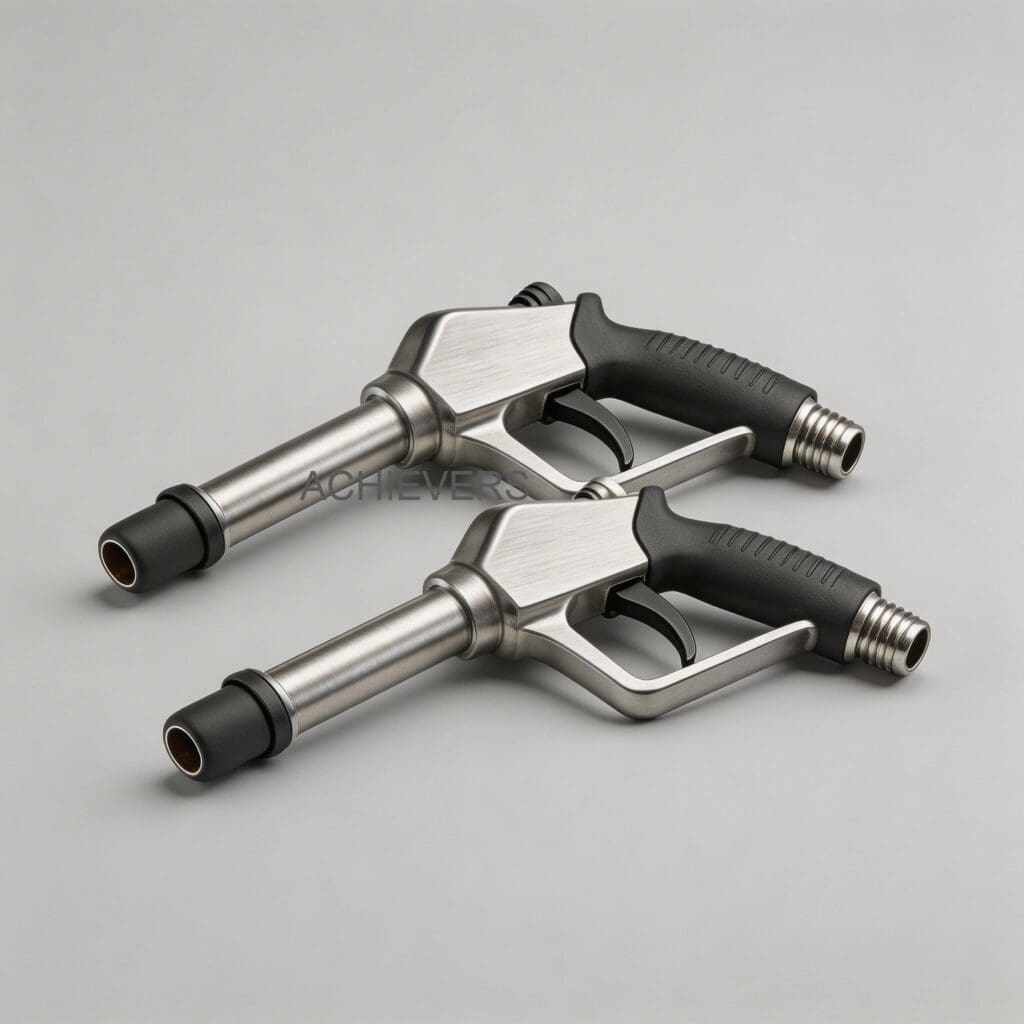
Critical wear parts include the stainless steel spout tip, the main valve poppet seal, the Duratuff hand protector, and the hold-open clip spring. When operating in dusty Indian environments, abrasive particles can easily migrate into the poppet stem, causing the nozzle to stick in the open position.
2. Preventive Maintenance Schedule
Transitioning from a reactive "fix-it-when-it-breaks" approach to a proactive maintenance strategy requires a standardized industrial fuel nozzle inspection schedule. Assigning accountability and frequency to these tasks ensures that minor wear does not escalate into a complete mechanical failure.
Use the following fuel nozzles preventive maintenance checklist to standardize operations at your facility:
| Task | Frequency | Responsible | Est. Time | Notes |
| — | — | — | — | — |
| Visual Inspection for Damage | Daily | Pump Operator | 1 min | Check for cracked insulators, bent spouts, or missing hold-open clips. Do not use if structurally compromised. |
| Spout Sensing Port Check | Daily | Pump Operator | 1 min | Ensure the small hole at the tip of the spout is free of mud, grease, and debris. |
| Auto-Shutoff Function Test | Weekly | Maintenance Tech | 5 min | Dispense into an approved test container; ensure nozzle clicks off automatically when fuel reaches the tip. |
| Leak Inspection (Under Pressure) | Weekly | Maintenance Tech | 5 min | Turn on the pump but do not pull the lever. Check for weeping at the spout tip and inlet swivel joint. |
| Lever and Clip Actuation Test | Weekly | Maintenance Tech | 2 min | Ensure the hold-open clip engages smoothly and disengages instantly upon auto-shutoff. |
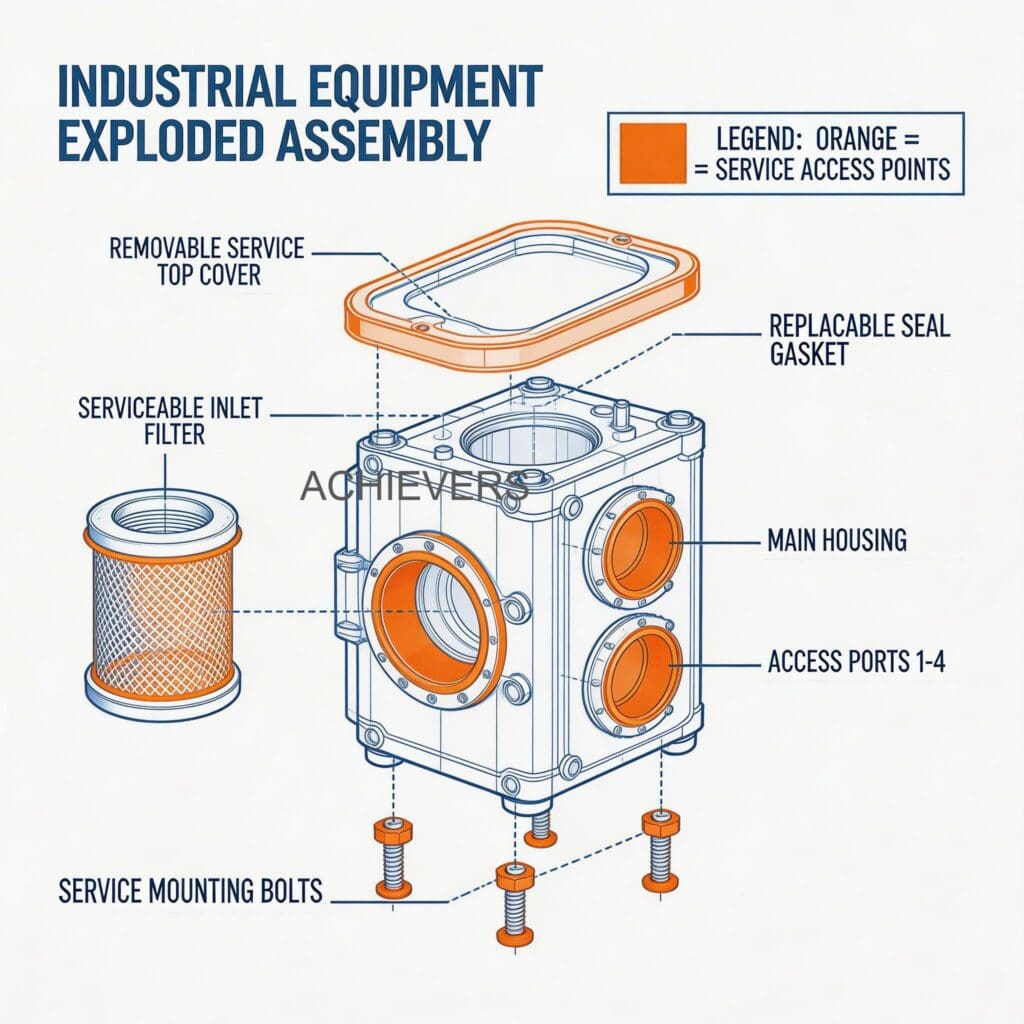
| Inlet Strainer Inspection | Monthly | Maintenance Tech | 15 min | Remove the nozzle from the hose, extract the wire mesh strainer, and clean out rust, sediment, or pipe scale. |
| Insulator and Guard Cleaning | Monthly | Cleaning Staff | 10 min | Wash the Duratuff lever guard and red insulator with mild soap to remove slippery fuel residue. |
| Swivel Joint Lubrication | Bi-Monthly | Maintenance Tech | 10 min | If equipped with a separate swivel, apply a drop of light machine oil to the bearings to prevent binding. |
| Flow Rate Verification | Quarterly | Maintenance Supervisor | 10 min | Clock the dispensing time for 20 liters. A drop in L/min indicates system restriction or failing pump vanes. |
| Complete Tear-down / Rebuild | Annually | Qualified Technician | 45 min | Replace main seals, poppet O-rings, and diaphragm if rebuilding is preferred over total replacement. |
Common Mistake to Avoid:
Never use wire brushes, needles, or compressed air blown into the spout to clean the vacuum sensing port. High-pressure air can rupture the delicate internal auto-shutoff diaphragm, rendering the automatic safety feature permanently useless. Always use a soft wooden toothpick or plastic pick, and wipe gently.
3. Step-by-Step Procedures for Key Tasks
Routine cleaning and inspection will resolve 80% of erratic dispensing behaviors. The following procedures outline the correct engineering approach to servicing these components safely.
Procedure A: Clearing the Vacuum Sensing Port (Fixing Premature Shut-Offs)
When a nozzle continuously "clicks off" every few seconds despite the tank being empty, the vacuum port is likely obstructed. In dusty environments like cement plants or construction sites, diesel fumes mix with airborne dust to form a thick sludge that blocks this port.
- Depressurize the System: Turn off the fuel dispenser pump and pull the nozzle lever into an approved test container to relieve all line pressure.
- Isolate the Equipment: Lock out the pump to prevent accidental activation while you are working on the nozzle end.
- Locate the Sensing Port: Look inside or just below the tip of the stainless steel spout. You will see a small hole (approx. 2-3mm in diameter).
- Initial Wipe: Use a clean, lint-free shop rag to wipe away external sludge, grease, and excess fuel from the stainless steel spout.
- Clear the Obstruction: Take a soft, non-metallic tool (like a wooden toothpick or a plastic probe) and gently clear any dirt out of the hole. Do not force the tool deep into the tube.
- Drain the Vacuum Tube: Point the nozzle straight down and tap the body gently with your hand. Sometimes, liquid fuel becomes trapped in the internal vacuum tube. Tapping helps drain it out.
- Inspect the Spout Geometry: Ensure the spout is completely round. If a vehicle has driven off with the nozzle still in the tank, the spout may be oval-shaped. A bent spout disrupts the venturi vacuum and cannot be repaired; the spout must be replaced.
- Test the Function: Restore power, activate the pump, and dispense fuel into a test can. Submerge the tip into the liquid—the mechanism should actuate and stop flow immediately.
Procedure B: Inspecting and Cleaning the Inlet Strainer (Fixing Slow Flow and Leaks)
If your 0-60 L/min nozzle is only delivering 15 L/min, or if the poppet valve is failing to seal completely (causing continuous dripping), debris from the storage tank is likely bypassing the dispenser filter and lodging in the nozzle.
- Shut Down and Drain: Turn off the dispenser pump. Drain residual fuel from the hose by opening the nozzle into a safe container.
- Disconnect the Nozzle: Using two properly sized wrenches (one on the hose coupling, one on the nozzle's BSP 3/4" inlet), carefully unthread the nozzle from the hose.
- Locate the Strainer: Look directly into the threaded inlet of the nozzle. You will see a small, conical or flat wire-mesh strainer.
- Extract the Strainer: Use needle-nose pliers to gently pull the strainer out of the inlet bore. Be careful not to crush or tear the mesh.
- Clean the Mesh: Wash the strainer in a parts washer or a bucket of clean diesel. Use a soft nylon brush to remove pipe scale, rust flakes, and biological sludge.
- Flush the Nozzle Body: While the strainer is removed, actuate the nozzle lever and visually inspect the internal poppet valve. Flush the inlet with clean diesel to wash out any grit that may be preventing the valve from seating fully.
- Reinstall the Strainer: Press the clean strainer back into the inlet until it seats firmly. Never operate the nozzle without this strainer installed.
- Reconnect and Test: Apply fresh, petroleum-rated thread sealant (do not use standard plumbing Teflon tape, as fuel will dissolve it) to the male hose threads. Reconnect the nozzle, tighten securely, pressurize the system, and check for inlet leaks.
4. On-Site Spare Parts to Stock
Waiting for spare parts during an equipment breakdown translates directly to idle fleets and lost productivity. Since industrial fuel nozzles process thousands of liters daily, certain components are considered consumable wear parts. To minimize downtime, maintain a small localized inventory of the following items:
| Part / Component | Type | Recommended Qty | When to Replace |
| — | — | — | — |
| Complete Fuel Nozzle | Full Assembly | 1 per 5 active hoses | When the main body cracks, threads strip, or internal diaphragm ruptures. |
| Stainless Steel Spout Assembly | Wear Part | 2 per 10 active hoses | If the spout becomes bent, deeply scratched, or the tip is crushed. |
| Duratuff Hand Insulator (Red) | Safety / Wear Part | 2 per 10 active hoses | When torn, degraded by UV exposure, or excessively slippery. |
| Hold-Open Clip & Spring | Hardware | 3 per 10 active hoses | When the clip bends, fails to hold the lever, or loses spring tension. |
| Inlet Wire Strainers | Consumable | 5 per 10 active hoses | When the mesh tears, rusts through, or becomes permanently clogged. |
Having these specific components on hand ensures that maintenance teams can execute quick turnarounds during the scheduled preventive maintenance windows.
5. Diagnosing Maintenance-Related Failures
Even with rigorous maintenance, components subjected to heavy industrial use will occasionally exhibit faults. The key to rapid resolution is correctly diagnosing the symptom. Use this troubleshooting matrix to bridge the gap between failure symptoms and correct maintenance actions.
| Failure Symptom | Most Likely Missed Maintenance Task | Corrective Action |
| — | — | — |
| Nozzle clicks off instantly upon squeezing lever | Cleaning the vacuum sensing port | Clear the sensing port hole on the spout. Check if fuel is trapped in the vacuum tube; shake nozzle downward to drain. |
| Flow rate is exceptionally slow (less than 30 L/min) | Cleaning the inlet strainer | Remove nozzle, extract the inlet strainer, clean away rust and debris, and reinstall. Also, check dispenser pump filters. |
| Nozzle leaks continuously from the spout tip after shutoff | Flushing debris from the poppet valve | Debris is preventing the main valve from closing. Remove strainer, flush nozzle internals to clear grit from the valve seat. |
| Fuel leaks from the lever pivot pin area | Packing/O-ring inspection | The main stem O-rings have failed due to age, high pressure, or chemical attack. The nozzle requires rebuilding or replacement. |
| Nozzle fails to shut off automatically when tank is full | Inspecting the diaphragm / Spout geometry | The venturi vacuum is compromised. Check for a bent spout. If the spout is fine, the internal diaphragm is ruptured; replace the nozzle immediately to prevent major spills. |
| Nozzle cannot be opened (lever is locked solid) | Checking system pressure / Interlock | The "no pressure – no flow" safety mechanism is engaged. Ensure the pump is actually running and generating at least 0.18 Mpa of pressure at the nozzle inlet. |
Integrating these diagnostic steps with your broader fuel management system—such as checking your Fuel Flow Meter to confirm upstream pressure and flow—will drastically reduce troubleshooting time.
6. Extending Service Life in Indian Conditions
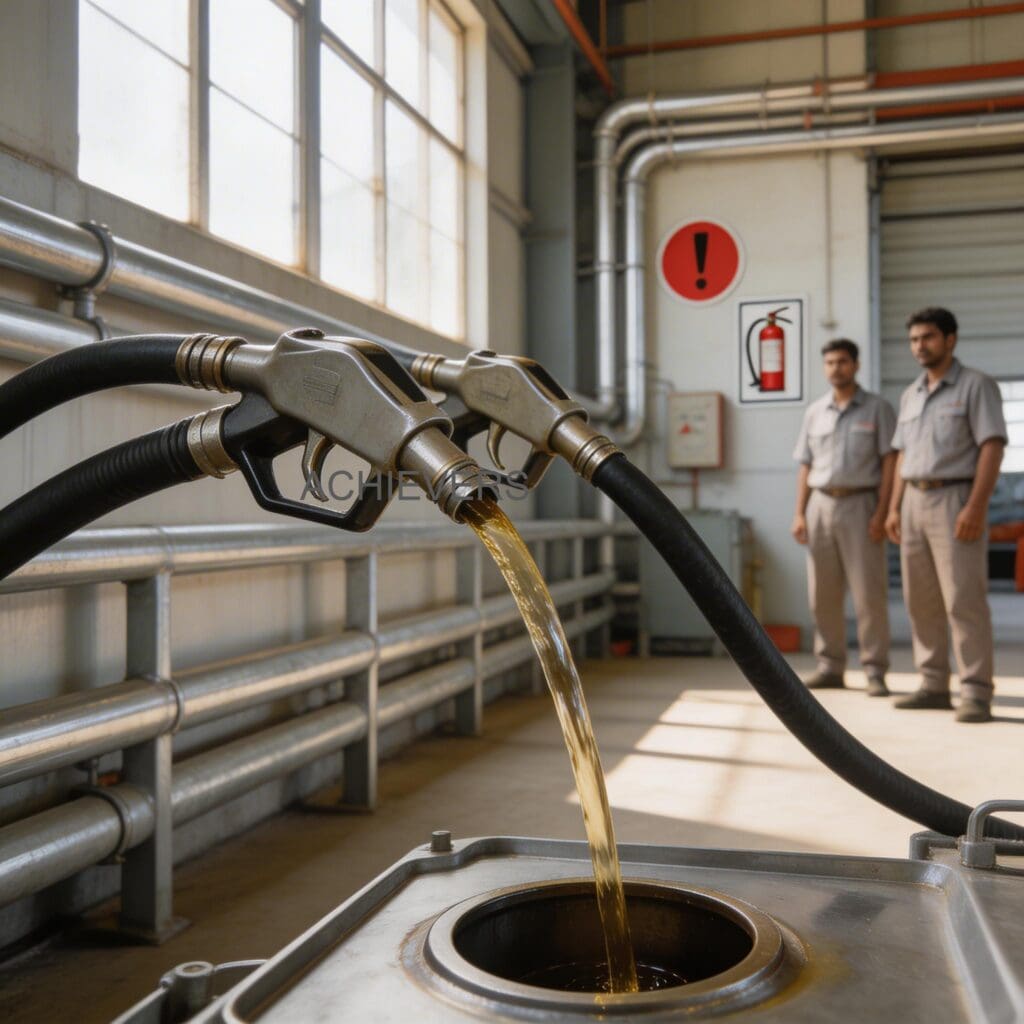
The Indian industrial landscape presents a unique set of challenges that can drastically shorten the lifespan of fluid handling equipment if not managed proactively. From the scorching heat of Rajasthan to the torrential monsoons of Kerala, your equipment must survive extreme environmental extremes.
Combating Dust and Particulate Matter
Mining sites, cement plants, and road construction projects are plagued by abrasive dust. When airborne dust settles on the nozzle lever assembly, it mixes with trace diesel to form a grinding paste. This paste wears down the main stem packing every time the lever is pulled. To combat this, ensure nozzles are always returned to their protective dispenser boots when not in use, rather than being left on the ground or hung over a fence. Regularly wipe down the hand protector and lever area with a clean rag.
Managing High Temperatures and UV Degradation
Sustained exposure to direct summer sunlight can accelerate the degradation of the Duratuff lever guard and internal rubber diaphragms. If your fueling station is completely unsheltered, consider installing a simple canopy. Not only does this protect the equipment from UV damage, but it also lowers the internal temperature of the fuel in the hose, reducing vapor lock issues during dispensing.
Handling Fuel Adulteration and Ethanol Blends
Indian fuel quality can be highly variable. The presence of water, rust from aging underground tanks, or adulterants can wreak havoc on nozzle seals. While Achievers nozzles are rated for up to 10% ethanol blends, excessive water in the fuel can lead to galvanic corrosion inside the aluminum nozzle body. Relying heavily on your upstream Fuel Dispensers and their filtration systems is critical. Ensure your primary fuel filters are rated at 10 to 30 microns and feature water-absorbing capabilities to prevent this contamination from ever reaching the nozzle.
Monsoon Humidity and Water Ingress
During heavy monsoons, water can pool around unprotected fueling areas. If a nozzle is dropped into a puddle, water and mud are instantly sucked into the spout via the vacuum sensing port. If this occurs, the nozzle must be taken out of service immediately, dismantled, and flushed thoroughly with clean diesel before it is used again. Injecting water-contaminated fuel into a modern Common Rail Direct Injection (CRDI) diesel engine can cause engine damage running into lakhs of rupees.
By adapting your maintenance frequency to the specific environmental realities of your site, you ensure that your investment delivers its promised cycle life of over one million actuations.
FAQ
Q: How long should an industrial fuel nozzle last before needing replacement?
A: With proper preventive maintenance, a high-quality nozzle tested for 1 million cycles can last 3 to 5 years in heavy commercial applications. Without maintenance, abrasive wear and drop damage can destroy a nozzle in under 6 months.
Q: Why does my nozzle keep clicking off even when the tank is empty?
A: This is almost always caused by a blocked vacuum sensing port at the tip of the spout, or fuel trapped in the internal venturi tube. Clean the small hole with a non-metallic pick and tap the nozzle downwards to drain trapped fluid.
Q: Is it safe to blow compressed air through the spout to clean it?
A: Absolutely not. High-pressure air blown back up the spout will rupture the delicate internal auto-shutoff diaphragm, permanently destroying the automatic safety shut-off feature and creating a severe spill hazard.
Q: Can we replace just the stainless steel spout if it gets bent?
A: Yes. The spout is a replaceable wear part. Replacing a bent spout is highly recommended, as altered spout geometry will prevent the auto-shutoff vacuum mechanism from functioning correctly.
Q: What does "no pressure – no flow" mean for my operations?
A: It is a critical safety interlock. The nozzle valve physically cannot be opened unless the dispensing pump is pushing fuel against it (at least 0.18 Mpa). This prevents fuel from accidentally draining out by gravity if the hose is left lying on the ground.
Q: Why is my nozzle leaking from the pivot pin on the lever?
A: A leak at the lever pin indicates that the main stem O-ring seals have failed. This is usually caused by abrasive dust working its way into the stem over time, or degradation from incompatible chemicals. The nozzle must be rebuilt or replaced.
Q: Do these nozzles comply with Indian regulatory safety requirements?
A: Yes. High-quality fuel nozzles utilized in commercial setups must adhere to strict safety standards to prevent spills and fires, aligning with PESO (Petroleum and Explosives Safety Organisation) best practices for safe fuel transfer when installed correctly on approved dispensing systems.
To ensure your fleet operations remain leak-free, efficient, and safe, upgrading to highly durable dispensing equipment is non-negotiable. If you are experiencing high failure rates with your current setup or need expert guidance on outfitting your site, contact Achievers Pumps and Valves today. Share your application details, preferred flow rates, and site conditions, and our engineering team will help you select the exact Fuel Nozzles and filtration systems built to survive your specific industrial environment.