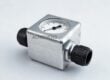
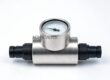
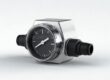
In modern automotive workshops and global fleet service centers, managing high-value bulk fluids like synthetic engine oils, automatic transmission fluids (ATF), and diesel is a significant operational challenge. When mechanics rely on manual dispensing handles with rudimentary mechanical dials—or worse, visual dipstick checks—the result is predictable: inconsistent fills, wasted time, and expensive fluid giveaway. Over a year, dispensing just half a liter of excess synthetic oil per vehicle can hemorrhage thousands of dollars from your bottom line.
Standardizing this process requires moving away from manual estimation and adopting a preset, automated approach. An engineered Liquid Batching System allows service bays to dispense exact volumes of high-viscosity fluids directly from bulk storage to the vehicle, automatically shutting off the moment the target volume is reached. By integrating metering equipment, a dedicated pump, flow sensors, a precise controller, and a fast-acting solenoid valve, workshops can speed up bay turnaround times, eliminate rework due to over- or under-filling, and strictly control inventory.
Quick ROI Snapshot
- Typical Payback Period: 8 to 14 months (depending on fluid throughput and current giveaway rates).
- Primary Savings: Eliminates 3-7% average fluid over-dispensing; reduces technician bay time by 10-15 minutes per complex service.
- Uptime Improvement: Reduces mechanical rework caused by over-pressurized transmissions from overfilling.
1. Industry Overview: The Fluid Challenge
Automotive service centers deal with a diverse matrix of fluids. Engine oils range widely in viscosity depending on whether they are 0W-20 synthetics or heavy-duty 15W-40 blends. Automatic transmission fluids require even stricter handling; modern multi-speed gearboxes are highly sensitive to fluid levels, where a deviation of just 200 milliliters can trigger sensor faults, erratic shifting, or accelerated clutch wear.
The primary challenge in managing these fluids is their changing viscosity based on ambient temperature. In a cold workshop environment, motor oil resists flow, causing standard turbine or paddle-wheel meters to slip and lose accuracy. Furthermore, manual dispensing requires a technician to stand holding a trigger, continuously monitoring a mechanical dial. This is dead time. The technician cannot perform secondary inspections, check tire pressures, or reset service intervals while waiting for a 10-liter sump to fill.
Common Mistake to Avoid
Relying on non-positive displacement flow meters for highly viscous fluids. Using standard turbine meters for cold engine oil or ATF will result in massive calibration drift. Turbine meters require turbulent flow, which high-viscosity fluids rarely achieve. Always specify an oval gear meter for lubricating oils to guarantee volumetric accuracy regardless of fluid thickness.
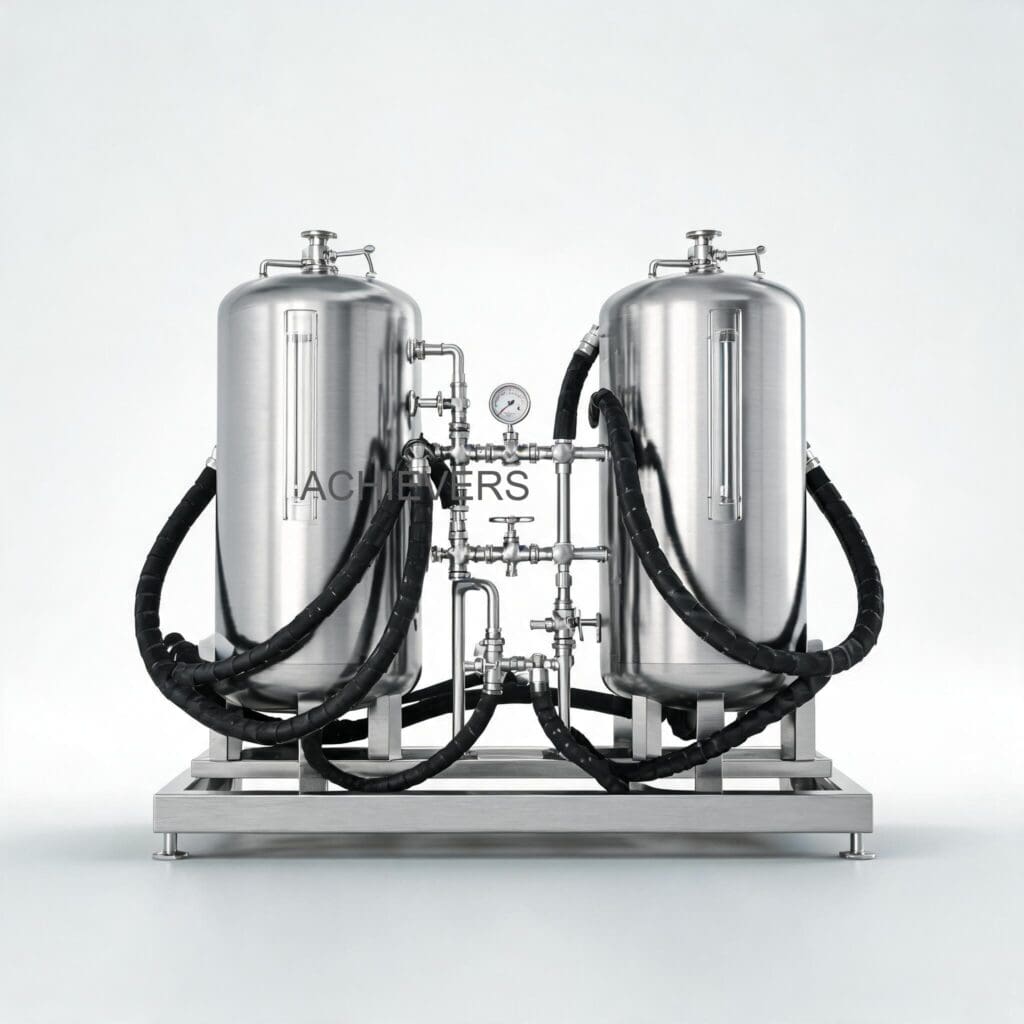
To solve this, advanced fluid handling utilizes a highly integrated Liquid Batching System built around positive displacement oval gear technology. This ensures that a specific volume of fluid is displaced with every rotation of the gears, effectively ignoring changes in viscosity or backpressure.
2. Product Capabilities Matched to Industry Needs
For a batching setup to survive in a commercial service center, it must combine robust mechanical components with precise electronic controls. The system must overcome the high pressure required to push cold oil through long hose reels, measure it perfectly, and shut off instantly to prevent spillage.
Below is a detailed breakdown of how the Liquid Batching System specifications address specific automotive workshop challenges.
| Industry Requirement | Liquid Batching System Feature | How It Addresses the Need |
| :— | :— | :— |
| High Viscosity Handling | Oval Gear Metering Technology | Measures heavy motor and gear oils volumetrically, preventing slip and maintaining accuracy regardless of fluid thickness. |
| Fast Bay Turnaround | Capacity: 60 Litre/Min | Rapidly fills heavy-duty vehicle sumps and diesel tanks, drastically reducing the time a vehicle occupies a service bay. |
| Strict Inventory Auditing | Accuracy: ±0.2 % | Prevents expensive synthetic fluid giveaway, ensuring that 5.0 liters billed to the customer is exactly 5.0 liters dispensed from bulk. |
| Hands-Free Operation | Controller & Solenoid Valve Integration | Technicians set the required batch, open the line, and walk away. The solenoid instantly closes the flow when the preset limit is hit. |
| Standardized Infrastructure | Power Source: 220 V Ac | Plugs directly into standard industrial grid power, requiring no specialized pneumatic or high-voltage installations. |
| Fluid Versatility | Multi-Fluid Compatibility | Engineered for dispensing diesel oil, motor oil, and transmission fluids, allowing one standard system to be deployed across different bays. |
| Contamination Prevention | Erosion Resistance & Sturdy Construction | Internal components resist particulate wear, maintaining fluid purity and protecting the precision tolerances of the oval gears. |
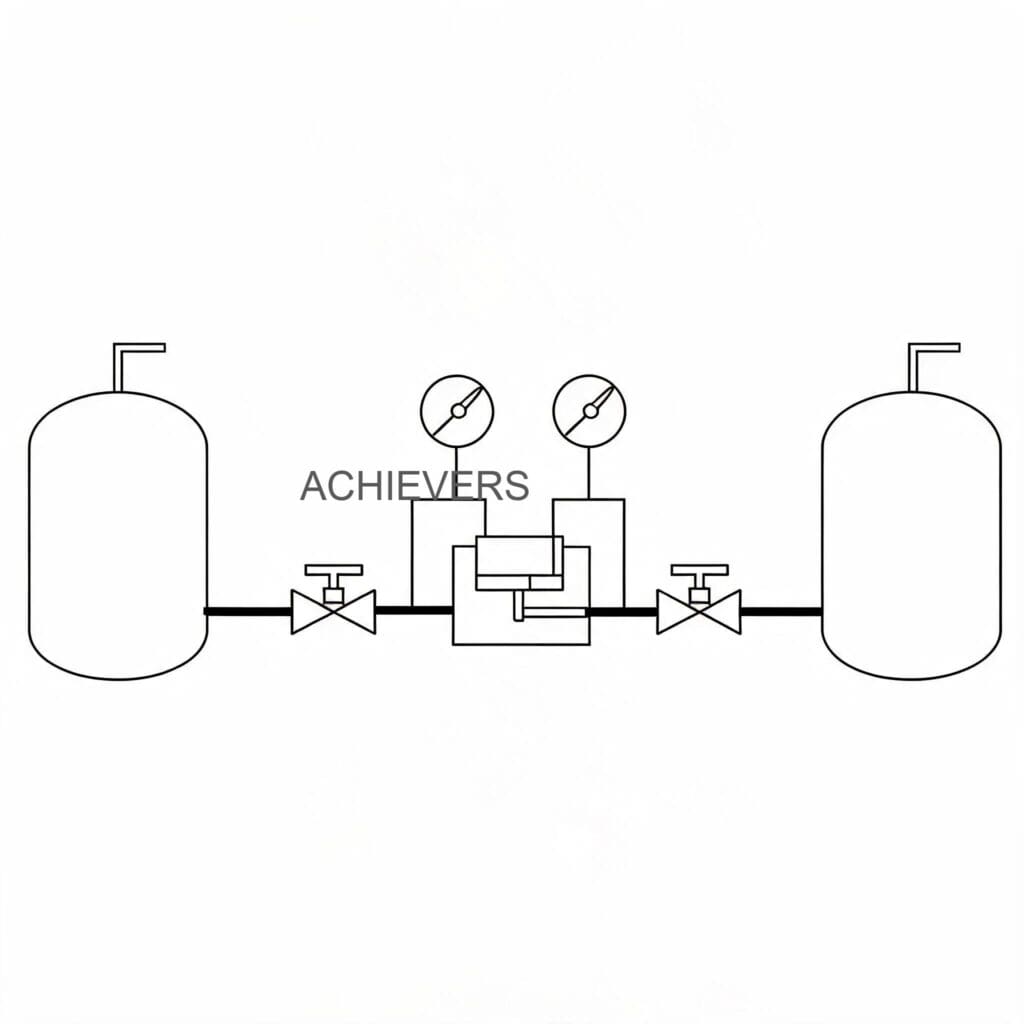
| System Reliability | Pump and Flow Sensor Inclusion | Provides a complete, ready-to-deploy skid. The pump pushes the fluid, the sensor measures it, and the controller manages the batch. |
3. Typical Installation Scenarios in This Industry
Implementing a Liquid Batching System correctly requires matching the setup to the specific workflow of the bay. Generic setups fail because they do not account for the specific fluid dynamics or the operational tempo of the technicians. Here are three typical deployment scenarios.
Scenario 1: Centralized Lube Bay Dispensing
In high-volume fast-lube operations or dealership service departments, engine oil is stored in bulk 1000-liter IBCs or large drums in a centralized fluid room. The batching system is installed at the tank. The 220 V AC pump drives the oil through rigid piping to overhead hose reels in the service bays. The technician uses the central controller (or networked keypad) to punch in the exact sump capacity (e.g., 6.5 liters). They pull the hose reel, connect the nozzle to the engine, and open the valve. The system dispenses exactly 6.5 liters and the solenoid snaps shut. This setup frequently integrates specialized Oil Flow Meters at the endpoints for redundant verification, ensuring absolute precision for high-cost synthetic lubricants.
Scenario 2: Transmission Service and ATF Flushing
Transmission fluid is significantly thinner than heavy gear oil but highly sensitive to temperature-induced volume changes. During transmission services, flushing machines or bulk dispensers must deliver ATF to exacting tolerances. The batching system is mounted on a mobile cart or a dedicated ATF wall-station. Because the accuracy of the system is ±0.2%, technicians can confidently execute a "drain and fill" or full flush without constantly checking the transmission's temperature-dependent dipstick or overflow plug until the final verification. The erosion-resistant design ensures that any micro-contaminants occasionally found in bulk tanks do not degrade the oval gear meter.
Scenario 3: Fleet Diesel Refueling Points
For commercial truck workshops, agricultural equipment depots, or heavy machinery maintenance yards, moving equipment to a public fuel station is inefficient. Workshops utilize dedicated on-site diesel storage. The batching system, utilizing its 60 Litre/Min capacity, is deployed as a high-speed fueling point. The fleet manager can preset a 200-liter batch for a truck to prevent over-fueling or unauthorized dispensing. For operations primarily focused on fuel management rather than oil, this setup is often complemented by a dedicated Diesel Flow Meter to monitor total daily consumption across the fleet.
4. Compliance, Accuracy, and Certification Requirements
While automotive workshops may not face the same explosive hazards as oil refineries, fluid dispensing is still governed by strict accuracy, safety, and environmental regulations across global markets.
Metrological Accuracy for Customer Billing
In many jurisdictions, if a workshop charges a customer for fluids by volume, the dispensing equipment must meet local legal metrology standards (similar to a commercial fuel pump). The ±0.2% accuracy provided by the oval gear mechanism easily exceeds the standard industrial requirements (which often only demand ±0.5% to ±1.0%). This high degree of precision protects the workshop from consumer protection audits and ensures fair billing.
Spill Prevention and Environmental Compliance
Environmental protection agencies globally enforce strict rules regarding the handling of hydrocarbons. Overfilling an engine or a transmission often results in spills that must be cleaned with hazardous waste absorbents and disposed of at a high cost. By utilizing the controller and fast-acting solenoid valve, the system physically prevents the operator from overfilling the reservoir. Once the batch is complete, flow physically cannot continue, mitigating the risk of environmental contamination and costly cleanup.
Electrical and Operational Safety
Because the system utilizes a 220 V AC power source, it is built to stringent electrical safety standards. In environments where diesel—a combustible liquid—is handled alongside heavy lubricating oils, electrical components like the solenoid valve, controller, and pump motors must be appropriately sealed against fluid ingress and dust, ensuring compliance with global electrical safety directives (such as CE marking or local equivalent standards).
5. ROI and Operational Benefits
Investing in engineered dispensing equipment is not merely a facility upgrade; it is a direct recovery of lost revenue. Manual fluid handling hides inefficiencies. A splash of extra oil here, a few spilled ounces of ATF there, and technicians waiting idly by a filling funnel all add up to thousands of hours and liters lost annually.
To maximize this ROI, workshops should standardize their fluid handling workflow. Implementing the system allows you to train technicians on a repeatable, error-free procedure.
Standard Operating Procedure: Executing a Zero-Waste Fluid Fill
- Identify the Fluid Requirement: The technician checks the manufacturer specifications for the exact engine oil or ATF capacity required for the specific vehicle model.
- Input Preset Volume: The technician inputs this exact volume (e.g., 4.2 liters) into the batch controller.
- Connect Nozzle: The delivery hose and non-drip nozzle are inserted into the vehicle's fluid receptacle or dipstick tube.
- Initiate the Batch: The operator presses 'Start' on the controller. The 220 V AC pump activates, and the solenoid valve opens.
- Hands-Free Dispensing: The oval gear meter measures the fluid volumetrically as it flows. The technician is now free to perform other under-hood checks.
- Automatic Shutoff: Once the sensor registers exactly 4.2 liters, the controller instantly cuts power to the solenoid valve, terminating the flow with ±0.2% accuracy.
- Record and Reset: The system registers the completed batch for inventory tracking, and the nozzle is safely returned to its holster without dripping.
By following this procedure, the operational improvements become immediately quantifiable.
| Benefit Area | Typical Improvement | Workshop Context & Impact |
| :— | :— | :— |
| Fluid Giveaway Prevention | 100% elimination of manual overfills | Saves an average of 0.25 to 0.5 liters per service. Across 50 cars a day, this recovers hundreds of liters of expensive synthetic oil per month. |
| Technician Labor Optimization | 10-15 minutes saved per complex job | Hands-free batching allows mechanics to multi-task (checking belts, filters, tires) while heavy fluids dispense at up to 60 Litre/Min. |
| Inventory Reconciliation | Accuracy improved to ±0.2% | Aligns bulk tank purchases with billed customer invoices. Stops the "mystery shrinkage" of bulk lubricants. |
| Rework Reduction | Near zero over-pressurization issues | Exact ATF and oil fills prevent blown seals, erratic shifting, or catalytic converter damage caused by excess oil burning. |

6. Selection Checklist for This Industry
Specifying a batching unit for an automotive or fleet maintenance facility requires careful consideration of the fluid properties and site infrastructure. Use this 8-point checklist when consulting with procurement to ensure you configure the right equipment for your bays.
- Specify the Primary Fluid: Explicitly define if the system will handle diesel oil, motor oil, or transmission fluids, as this dictates the seal materials (e.g., Viton, Nitrile) and pump tolerances.
- Determine Maximum Viscosity: Identify the heaviest oil you will pump at your lowest expected workshop temperature (e.g., 85W-140 gear oil in winter). This ensures the oval gear meter and pump are adequately sized.
- Verify Flow Rate Requirements: Confirm that a capacity of 60 Litre/Min aligns with your needs. This is excellent for heavy equipment and diesel, though flow restrictors may be needed for smaller passenger car sumps to prevent splash-back.
- Confirm Power Availability: Ensure your fluid storage room or service bay has stable 220 V AC power available for the controller, pump, and solenoid valve.
- Assess Pumping Distance: Calculate the total pipe run from the bulk tank to the furthest hose reel. High-viscosity fluids over long distances require robust pump selection to overcome pressure drops.
- Define Accuracy Needs: For billing and high-value synthetics, ensure the specification guarantees ±0.2% accuracy.
- Evaluate Filtration Needs: Although the system features erosion resistance, installing a bulk filter upstream of the batching pump is critical to protect the oval gears from tank sludge or metal shavings.
- Plan for Integration: Determine if the batch controller needs to stand alone or if you eventually plan to link it to your workshop management software to automatically bill the fluids dispensed.
FAQ
Q: Can this batching system handle cold automatic transmission fluid (ATF) without losing accuracy?
A: Yes. Because the system uses an oval gear meter, it operates on the principle of positive displacement. It measures the physical volume of the fluid passing through the gears, meaning its ±0.2% accuracy remains stable regardless of how thick or cold the ATF becomes.
Q: What maintenance is required for the oval gear meter and the solenoid valve?
A: The system is designed for high endurance and erosion resistance. Routine maintenance primarily involves ensuring that the upstream fluid strainers are clean. The oval gears themselves require minimal maintenance as the motor oil and diesel fluids they measure are naturally self-lubricating.
Q: Can I use this single system to pump both diesel fuel and heavy motor oil?
A: While the components are compatible with diesel oil, motor oil, and transmission fluids, it is highly recommended to use dedicated systems for each fluid type. Mixing diesel and motor oil in the same hoses and pumps will cause severe cross-contamination, which can damage engines.
Q: What happens if there is air in the bulk tank line?
A: Positive displacement meters will measure air as if it were fluid, which can skew your batch accuracy. If your bulk tanks frequently run low, you should install an air eliminator upstream of the flow sensors to ensure only solid liquid is measured.
Q: Does the 60 Litre/Min capacity cause splashing in smaller vehicle engines?
A: 60 Litre/Min is the maximum capacity, ideal for bulk transfer or large diesel tanks. For passenger vehicle engine oil, you can utilize a dispensing nozzle with a flow restrictor or a variable trigger to throttle the flow as it enters the narrow engine fill port, while the batch controller still automatically stops the total volume.
Q: What is the benefit of the solenoid valve over a mechanical shut-off nozzle?
A: A mechanical nozzle requires the technician to hold it and manually react when the fluid reaches the fill line. A solenoid valve is controlled electronically by the batch controller; it reacts in milliseconds the moment the preset volume (e.g., 5.0 liters) is reached, providing hands-free, perfectly accurate dispensing without human error.
Q: Is the system difficult to install in an existing workshop?
A: No. The system is highly modular. Because it runs on a standard 220 V AC power source, it does not require complex pneumatic air lines for the pump or low-voltage control wiring. It can be plumbed directly into existing bulk tanks and rigid piping systems.
Ready to eliminate fluid giveaway and speed up your service bays with automated, hands-free dispensing? Contact the engineering team at Achievers Pumps and Valves today to discuss integrating a Liquid Batching System into your facility. Please provide your primary fluid type, maximum required flow rate, and layout details so we can configure the perfect high-accuracy solution for your workshop.